What matters when choosing
Choose the framing approach around how far you move during a lesson, then check lighting, microphone and mounting needs against the room and desk you actually use.
Fixed 1080p webcam
Consider it when: You usually speak from one position and can set the camera angle before class.
Trade-off: A substantial desk-height change or sideways movement may require you to reframe it manually.
Auto-framing webcam
Consider it when: You shift position but do not need a camera head that pans and tilts to follow you.
Trade-off: Framing methods differ: Logitech says Brio 500 requires Logi Tune for RightSight auto-framing, while Insta360 Link 2C reframes digitally.
Physical tracking webcam
Consider it when: You regularly move beyond the frame of a stationary camera during speaking practice.
Trade-off: Insta360 Link 2 uses a pan-and-tilt gimbal, but its physical movement adds a setup consideration that a fixed camera does not have.
| Concern |
What to check |
Who this matters to |
| Staying in frame |
Check whether framing is fixed, digital or physically tracked, and whether it requires software. |
If I stand up or move while practising, I want my face to remain visible without stopping to adjust the camera. Around 36% of consumers put staying in frame first. |
| Clear picture and speech |
Look for light correction and suitable focus; test microphone pickup in your lesson room. |
Changing daylight or household noise can make it harder for my teacher to see and hear me. Clear picture and speech are the primary concern for roughly 29% of consumers. |
| Simple setup |
Check the connector, computer compatibility and whether the mount reaches a useful standing-height angle. |
When I stay close to the screen, I would rather have a straightforward call setup than movement controls I seldom use. About 21% of consumers prioritise that simplicity. |
| Showing lesson materials |
Check focus at the distance used for written work and the class platform’s video settings. |
If I regularly hold up exercises or show notes, I need the camera to capture those details clearly. For around 14% of consumers, showing materials comes first. |
Joybuy webcam choices
These webcams offer choices for a standing-desk video call, from a clip-on lesson camera to models with wider views or remote-controlled framing. Check how each would sit at your standing height; none of the listed features should be taken to mean automatic physical tracking.
 No image available
j5create JVCU435 4K Webcam with 5x Digital Zoom Remote, Black and Silver
Consider this model if you want to adjust your framing from the desk using its remote-controlled digital zoom. It is a USB 4K webcam with 5x digital zoom; check whether remote adjustment suits your movements and whether its mount reaches your preferred standing-height angle.
View on Joybuy
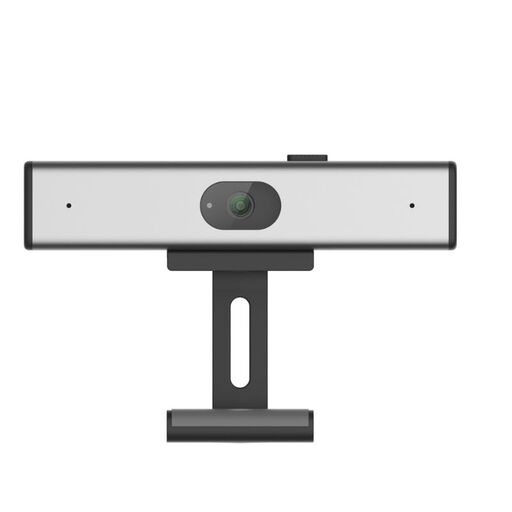 No image available
Philips SPL6308S/00 2K QHD Clip-on Webcam, EU Version, Silver
Consider this clip-on model if you mainly stay near your monitor during lessons. Its stated features include 2K QHD video and a noise-reduction microphone; check the connector and whether the clip lets you set a suitable angle at standing height.
View on Joybuy
 No image available
EMEET All-in-One 4K USB Webcam, 98° Adjustable View, Fixed Focus
Consider this model if an adjustable wide view fits the area you use while speaking. Its stated features include a 98° adjustable field of view, four-microphone array and fixed focus; check the focus distance and mounting position for your standing-desk setup.
View on Joybuy
Common questions
Do I need a 4K webcam for an online language class?
Not necessarily: if the lesson mainly shows your face, choose around framing, lighting and speech pickup before paying attention to 4K capture. Google Meet offers a conditional 1080p send setting, and Zoom sets requirements for HD video, so check what your class platform can actually send.
Where should the webcam go on a standing desk?
Position it so your face sits comfortably in frame at your usual standing height, using a stable clip or compatible mount. The UK Health and Safety Executive advises placing the top of the display at eye level and the screen about an arm’s length away; check the camera angle after adjusting the desk.
Why might a 4K webcam still show lower-resolution video in class?
The class platform may send video below the camera’s capture resolution. Google Meet and Zoom describe settings and device or connection conditions for higher-resolution video, so review the platform’s send setting on the computer you will use.
What should I test before the first lesson?
Open the class app and test the selected camera, microphone and preview while standing at your usual desk height. If video does not appear, check the privacy shutter, camera permissions and privacy mode; Microsoft identifies these as possible causes of a missing camera image in Teams for personal use.


