Solo remote and hybrid workers
If you make frequent seated calls, assess whether the laptop camera’s position, lighting or framing is the problem. An external camera gives you another placement option, provided its mount fits your screen or desk.


For seated, one-person work calls, start by checking whether a USB webcam with suitable light correction and an eye-level mounting position addresses the problem with your laptop camera. Consider extra image controls when you need them, tracking when you move while presenting, or a wider shared-desk camera when several people must fit in frame. Check the connection, computer, meeting app and mounting position before choosing.
The useful upgrade depends on what your current camera cannot do in your usual call position.
If you make frequent seated calls, assess whether the laptop camera’s position, lighting or framing is the problem. An external camera gives you another placement option, provided its mount fits your screen or desk.
If you need consistent framing across calls, look at camera placement and lighting before paying for more resolution. Manual image controls may be useful if you need to adjust the picture yourself.
A presenter who moves may need tracking; several people at one desk may need a wider view and a way to capture their voices. Those are different requirements from a fixed camera for one seated caller.
Start with the number of people and where the camera will sit, then check the picture controls, connection and audio against your usual calls.
| Priority | What to check | Your needs |
|---|---|---|
| Image and lighting | Check the stated resolution, available light correction and whether you can light your face from the front. More resolution alone will not fix backlighting or a poor camera position. | I make seated calls in changing light and want my face to remain visible without adjusting the picture before every meeting. |
| Framing and mounting | Check the field of view, how securely the clip fits your display and whether a tripod or tabletop position is possible. Tracking matters chiefly if the presenter moves. | My laptop angle is awkward, or I need the camera to frame a moving presenter or several people at a shared desk. |
| Connection and software | Match the exact model’s USB connector and requirements to your computer, operating system and meeting app. Check separate requirements for tracking or image-control features. | I use a work computer or dock and need the camera’s required features to work with my permitted software. |
| Audio and privacy | Check the microphone arrangement against speaker distance and room noise; consider a headset for noisy calls. If you want a physical camera control, check for a shutter. | Calls from a shared or noisy room make microphone placement important, and I may want to cover the lens between meetings. |
A 4K specification does not correct a lens below eye level or strong light behind you. Logitech’s placement guidance recommends positioning a webcam at eye level.
Work out where the camera can sit and how your face will be lit. Choose extra resolution or manual controls when they serve a specific call or presentation need.
The connector and basic video connection are only part of the setup. For example, Logitech lists different USB-C connection requirements for Brio 500 and MX Brio; software-dependent features can add further conditions.
Check the exact model against your port or dock, operating system, meeting app and any software needed for the feature you intend to use.
A view arranged around one seated person may not include everyone. A wider, room-facing microphone arrangement can also pick up sound differently from a close headset.
Count the usual participants and check their seating positions before selecting the field of view and microphone arrangement.
Microphone features do not remove the effects of distance, other speakers and background sound on a work call.
For noisy rooms, assess your existing headset alongside the camera rather than choosing the webcam on its microphone description alone.
These examples illustrate different camera arrangements; the requirements apply to the named models, not every product from each brand.
Brio 500 is a personal-call option, while MX Brio adds 4K capture and manual image controls according to Logitech.
Link 2 is aimed at presenters who need the camera to follow movement rather than remain fixed on one seated position.
HP describes Poly Studio P5 as a compact 1080p camera for individual work calls.
DVY21 is a meeting-space option to consider when several people share one camera position.
These options cover USB webcams for individual work calls and a camera with integrated audio for a shared desk. Compare each one with your mounting position, computer connection and usual number of callers.
 No image available
Consider this model if you want to adjust framing from your seat during a work call. Its title specifies 4K, remote control and 5× digital zoom; check that its mounting arrangement suits your desk.
 No image available
Autofocus is relevant if your distance from the camera changes during calls. The title says 2K, while the supplied technical description says Full HD 1080p at 30 fps; confirm the delivered resolution before choosing it for a detail-sensitive use.
 No image available
Its stated 98° adjustable field of view and integrated audio make it worth checking for a shared-desk call. It has fixed focus; confirm that its mount, computer and meeting-app compatibility suit your setup.
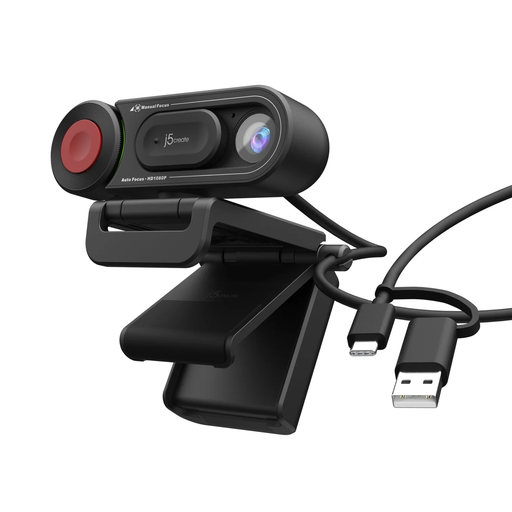 No image available
The focus switch may be useful when changing between a seated call and showing an object. Its supplied product information specifies 720p video; decide whether that level of detail suits your calls and check the mount against your display.
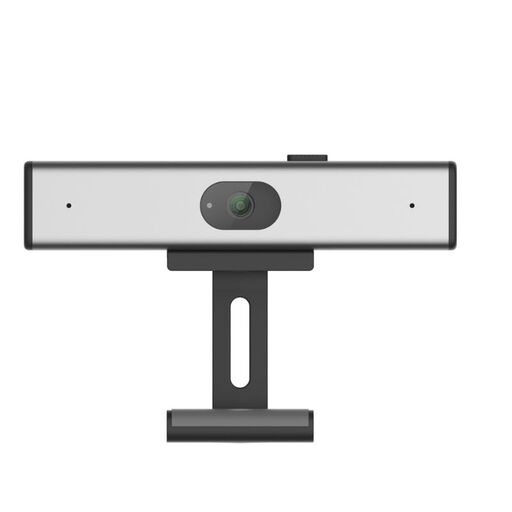 No image available
The clip-on design is relevant if you plan to place the camera on a laptop or monitor. Its title lists a noise-reduction microphone; check the connector and operating-system compatibility for your work computer before ordering.
Not necessarily: for a seated one-person call, suitable lighting and eye-level placement may address the problem more directly than resolution alone. Consider 4K if you need its extra stated detail or a particular model’s image controls, and check its computer connection requirements.
Aim for approximately eye level and around arm’s length away, as Logitech advises in its webcam setup guidance. Check that the monitor clip holds securely; if it cannot give you a suitable angle, consider a tripod-ready mounting option and light your face from the front.
Insta360 lists Zoom, Teams and Google Meet among the conferencing platforms compatible with Link 2. Before relying on tracking or virtual-camera functions, check the requirements for that exact feature on your computer and work account.
Use an appropriate electrical-waste collection point or household waste recycling centre rather than putting a webcam marked with the crossed-out wheelie-bin symbol in household rubbish. Check your local collection arrangements before taking it in.