Solo facilitator in an open office
You lead from one position and need remote participants to hear you amid nearby office activity. Consider how the microphone prioritises your voice before deciding whether a higher video resolution matters.


Choose the microphone pickup approach before paying attention to 4K resolution. Focused pickup is worth considering when one facilitator speaks near the webcam, but a wider pickup mode or separate meeting-audio device is more appropriate when colleagues around the room must contribute. Check speaker positions and the meeting app’s noise settings together: isolating one voice can also remove voices the meeting needs.
You lead from one position and need remote participants to hear you amid nearby office activity. Consider how the microphone prioritises your voice before deciding whether a higher video resolution matters.
You move, gesture or show planning materials. Check whether framing or presentation modes cover what you intend to show, and whether your voice remains clear when you move away from the camera.
Several local participants need to speak. A mode focused on one nearby voice may work against that aim, so test each speaker’s position and consider wider pickup or a separate room-audio device.
Decide who needs to be heard, then check camera framing and meeting-app setup. A feature that helps one speaker can be a poor fit for a group speaking from different positions.
| Concern | What to check | Who this matters to |
|---|---|---|
| Main speaker’s voice | Check for a focused pickup mode and its stated speaker distance; confirm the meeting app selects the intended microphone. | If I lead from a desk beside other conversations, I need remote colleagues to follow my decisions and deadlines. Around 36% of consumers put the main speaker’s voice first. |
| Several local voices | Test each expected speaker from their usual position; consider wider pickup or separate room audio if they sit apart. | When colleagues in the room challenge or update a plan, I need their contributions to reach remote attendees too. For around 29% of consumers, hearing several local speakers takes priority. |
| Visible planning materials | Check whether framing, tracking or presentation modes work with your camera position, notes or whiteboard. | If I stand to explain a plan or show written notes, remote colleagues need to see the relevant material. Keeping the presentation visible comes first for around 21% of consumers. |
| Meeting setup | Select the camera and microphone in the meeting app, check permissions and run a test call with the intended noise settings. | When I need the meeting to start without device changes, I want to know that the right microphone is active. Around 14% of consumers prioritise predictable setup. |
Noise reduction does not tell you whether a webcam prioritises one nearby speaker or picks up people across a room. The focused option may leave colleagues harder to hear.
Match the pickup mode to the speaker layout, then test it with the office noise and people expected in the meeting.
Microsoft says Teams Voice isolation can suppress other voices entering the microphone. That may remove contributions the planning session needs.
Make a test call with every local speaker and choose settings that preserve their voices when group participation matters.
A facilitator can remain visible while moving beyond the microphone’s intended pickup area. Insta360 advises staying within 1.5 metres of its Link 2 and Link 2C webcams for optimal sound quality; guidance for another model must be checked separately.
Test speech while sitting, standing and presenting at the distances you will actually use.
The Link 2 Pro is relevant when a facilitator wants a choice of microphone modes alongside camera tracking.
The Brio 500 and MX Brio offer different video specifications and meeting features for an individual host.
The compact Meet 2 is an option to examine when 4K video and auto-framing matter alongside near-camera speech.
These webcams offer different ways to frame a planning meeting, from a fixed-focus camera to remote-controlled zoom. Check microphone pickup with your actual speakers and office noise before choosing one for a group discussion.
 No image available
Consider this model when several people may be in the camera view, but test whether their voices remain clear from their expected positions.
Its listed configuration includes a four-microphone array, dual AI speakers, fixed focus, an adjustable 98° field of view and USB connection.
 No image available
Consider this model if someone can adjust the camera view during the meeting; remote control is not the same as automatic tracking.
The product name specifies 5x digital zoom and a remote control. Test microphone pickup separately with the people who will speak.
 No image available
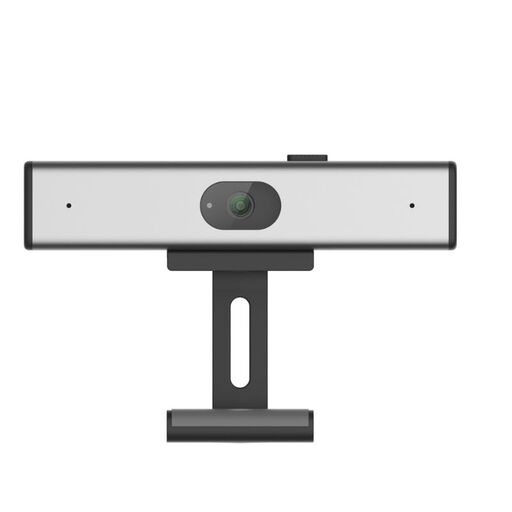
Consider this clip-on model for a facilitator working close to a laptop or desktop screen; test how it handles the actual speaker distance and office noise.
The product name specifies a noise-reduction microphone and a clip-on mount. Check the EU-version configuration against your intended setup.
A focused mode is worth considering when one facilitator speaks close to the webcam. Insta360 says the Link 2 Pro’s Focus mode prioritises voices within approximately 1 metre in front of the camera; choose and test a wider approach if colleagues around the room must also speak.
Teams settings can help manage background sound, but they do not replace a microphone suited to the speaker layout. Microsoft says Voice isolation can suppress other voices entering the microphone, so test it with every intended local speaker before a group planning session.
Select the intended camera and microphone in the meeting app, check microphone permissions and make a test call from the planned location. Have each local participant speak from their expected position, including while the facilitator presents notes or stands.
No. Webcam processing concerns the sound sent to remote attendees, not noise exposure for people in the office. The Health and Safety Executive advises managing workplace noise risks separately.