What to check before choosing
For a tutorial in a noisy office, identify the need you would address first: speech, demonstrations or a straightforward seated shot. That priority helps determine which features are worth checking on the exact model.
| Concern |
What to check |
Who this matters to |
| Voice clarity |
Look for microphone noise reduction on the exact model; try the audio on your usual tutorial platform in normal office conditions. |
If colleagues are talking nearby, I need students to understand my instructions without repeated explanations. Around 42% of consumers put voice clarity first. |
| Demonstration framing |
Decide whether the lesson needs a desk view, adjustable field of view or tracking; check whether those controls require software. |
When I show papers, objects or hand movements, I need them to stay visible without continually adjusting the camera. For roughly 33% of consumers, demonstrations are the primary concern. |
| Seated setup |
Check the computer connection, software requirements, face framing and any physical privacy cover. |
If I teach from one position, I want a dependable face shot without controls I seldom use. A straightforward seated setup comes first for about 25% of consumers. |
Joybuy webcams for desk-based tutorials
These webcams are options to consider for tutorials taught at a desk, where microphone features and the amount of office visible in the frame both affect the choice. Compare their stated features with your computer setup, and assess speech quality in your usual room.
 No image available
EMEET All-in-One 4K Webcam with Sony Sensor
Consider this model if you teach at a desk but sometimes need a wider view for demonstrations. Its name specifies a four-microphone array, dual AI speakers, a 98° adjustable field of view, fixed focus and plug-and-play USB. Assess the listing's noise-reduction claim with your usual tutorial platform; check whether fixed focus suits objects held near the camera, and confirm computer compatibility before ordering.
View on Joybuy
 No image available
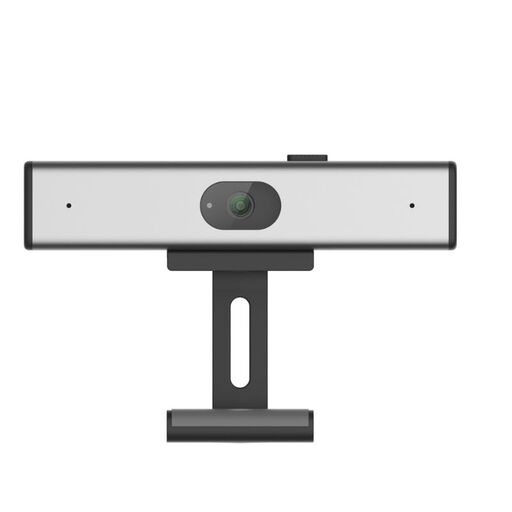
Philips SPL6308S/00 2K QHD Webcam, EU Version, Silver
Consider this clip-on model for a monitor- or laptop-based tutorial. The product name specifies 2K QHD video and a microphone with noise reduction; that claim does not establish how it will handle conversations in your office. Check computer compatibility and the available framing options if you need to show more than a seated face shot.
View on Joybuy
Frequently asked questions
Will a noise-cancelling webcam microphone remove office conversations?
Do not assume it will remove nearby speech. AnkerWork, Logitech and OBSBOT describe noise reduction on particular models, but those feature claims do not establish speech clarity in every office. Try the microphone on your tutorial platform under normal working conditions.
What helps when I show papers or objects during a tutorial?
Choose framing that can include the material you show without losing the view your students need. AnkerWork specifies adjustable field-of-view settings for PowerConf C200; Logitech describes a desk-facing Show Mode for Brio 505; and OBSBOT lists tracking and preset modes for Tiny 2 Lite. Check which controls require companion software.
What should I check if I use a work-managed computer?
Check the exact webcam's connection and operating-system requirements, then establish whether its desired framing controls need software you can install. Logitech states that Brio 505 RightSight auto-framing requires Logi Tune and is unavailable for ChromeOS or ARM computers.
How long is the normal UK cancellation period for an online webcam purchase?
For an eligible UK sales contract, regulation 30 of the Consumer Contracts Regulations 2013 sets the normal cancellation period to end 14 days after the consumer, or their nominated recipient other than the carrier, takes physical possession of the goods. Check applicable exceptions and the retailer's return instructions; cancellation for a change of mind is separate from remedies for faulty or misdescribed goods.
What should I do with an old webcam?
Use an appropriate electrical-equipment reuse or recycling route when replacing it. GOV.UK explains that UK waste electrical and electronic equipment rules encourage recovery, reuse and recycling rather than disposal through ordinary waste routes.


