Overhead craft demonstrators
If students need to follow hand placement, tools and small materials for much of the lesson, prioritise a secure overhead position and focus at the distance between camera and work surface.


For lessons centred on hands, tools and small materials, start with a camera you can position securely above the work surface; framing and focus distance matter more than resolution alone. A desk-facing webcam suits shorter demonstrations, while a tracking camera is more relevant when you move around as you teach. Check the mount, lighting, teaching platform and connection before deciding whether 4K capture will be useful.
The camera position that matters most depends on whether students chiefly watch your hands, your face or your movement around the room.
If students need to follow hand placement, tools and small materials for much of the lesson, prioritise a secure overhead position and focus at the distance between camera and work surface.
If you address students face-to-camera before showing sketches or work in progress, consider how easily you can change views without losing a stable picture of the desk.
If you move between a presentation area and larger projects, a camera that can follow a presenter may be useful. Check separately how you will show detailed work on the table.
Choose the camera arrangement around your main lesson view, then check that it works at your desk and in the platform students will use.
Choose it when: Hands and materials need to stay in view through sustained tabletop demonstrations.
Allow for: A suitable base or clamp and room to position it. Logitech specifies Reach as a 1080p/60fps content camera, not a 4K camera.
Choose it when: You usually speak to camera but briefly show sketches or work on the desk; Logitech offers this arrangement with MX Brio Show Mode.
Allow for: A separate secure mount if you need a level, sustained overhead view rather than a downward tilt.
Choose it when: You regularly move between teaching positions; OBSBOT describes Tiny 2 as offering tracking and auto zoom.
Allow for: A live test to see whether tracking holds the intended view instead of reframing during a tabletop demonstration.
Choose it when: You teach at a repeatable desk position and can mount the camera at a suitable distance.
Allow for: A fixed focus range: Elgato specifies 30–120 cm for Facecam MK.2. Its stated uncompressed 1080p60 modes require USB 3.0.
| Concern | What to check | Who this matters to |
|---|---|---|
| Overhead framing and close-up visibility | Check the mounting position, desk fit and focus at the intended camera-to-work distance. | When small movements of my hands or tools carry the lesson, I need the work to stay clearly framed from above. Around 39% of consumers put overhead visibility first. |
| Colour and lighting control | Light the work surface and check whether exposure and white balance can be adjusted. | If students must distinguish materials or colours, I want their appearance to remain consistent as I teach. Around 23% of consumers make colour and lighting their primary concern. |
| Live-class compatibility | Check the USB connection, computer and platform settings; test the intended class setup. | I need the camera and connection to work reliably in the platform my students use, even if that limits the video quality they receive. For around 23% of consumers, dependable live delivery comes first. |
| Presenter movement | Decide whether you need a moving presenter shot, a fixed work-surface shot or both; test tracking during a lesson rehearsal. | When I move between a workbench and a presentation area, I need to remain in frame without losing the view students need. Presenter mobility is the main concern for around 15% of consumers. |
4K capture cannot correct an insecure camera angle, poor lighting or work positioned outside the camera’s focus range. The live platform may also send a lower-resolution picture to students.
Set the camera over your actual work area and check focus, lighting and platform video settings before making resolution the deciding factor.
A desk-facing tilt can show a quick sketch, but it does not establish a level, stable view of detailed work.
Measure the desk and camera position. For repeated overhead teaching, use an adjustable content-camera setup or check that a compatible mount can hold your webcam securely above the work.
A tripod, desk arm, clamp or suitable camera base may also be needed.
Elgato specifies USB 3.0 for Facecam MK.2’s uncompressed modes; USB 2.0 uses MJPEG instead. Zoom’s HD delivery also depends on the relevant account, device, settings and connection.
Check your available port and run a private class in the intended platform before relying on a particular camera mode.
Tracking addresses a moving presenter’s framing, while detailed craft work often needs the camera to hold a fixed composition.
If you choose a tracking camera, rehearse the movements and tabletop shots you plan to use, and check when the camera reframes.
Logitech offers two relevant approaches: Reach for repositioning a camera over physical work, and MX Brio for conventional webcam use with a desk-facing Show Mode.
Tiny 2 is relevant when the tutor moves between presentation and demonstration positions.
Facecam MK.2 is an option for a controlled, repeatable desk setup where its stated working distance suits the camera position.
These conventional webcams offer different options for a desk-based class or a separately mounted demonstration view. Check each camera’s focus at your working distance and how you would mount it before choosing one for overhead teaching.
 No image available
Consider this autofocus webcam if you can position it securely for your demonstration. Its 2K name and stated 1080p video specification differ, so confirm the recording mode before buying and test focus at your work surface.
 No image available
The remote-controlled digital zoom may suit a fixed teaching station where you want to change framing. Check focus at the craft surface and arrange a secure mount if you need an overhead view; digital zoom alone does not establish how much detail students will receive.
 No image available
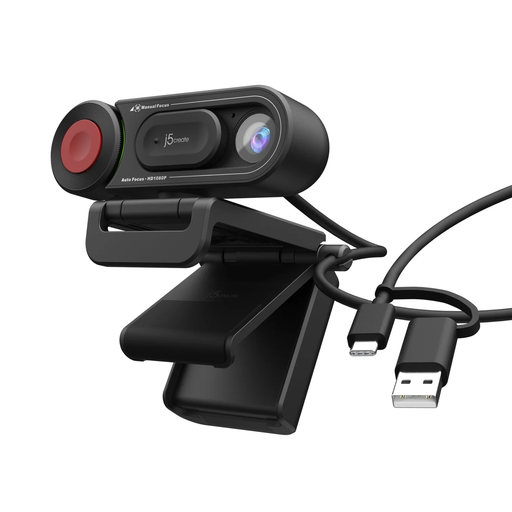
The auto and manual focus switch may be useful when changing what you show during a class. Test whether its stated 720p video shows your smallest materials clearly enough, and check how to secure it if the lesson needs an overhead view.
 No image available
This fixed-focus webcam is worth considering for a teaching position that stays at a consistent distance. Check that its focus suits the craft surface and that you can mount it where needed; its adjustable 98° field of view does not resolve either question.
No: if students mainly need to see your hands and materials, secure overhead framing can matter more than 4K capture. Logitech specifies 1080p/60fps for its Reach content camera. For classes on Zoom, HD delivery depends on the account, device, settings and connection, so a 4K camera does not guarantee students receive a 4K or Full HD picture.
Measure from the proposed camera position to the work surface, then compare that distance with the camera’s stated focus range or focus behaviour. Elgato specifies a fixed 30–120 cm range for Facecam MK.2, while Logitech describes Reach as using autofocus. Test with your smallest typical materials before a live class.
Run a private session in the platform students will use, with your actual camera angle, lighting, materials and microphone. Check the live picture as you move your hands and change what is on the work surface; Columbia University’s online-teaching guidance also treats webcam position and lighting as preparation worth addressing.
UK consumers generally have a separate cancellation right for eligible online orders: the Consumer Contracts Regulations 2013 state that the cancellation period for goods ends 14 days after the day the consumer receives them. Check the conditions and the seller’s return process; remedies for a faulty or misdescribed camera are a separate matter, not simply a change-of-mind return.
Look for an electrical-equipment recycling collection point or a retailer take-back option rather than putting the webcam in general waste. GOV.UK explains that UK waste electrical and electronic equipment rules aim to increase recovery, reuse and recycling of this equipment.