Printed-score explainers
If viewers need to inspect notation, markings or short passages on paper, give priority to focus and a stable angle over the page. A camera that is easy to aim at documents matters more here than face-framing features alone.


Choose a webcam for face-to-camera explanation when you share the score digitally; a desk-facing webcam can also work for occasional close views of printed passages. If a whole physical page needs to stay in view, an adjustable content camera or USB visualiser offers a more direct way to frame it. Check the space it needs on your desk, its connection and how the image appears in your meeting or recording app before buying.
Start with how viewers will see the notation: through a screen share, in brief views of the desk, or on a printed page that stays under the camera.
If viewers need to inspect notation, markings or short passages on paper, give priority to focus and a stable angle over the page. A camera that is easy to aim at documents matters more here than face-framing features alone.
If you mostly speak to camera but briefly show notes on the desk, consider whether a tilting webcam can frame the part of the score you need. Logitech lists Show Mode on its MX Brio and Brio 500 webcams for sharing desk material.
If you share the score through software, the webcam primarily shows you speaking. Focus instead on a suitable presenter view, the connection your computer provides and compatibility with your call or recording app.
For a printed score, establish the required page view and camera position before comparing resolution. For a digitally shared score, make sure the presenter camera fits your computer and app.
Choose it when: You need one compact camera for speaking and occasional views of a score excerpt.
Trade-off: A monitor-mounted camera may need repositioning to show a full page steadily, even if it offers a desk-view mode.
Choose it when: A printed score needs to remain framed for much of the explanation or you regularly move between pages.
Trade-off: Its adjustable arrangement takes a different amount of desk space from a monitor clip; check the footprint where you work.
| Concern | What to check | Who this matters to |
|---|---|---|
| Printed notation | Check the area of the page the camera can frame and whether it can focus at the intended distance. Compare capture resolution only after establishing a workable position. | If viewers must inspect small markings on paper, I need the passage to remain in focus and within the frame. Around 46% of consumers put physical-score legibility first. |
| Switching views | Check the tilt or arm movement and whether the camera stays stable when aimed at the desk. | When I move from speaking to showing an annotated bar, I want the change of view to be practical during the session. For around 36% of consumers, switching between face and desk views is the primary need. |
| Presenter video | Check the video modes, focus, connector and compatibility with the app you use. | If the notation is already on screen share, I need the camera chiefly to show me speaking. A presenter view is the first concern for around 18% of consumers. |
More capture detail cannot fix a camera that cannot aim at the page or keep the required passage in focus. Nor does the capture setting alone determine what viewers see through a meeting app.
Place the score where you will use it and check the area a monitor-top camera would need to see. If that position will not work, consider an adjustable content camera or visualiser before paying for additional webcam resolution.
A separate arm, tripod or document camera may be needed if your chosen mount cannot hold the required angle.
Features intended to keep a presenter in view do not, by themselves, provide a stable view of notation on the desk.
Choose a presenter-focused webcam when the score is normally screen-shared. If you will show paper, check the camera’s desk-facing position, mount movement and focus at the page.
Connection instructions can differ by model. Elgato instructs Facecam Neo users to connect it directly to a computer’s USB-C port rather than through a USB hub.
Check your ports and the camera’s instructions, then confirm that your meeting or recording app can use the intended camera input.
Webcams are electrical equipment, so an old device needs an appropriate disposal route. GOV.UK guidance describes the UK Waste Electrical and Electronic Equipment rules and the roles of sellers and other market participants.
Before replacing a camera, check the seller’s take-back information or your local authority’s electrical-waste arrangements.
These brands illustrate different camera formats for this task; the choice depends on whether you will show yourself, a printed score or both.
Its cited range includes conventional webcams with desk-sharing features and the more document-focused Reach camera.
Facecam Neo is a presenter-focused option to consider when the score is usually shared digitally.
Meet 2 is a compact webcam option for face-to-camera explanations and nearby objects.
V4K PRO 120 is a USB visualiser to consider when the physical page is the main subject.
These webcams suit the presenter side of a home-office score explanation, particularly when the score is shared digitally. For printed notation, check whether the chosen camera and mount can hold the page view you need.
 No image available
Consider this for a presenter view while sharing the score digitally. Autofocus is stated in the product name, but confirm the capture mode before buying: the name says 2K while the detailed description states Full HD 1080p at 30 fps. Check the mount angle if you also need to show paper.
 No image available
Consider this for a presenter view when you want remote-controlled digital framing. The product name specifies 4K capture and 5x digital zoom. If you plan to move between your face and nearby notation, check its focus behaviour and whether the mount can aim steadily at the desk.
 No image available
Consider this for face-to-camera conferencing while the score appears on screen share. Its stated features include 4K capture, fixed focus, an adjustable 98° field of view, four microphones and dual speakers. Check that your intended camera distance suits fixed focus; also check mounting separately if you need a desk view.
 No image available
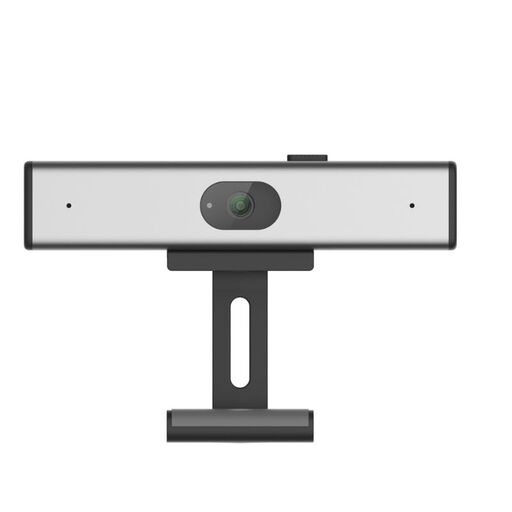
Consider this clip-on camera for presenter video when the score is shared digitally. The product name specifies 2K QHD and a noise-reduction microphone. Check the connector and focus behaviour for your setup, and confirm how you would position it if printed notation must appear on camera.
 No image available
Consider this for a presenter view when the score is shared through software. The product name specifies an auto and manual focus switch, while the listing describes 720p video. Decide whether that capture mode suits your call or recording, and check the mounting angle before planning to show a printed page.
No, not when the score is screen-shared and the webcam mainly shows you speaking. If viewers must inspect a printed page through the camera, compare the page framing and focus as well as capture resolution; Logitech lists 4K capture for MX Brio, while IPEVO UK describes V4K PRO 120 as a document-focused visualiser.
A visualiser is worth considering when a physical score stays in view for much of the session or you repeatedly reposition pages. IPEVO UK specifies an adjustable arm and Tabloid/A3 capture range for V4K PRO 120; check that its footprint and page view fit your desk.
A desk-view mode helps aim a supported webcam at the page, but it does not establish what viewers will be able to read. Check the passage size, lighting and focus at your intended position, then assess the image in the meeting or recording app you will use.
Follow the instructions for the exact model rather than assuming a hub will suit every camera. Elgato’s Facecam Neo setup guidance calls for a direct USB-C connection to the computer, not a USB hub; also check that your chosen app can select the camera.