For regular one-person calls, a 1080p webcam is a sensible starting point; consider a roughly 65°–78° view if you want less of your room in the frame, and a wider or adjustable view if you need to show another person or your desk. Check your lighting before choosing on resolution alone, then confirm the exact camera’s connection, mount, computer compatibility and physical privacy cover.
Who is this setup for?
People taking solo calls from home
If meetings or interviews usually show just you, pay attention to how much background the camera includes. PCMag UK describes webcam fields of view from about 65° to 90°; a view towards the narrower end can help keep the frame focused on one person.
People working in changing light
A desk beside a bright window or in a dim room makes lighting placement part of the camera decision. Check the view at your normal call time rather than relying on an automatic-exposure feature alone.
People who want a visible privacy control
A physical shutter or cover lets you see when the lens is blocked between calls. On Windows, also check the camera-access settings needed by your conferencing application, as described by Microsoft Support.
What should you check before buying?
Start with the view from your usual seat and the light in your room, then check whether the camera will work and sit securely on your computer.
| Priority |
What to check |
Your needs |
| Framing |
Compare the field of view at your normal seating distance. PCMag UK describes approximately 65°–90° across webcams; check whether the mount lets you position the lens where you need it. |
I want my face clearly framed without showing more of my home than necessary. If someone else or a desk demonstration must fit, I need a wider or adjustable view. |
| Video mode |
Check resolution and frame rate together, such as 1080p/30fps or 4K/30fps. Confirm what your computer and calling app can use before choosing a higher-resolution mode. |
For routine meetings, I can start by assessing 1080p. Cropping or reframing may make a higher-resolution option more relevant to my calls. |
| Lighting |
Preview the image at your usual call time. Try front-facing light if a window is behind you, and check the exact model’s exposure or HDR controls if lighting changes. |
My face needs to remain visible when daylight changes or the room is dim; a camera feature alone should not have to compensate for an unlit desk. |
| Privacy |
Check whether the exact model has an integrated shutter or supplied cover. On Windows, review both camera access and the setting for desktop applications where relevant. |
I want to see when the lens is covered between calls and control which applications can use the camera. |
| Setup |
Confirm the USB connector, operating-system and conferencing-app support, and whether the supplied clip fits your screen. Check whether optional control software is permitted on a work computer. |
I need the camera to connect, stay in position and work with the calling software I actually use. |
Common buying mistakes
-
Choosing by resolution alone
A 4K label does not tell you whether the camera frames your face well or whether the room has enough light. PCMag UK presents 1080p as a starting point; Logitech’s Brio 4K specifications also show that its 4K/30fps and 1080p/60fps modes involve different resolution and frame-rate choices.
Decide on framing and lighting first, then consider whether extra resolution would help with your intended cropping or capture.
-
Letting a wide lens show too much of the room
A wider field of view includes more background, which may be distracting or reveal part of your home that you would rather keep outside the call.
Check a live preview from your usual seat and use a wider view when you actually need shared-room or desk context.
-
Expecting automatic correction to replace lighting
Exposure features cannot remove the practical difficulty of a dim face against a bright window. Their effect will depend on the room and camera.
Try lighting your face from the front at your usual call time before choosing a camera primarily for its low-light claims.
-
Overlooking the connection and work-computer settings
A camera may be connected but unusable for a call if the clip does not fit, the required connector is unavailable or application access is off. Microsoft Support notes that Windows desktop conferencing applications need the desktop-app camera-access setting enabled.
Check the exact USB connection, mount, operating-system support and app permissions; ask whether a managed work computer permits any optional camera software.
Brand and model references
These manufacturer examples illustrate features to compare on the exact model; they are separate from the Joybuy products below.
Logitech
Logitech lists webcam models ranging from 1080p cameras with shutters to a Brio 4K model with selectable framing.
- According to Logitech, the C920s combines 1080p/30fps, a fixed 78° view and a flip shutter; the Brio 4K lists 65°/78°/90° views and 4K/30fps or 1080p/60fps modes.
- Those modes and controls differ by model, so check the specifications and software requirements of the particular webcam you are considering.
OBSBOT
The OBSBOT Meet 2 is a compact 4K option with autofocus and a privacy cover in the manufacturer’s listing.
- OBSBOT lists up to 4K/30fps and 1080p/60fps for the Meet 2, alongside a magnetic mount.
- The cited manufacturer listing is a US store page; confirm the version and purchase terms offered to you before choosing it for a UK home setup.
Elgato
Elgato’s Facecam MK.2 is a route to consider if you want camera controls for a personal-call or presentation setup.
- Elgato describes 1080p/60fps HDR video, Windows and Mac controls, and a shutter that slides across the lens.
- Check that the controls you intend to use are available on your computer and permitted on a managed work device.
Joybuy webcam options
These webcams are options to compare for individual home calls. Use your desk distance, lighting and computer setup to decide which details need checking on each model.
 No image available
Targus 2K Webcam with Auto Focus
For regular solo calls, compare the view from your usual seat with the amount of background you want to show. The product name identifies a 2K webcam with auto focus; check its stated video modes, mounting and privacy control against your setup.
View on Joybuy
 No image available
j5create JVCU435 USB™ 4K Ultra HD Webcam with 5x Digital Zoom Remote Control
The stated 5x digital zoom makes this model worth comparing if you need to adjust a call’s framing. Check the field of view at your desk distance and whether your computer and calling app can use the 4K mode you want.
View on Joybuy
 No image available
j5create JVU250 HD Webcam with Auto & Manual Focus Switch
This HD model has an auto and manual focus switch stated in its name. If the aim is a clearer picture than your laptop camera provides, compare their actual video views and check the field of view and privacy arrangement before choosing.
View on Joybuy
 No image available
Philips SPL6308S/00 2K QHD PC Webcam, EU Version
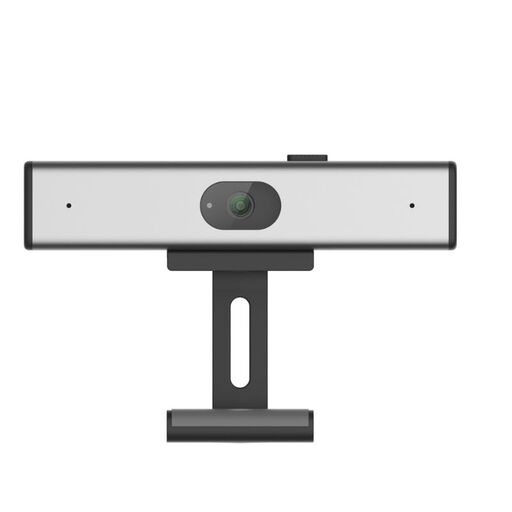
This clip-on PC webcam is labelled 2K QHD and EU Version. For home meetings, check its framing at your usual distance and confirm that this variant works with your computer and calling app.
View on Joybuy
Webcam questions answered
What field of view suits a one-person home call?
A narrower view is a useful starting point if you want your face and less of the room in frame. PCMag UK describes approximately 65°–90° across webcams, with 78° around the middle; check a live preview from your normal seat before deciding.
Will a 4K webcam improve every Teams or Zoom call?
Not necessarily: the calling app, computer and connection affect the video delivered to other people. Higher resolution may help when you need to crop, but resolution and motion are separate choices: Logitech specifies 4K/30fps and 1080p/60fps modes for its Brio 4K.
Why might a webcam work in one Windows app but not another?
Camera-access settings can differ by application type. Microsoft Support advises checking camera access for individual Microsoft Store apps and the desktop-app setting used by browsers and conferencing applications such as Teams.
Does a physical shutter address workplace video monitoring?
A shutter covers the lens when you use it, but it does not settle an employer’s monitoring responsibilities. The Information Commissioner’s Office explains that worker monitoring raises obligations under the UK GDPR and Data Protection Act 2018; questions about a workplace’s recording practices need to be addressed by the organisation.


