For a seated, slide-led project update, start with a 720p or 1080p webcam that frames you without showing more of the room than you want; Microsoft recommends those resolutions for Teams presentations. Consider 4K capture or additional framing and lighting controls if you show physical materials, move around or present against a bright window, but check what your meeting app and setup can use.
Who needs which webcam features?
Desk-bound project presenters
If you share slides while seated at a fixed desk, concentrate on a useful face-and-shoulders view rather than resolution alone. Microsoft recommends a 720p or 1080p webcam for Teams presentations; the image your colleagues receive also depends on the meeting service.
Presenters working against a bright window
If daylight changes during your update, look at documented light-correction, HDR or backlight-compensation features. Logitech, Creative and Razer describe such features on particular models, but their specifications do not guarantee the same result in every room.
Presenters showing physical work
If you sometimes hold up a prototype, show desk materials or move while explaining progress, check the field of view and focus behaviour. Automatic framing may be useful for movement; a wider view will also show more of the room.
What matters when choosing a webcam?
Decide what colleagues need to see during your usual update, then check lighting, framing and setup against that task. Higher capture resolution is not a substitute for a suitable view or a usable meeting-app setting.
| Concern |
What to check |
Who this matters to |
| Clear desk presentation |
Check the 720p or 1080p mode, a suitable field of view and the HD settings available in your meeting app. |
If I mainly present slides from my desk, I want colleagues to see my face clearly without relying on a capture mode they cannot receive. Around 36% of consumers put platform-appropriate video first. |
| Difficult lighting |
Look for documented light correction, HDR or backlight compensation, and assess the view with your usual window and desk lighting. |
A bright window behind me can make my face harder to see during a daytime update. For roughly 29% of consumers, managing difficult lighting is the primary concern. |
| Materials and movement |
Check whether the field of view fits your demonstration, plus the focus type or documented auto-framing behaviour. |
When I show a prototype or move towards a board, a fixed talking-head view may leave part of the explanation out of frame. About 21% of consumers prioritise flexible framing. |
| Privacy and setup |
Confirm whether the model has a physical shutter, which USB connection its intended mode needs, and camera access in your meeting app. |
I want to cover the lens between calls and avoid connection problems just before presenting. Privacy and straightforward setup come first for approximately 14% of consumers. |
Buying mistakes to avoid
-
Choosing 4K solely for its resolution
Capturing 4K does not mean colleagues receive 4K. Zoom says group HD activates 720p for active-speaker video, while 1080p depends on account, enablement, hardware and bandwidth conditions.
Check your usual meeting service and settings before deciding whether 4K capture offers a framing or cropping benefit you will use.
-
Choosing the widest view without checking the background
A wide lens can include desk materials, but it can also show more of a private home-office space. Creative specifies a 95° field of view for Live! Cam Sync 4K; that width will not suit every seated presentation.
Choose a view that includes you and the materials you actually show, and check what remains visible behind you.
-
Assuming built-in microphones solve presentation audio
People following slides may rely on your voice more than your camera image. Microsoft advises presenters to prioritise clear audio and consider a wearable microphone or Teams-certified headset.
Test your voice from your normal seat, especially if the room has noise or echo.
A separate headset or wearable microphone may add another item to your presentation setup.
-
Overlooking connection, focus and permissions
Model-specific conditions can affect the mode you intend to use: Elgato specifies USB 3.0 for Facecam MK.2’s uncompressed output and a 30–120 cm fixed-focus range. Microsoft also notes that Windows or browser permissions can block a connected camera in Teams.
Check the required port and your seating distance before purchase, then allow camera access and test the meeting app before presenting.
Webcam brands for reference
Logitech
Its C920s and Brio 4K illustrate different choices for a fixed desk view and more adjustable capture.
- Logitech specifies 1080p/30 fps, autofocus, a 78° view and a physical privacy shutter for C920s. Brio 4K offers selectable 65°/78°/90° views and autofocus.
- Brio 4K’s higher capture resolution does not establish the resolution a meeting service will transmit.
Creative
Live! Cam Sync 4K is a wide-view option to examine if you show more of a desk or present with a bright light behind you.
- Creative specifies a 95° field of view, horizontal rotation, tilt and backlight compensation.
- Creative describes 4K and 2K output conditions involving third-party applications, so check the resolution choices in your conferencing app.
Elgato
Facecam MK.2 is worth examining for a controlled presentation from a consistent desk position.
- Elgato specifies 1080p/60, an 84° field of view and a 30–120 cm fixed-focus range.
- Its uncompressed output requires USB 3.0; Elgato specifies MJPEG output over USB 2.0, and the fixed-focus range matters if you change position.
Razer
Kiyo V2 provides a model to consider if automatic framing is relevant to a presentation in which you move.
- Razer specifies 4K/30 fps, auto-framing and light correction for Kiyo V2.
- Those manufacturer-described controls do not establish that a static update needs auto-framing or that a conferencing service will transmit 4K.
Joybuy webcams for home-office updates
These webcams cover fixed desk calls, adjustable framing and wider views for presentations involving physical materials. Compare each model’s stated features with your usual seating position, room and meeting app.
 No image available
j5create JVCU435 4K Webcam with 5x Digital Zoom and Remote Control
Consider this model if you need to adjust the view while presenting desk materials. The listing specifies 4K/30 fps capture, remote-controlled digital zoom and a privacy cover; check the video mode your meeting app can use.
The remote-control battery is not included.
View on Joybuy
 No image available
Targus 2K Webcam with Auto Focus
Its stated 67° field of view may suit a relatively narrow desk presentation; the listing also describes autofocus, lighting correction and a physical privacy slider.
Check the capture resolution for this variant before buying: its title says 2K, while its specification table and English description say Full HD 1080p.
View on Joybuy
 No image available
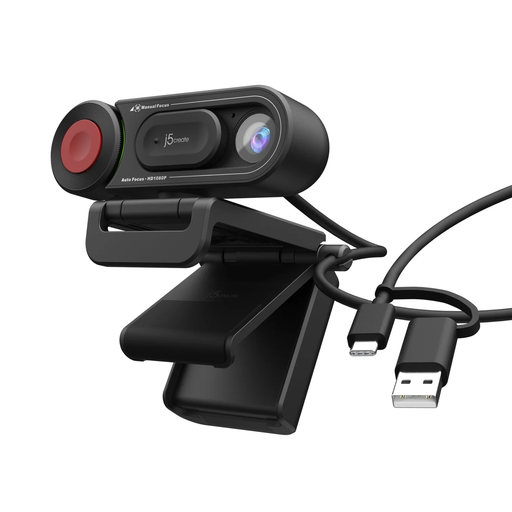
j5create JVU250 HD Webcam with Auto and Manual Focus Switch
For a routine seated update, this is a 720p option with both automatic and manual focus modes. Microsoft includes 720p webcams in its Teams presentation guidance; decide whether that level of image detail meets your needs.
View on Joybuy
 No image available
EMEET All-in-One 4K Webcam with Sony Sensor, 4-Mic Array and 98° Adjustable View
The adjustable 98° view is worth considering when your update needs to include more of a desk or another person. The listing specifies 4K/30 fps capture, fixed focus, a four-microphone array and integrated speakers.
Check the fixed-focus working distance against your seat, how much of the room the view includes and the resolution your meeting app can transmit.
View on Joybuy
 No image available
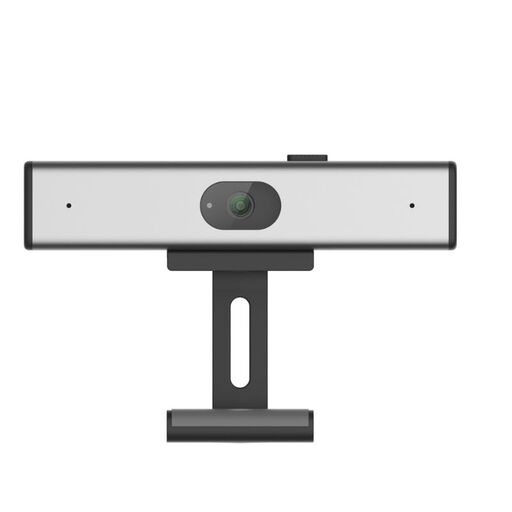
Philips SPL6308S/00 2K QHD PC Webcam, EU Version
This clip-on model is described for video calls and remote work, with 2K QHD/1440p capture and a noise-reduction microphone.
Before choosing it for your desk, confirm the focus behaviour, field of view, connector and compatibility with your meeting app.
View on Joybuy
Questions about presenting with a webcam
Do I need a 4K webcam for a project update on Zoom or Teams?
No: 4K is not necessary for every slide-led update. Microsoft recommends a 720p or 1080p webcam for Teams presentations, while Zoom says group HD activates 720p active-speaker video and places conditions on 1080p. Consider 4K capture if its framing or cropping options serve a task you actually have, rather than assuming attendees will receive 4K.
What should I test before presenting from home?
Test the camera and your voice from the seat and lighting you will use for the update. Check the view inside your meeting app, leave space in frame for anything you intend to show, and consider a wired internet connection; Microsoft recommends one for Teams presentations.
Why is my connected webcam not showing video in Teams?
Camera access may be blocked in Windows or your browser, even when the webcam is connected. Microsoft advises checking those permissions for Teams; also check that any physical privacy shutter is open before testing the call again.


