People training in changing light
If you attend from a kitchen table where daylight and room lighting vary, consider automatic light correction as well as capture resolution. Positioning the main light in front of you still matters.


For seated, face-to-camera training, choose a Full HD webcam with automatic light correction and a physical lens cover if those are your main needs. If you must show paperwork or objects on the table, consider adjustable framing instead—but check how much of the kitchen a wider view reveals and whether your computer permits any software needed to change the view.
If you attend from a kitchen table where daylight and room lighting vary, consider automatic light correction as well as capture resolution. Positioning the main light in front of you still matters.
If sessions involve notes, forms or objects on the table, look at how easily the camera can switch between your face and the materials. A wider view can also include parts of the room you would rather keep off camera.
If the webcam stays attached between sessions, a physical shutter or cover gives you a visible way to block its lens. Check that the camera also works with the training app and computer you will use.
Start with what the trainer needs to see: just your face, or materials on the table too. Then check lighting, privacy and compatibility for the place where you will actually join the session.
| Concern | What to check | Who this matters to |
|---|---|---|
| Face visibility in changing light | Look for automatic light or brightness correction, and plan where the main light will fall on your face. Do not use a resolution figure alone to judge lighting. | When daylight puts my face in shadow, I need other participants to see me throughout the session; roughly 40% of consumers would put face visibility first. |
| Framing people and materials | Check whether the field of view is fixed or adjustable and, if adjustable, whether changing it requires software you can use. | If I need to show a document and then return to a face-to-camera view, I want control over what else enters the frame; around 30% of consumers would prioritise framing. |
| Privacy and straightforward setup | Check for a physical lens cover, support for your training app and computer, and whether you plan to use a headset or the webcam microphone. | In a shared kitchen, I want to join without a complicated setup and cover the lens afterwards; about 30% of consumers would make privacy and simple participation their primary concern. |
A wide view can help with demonstrations, but it may also show other people or private parts of a shared kitchen. The Logitech C920s has a fixed 78° view; AnkerWork and HP list selectable views for the PowerConf C200 and HP 625 respectively.
Begin with a frame that shows you and any essential materials, then widen it only when the activity requires more table space.
A higher capture resolution does not establish how your face will look under uneven kitchen lighting or whether the webcam will work with your training setup.
Check the training app, computer operating system and available USB connection. Consider where the camera will sit relative to your main light source.
Built-in or multiple microphones are useful specifications to compare, but they do not establish how clearly others will hear you when there is household noise or echo.
If audio is important to the session, try your setup in the room beforehand and consider using a headset.
Using a headset means keeping another device ready for the session.
A physical shutter or cover lets you block the lens between sessions, which can be useful when the webcam remains on a laptop in a shared room.
If that visible privacy control matters to you, check that the particular model has one and close it when the session ends.
Its Brio 100 and C920s illustrate two Full HD approaches to seated training calls: a straightforward camera and a model with a specified fixed frame.
The PowerConf C200 is relevant when training alternates between a close view and showing materials on the kitchen table.
The HP 625 FHD Webcam is worth examining if your sessions centre on Teams and you also want adjustable framing.
These webcams offer different ways to attend a seated training call, including options for changing the view and a simpler HD camera. Compare their stated features with your lighting, framing and privacy priorities rather than assuming that every model meets the same needs.
 Image unavailable
Consider this model if you want to change the view while demonstrating something at the table. Its title specifies remote-controlled 5x digital zoom; check how its lens cover, lighting behaviour and USB connection fit your setup before ordering.
 Image unavailable
This is an option to examine if a wider, adjustable view would help you include training materials. Its fixed focus makes it worth checking how you intend to position objects near the camera; also confirm whether it has the physical cover and light correction you want.
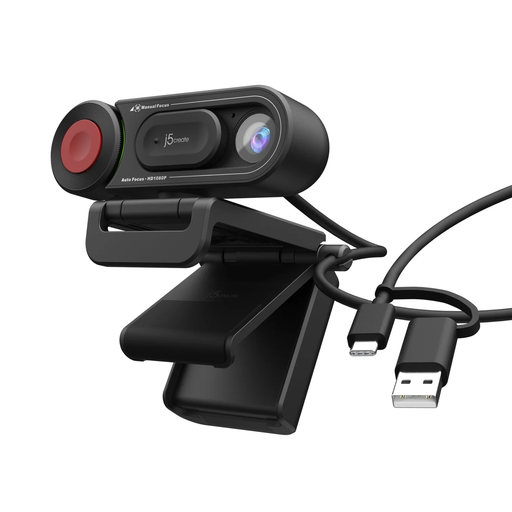 Image unavailable
Consider this camera for straightforward face-to-camera attendance if HD capture meets your needs. The named auto and manual focus switch may be relevant when setting up your seat; check the capture resolution, lens-cover provision and lighting features if those are deciding factors.
A USB plug-in webcam is among the video options in Zoom's desktop-app system requirements. Check that your computer, the version of the app used for training and any device-management rules also allow your chosen setup.
Choose a wider view when the trainer needs to see materials or more than one person, not simply because the widest setting is available. For ordinary seated participation, use a frame that keeps you visible without including unnecessary parts of the room; check whether changing the view requires additional software.
For products placed on the Great Britain market, GOV.UK guidance says CE marking continues to be recognised alongside or in place of UKCA marking where applicable. That guidance concerns England, Scotland and Wales; if delivery is to Northern Ireland, check which marking arrangements apply to the product there.
Treat an old webcam as electrical equipment when considering disposal. GOV.UK guidance on waste electrical and electronic equipment addresses its recovery, reuse and recycling; check available retailer take-back or local electrical-waste collection options rather than putting it straight into general waste.