Who needs which mixer choices?
A buffet range works better when guests can distinguish a drink made without alcoholic ingredients from a lower-alcohol mixed serve, then choose the flavour and format they prefer.
Hosts serving alcohol-free guests
Keep a clearly identified route for drinks made without alcoholic ingredients. A neutral mixer and a tonic or other flavour-led option give guests more than one way to make a soft drink; check every ingredient before calling a finished serve alcohol-free.
Hosts offering a low-calorie tonic
A separate tonic choice helps guests compare nutrition labels without assuming that every product called “light” or “slimline” has the same sugar content. Tesco and Sainsbury’s low-calorie tonic examples each state 2 kcal per 100 ml, but check the exact pack being served.
Hosts running a self-serve drinks table
Bottles can supply repeated pours, while cans provide individual portions. Plan where opened bottles will be kept and retain their labels: Tesco’s 1 L low-calorie tonic listing instructs refrigeration after opening and use within three days.
What matters when choosing buffet mixers?
Decide which drinks can be served without alcohol, then compare flavour, nutrition labels and pack formats for the number of serving routes you want.
| Priority |
What to check |
Your needs |
| Drink description |
Check the ABV of every ingredient added to the mixer and the resulting serve. UK Department of Health and Social Care guidance describes low-alcohol drinks as 1.2% ABV or less. |
I want guests to be able to tell which drinks contain no alcoholic ingredients and which are intended as lower-alcohol serves. |
| Sugar and calories |
Compare nutrition values on the same per 100 ml basis, then read the sweetener list. Tesco and Sainsbury’s low-calorie tonic examples state 2 kcal per 100 ml; that does not describe every light tonic. |
A familiar tonic with lower stated sugar or calorie values matters to some guests, but I would still offer another flavour choice. |
| Flavour choice |
Compare a neutral mixer, a classic quinine-led tonic and a citrus or botanical option by their stated ingredients. Fentimans describes lemon oil and lemongrass in its Premium Indian Tonic; flavour preference remains personal. |
Some guests may want a bitter tonic, while others would rather make a drink with a different flavour profile. |
| Serving format |
Compare bottle volume with can size and count. Check how opened bottles must be stored and whether they can be refrigerated during service. |
For a self-serve table, I want enough for repeated pours without opening every bottle before guests arrive. |
| Ingredient access |
Keep the current pack’s ingredient and allergen information available, especially if drinks are decanted. Ask a caterer how guests can obtain information about mixed serves. |
Guests should be able to check what is in a drink before choosing it. |
Which brands illustrate the mixer options?
These product-line examples show differences worth checking on the exact pack; a brand name alone does not establish a mixer’s nutrition values or ingredients.
Fever-Tree
Its Indian tonic range includes regular and Refreshingly Light variants.
- Fever-Tree positions its Premium Indian Tonic for drinks with gin, vodka or fortified wine.
- The brand says Refreshingly Light Premium Indian Tonic has 50% fewer calories than its regular version; that relative claim does not make it sugar-free.
Fentimans
A botanical tonic option for a different flavour route.
- Fentimans lists herbal infusions, Sicilian lemon oil and lemongrass extract for its Premium Indian Tonic.
- The same product lists 4.4 g sugars per 100 ml; check the label if sugar content affects the choice.
Britvic
An example of classic and zero-sugar Indian tonic variants in cans.
- Britvic’s September 2023 announcement described 330 ml can multipacks in both variants.
- That dated announcement does not establish which variant or pack format is available for an order now.
Tesco
Own-label low-calorie Indian tonic is listed in a 1 L bottle and a 6 × 250 ml can pack.
- Tesco’s low-calorie tonic listing states 2 kcal and 0 g sugars per 100 ml.
- Check the delivered pack’s ingredients and storage directions before serving.
Sainsbury’s
Own-label diet and standard Indian tonic provide two distinct label comparisons.
- Sainsbury’s lists 2 kcal per 100 ml for its Diet Indian Tonic Water and 18 kcal per 100 ml for its standard Indian Tonic Water.
- Do not substitute the standard bottle for the diet variant without checking which nutrition profile guests expect.
Joybuy tonic options for a wedding buffet
These tonic multipacks offer portioned cans for a buffet table. Compare the exact labels for sugar, ingredients and ABV before assigning a product to a particular serving route.
 No image available
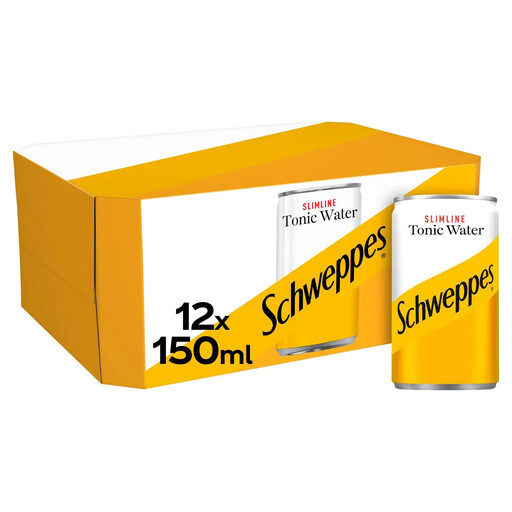
Schweppes Slimline Tonic Water, 12 × 150 ml
The 150 ml cans provide individual tonic portions for a self-serve table. If sugar content or sweeteners matter to guests, check the exact pack label; check all added ingredients before describing a finished drink as alcohol-free or low alcohol.
View on Joybuy
 No image available
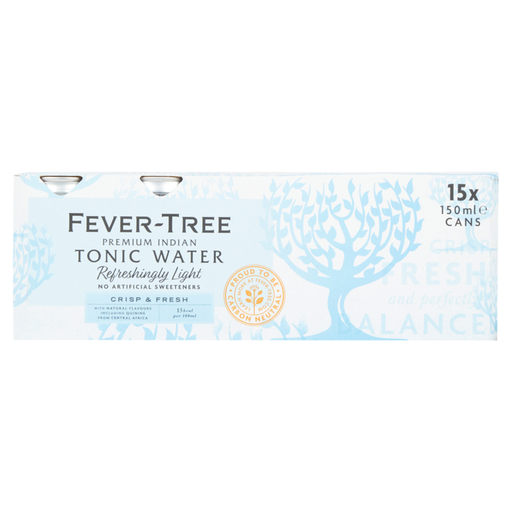
Fever-Tree Refreshingly Light Premium Indian Tonic Water, 15 × 150 ml
This 15-can pack offers portioned Indian tonic for guests who prefer that style. “Refreshingly Light” distinguishes the variant, but check its nutrition panel rather than treating the name as a sugar-free claim.
View on Joybuy
 No image available
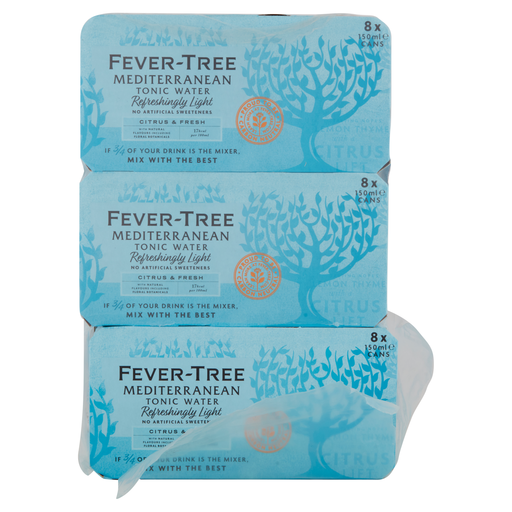
Fever-Tree Refreshingly Light Mediterranean Tonic Water, 8 × 150 ml
The eight-can pack provides a separate Mediterranean tonic option alongside a classic Indian tonic. Check the ingredients and nutrition panel if choosing it for a particular flavour or sugar preference.
View on Joybuy
 No image available
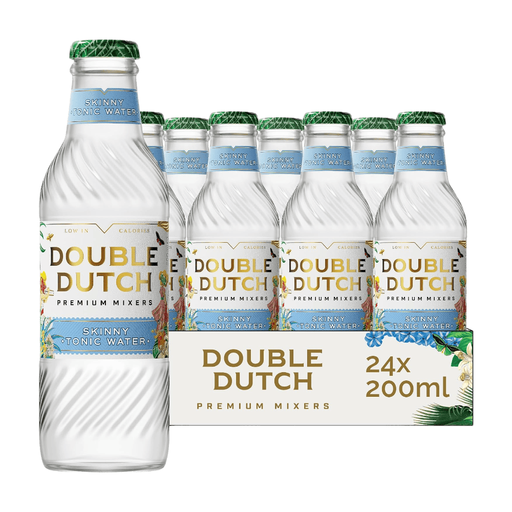
Double Dutch Skinny Tonic, 24 × 200 ml
The 24-can pack allows individual 200 ml portions at a drinks table. Check the pack’s nutrition and ABV information rather than using “Skinny” to infer either; the finished drink also depends on what is added.
View on Joybuy
 No image available
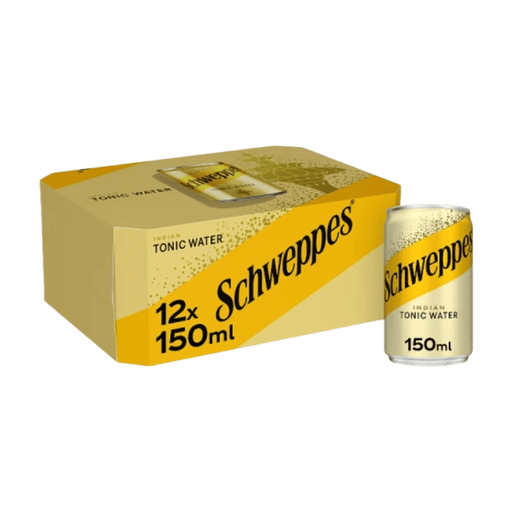
Schweppes Indian Tonic Water, 12 × 150 ml
This 12-can pack supplies individual portions of standard Indian tonic. Keep its label available so guests can distinguish it from the Slimline variant and check ingredients and nutrition values themselves.
View on Joybuy
Questions about wedding buffet mixers
Does a low-calorie mixer make the finished drink low alcohol?
No. Calorie content does not establish ABV. UK Department of Health and Social Care guidance describes low-alcohol drinks as those at 1.2% ABV or less, so check the ingredients and finished serve before using that description.
Which mixer styles should I put on a wedding buffet table?
A neutral mixer, a low-calorie tonic and a different flavour option provide distinct choices without requiring several similar tonics. Check which products can be served without alcoholic ingredients, and label mixed serves according to what actually goes into them.
Should I choose 1 L bottles or cans?
Choose bottles for repeated pours when you can follow their opened-pack storage directions; cans suit individual portions or a separate mixer option. Tesco lists its low-calorie Indian tonic in both a 1 L bottle and a 6 × 250 ml can pack, so compare formats against how the table will be served.
How should I handle tonic bottles after opening?
Follow the exact bottle’s directions and open stock in stages. Tesco’s 1 L low-calorie tonic listing says to refrigerate after opening and consume within three days; do not assume another product has identical instructions.
How can guests check ingredients in mixed drinks?
Keep original mixer labels accessible, particularly if drinks are decanted, and identify every ingredient added to a mixed serve. If a caterer prepares the drinks, ask how guests can obtain ingredient and allergen information before choosing one.


