
24/7 全天候客户支持

免费退货

当日/次日达

品质保障

开启新人专享福利: 全场免邮 | 低至 2 折 | 免费试用 30 天 JoyPlus 会员
下载 Joybuy
Managing medicines, vitamins or supplements becomes easier when each dose has a clear place. However, a weekly pill organiser is not automatically suitable simply because it has seven compartments. The wrong design can create confusion, spill tablets in a handbag or become difficult to open after a few weeks.
This guide explains the practical features UK shoppers should check before buying, followed by our top recommendations for different routines and budgets.
A basic 7 day pill box may provide one compartment per day, but that does not necessarily suit people taking tablets at different times. If your routine includes morning and evening doses, look for an AM PM pill organiser. For three or four daily doses, choose a clearly separated 3 times a day pill organiser or 4 times a day pill organiser.
A box with the wrong layout may encourage users to place different doses together, making the organiser less useful.
Large lids and push buttons can be helpful for older users or people with arthritis. Yet lids that open too easily may spill tablets in a coat pocket or travel bag. Check whether the product uses a snap-shut closure, push-button mechanism or separate removable cases.
The most suitable closure depends on the user: a secure snap lid may suit travel, while a push-button lid may be easier for limited dexterity.
An airtight pill container can help limit exposure to moisture, but product descriptions do not replace storage instructions. Some medicines may need to remain in their original packaging, and certain tablets should not be removed from blister packs until required. Always follow the medicine label and ask a pharmacist if you are unsure.
A pill organiser is generally more straightforward for vitamins and supplements, but large capsules still require sufficient compartment space.
Capacity should be assessed by the size and number of items you take, not just by the word “large”. Fish oil capsules and bulky supplements need deeper compartments than small tablets.
Useful product information may state an approximate capacity, such as the number of capsules, fish oils or vitamins per section. Treat these figures as guides because tablet shape varies. A large capacity pill box is useful only if the lid still closes securely after filling.
Choose the layout that matches your routine:
Clear day labels are important for carers and anyone checking whether a dose has already been prepared.
Look for clearly stated materials such as BPA-free plastic, food-grade polypropylene or PP plastic. These descriptions identify the construction material, but do not mean every medicine is suitable for long-term storage outside its original packaging.
Also check:
Avoid abrasive cleaners unless the manufacturer specifically permits them. Keep all medicines away from children and pets.
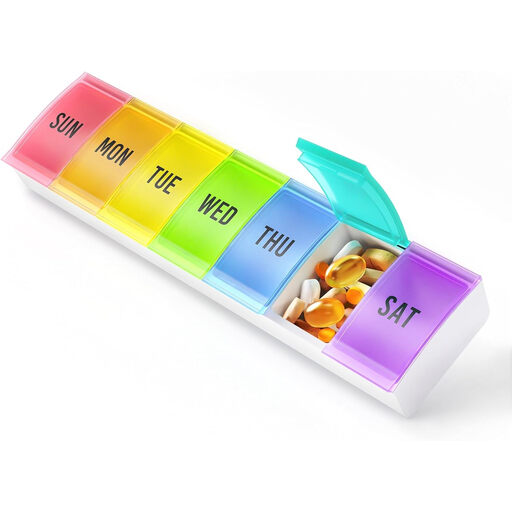
Why This Fits Their Persona: A straightforward seven-compartment daily pill case for people beginning a weekly medication or supplement routine at home.
It has secure snap-shut lids and day labels with stated fade-resistant 3D printing, rather than relying on loose or unmarked sections.
BPA-free plastic, seven compartments and ergonomic lids designed for easier opening.
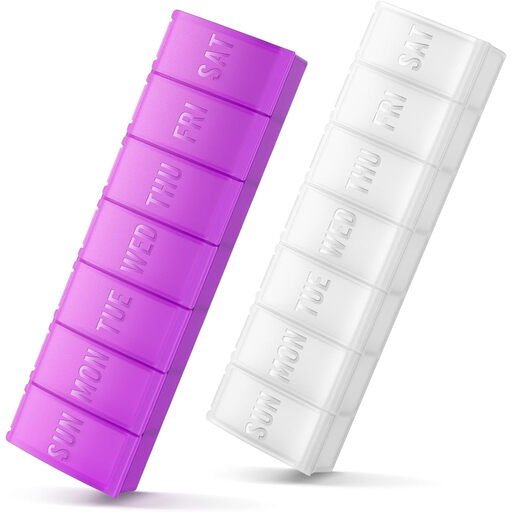
Why This Fits Their Persona: Suitable for users who prefer roomy compartments, permanent-looking labels and a two-pack for home and travel use.
The specification lists etched day labels and smooth hinges, addressing labels that peel and lids that become awkward to operate.
BPA-free medical-grade plastic, large compartments and two organisers in the listed pack.
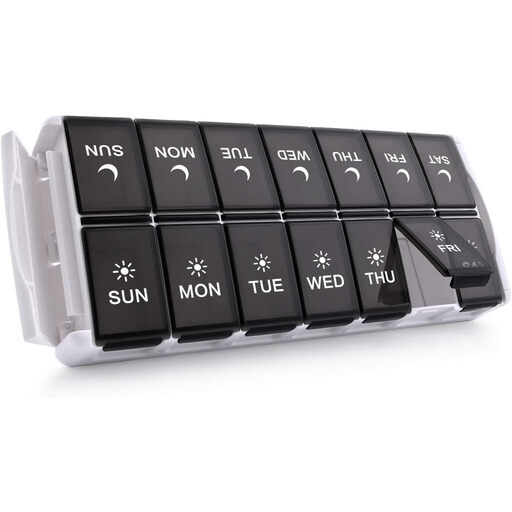
Why This Fits Their Persona: Designed for people managing substantial morning and evening doses, including larger vitamins, fish oils or supplements.
Its AM/PM structure avoids mixing doses, while the removable bottom cap is intended to make weekly filling more convenient.
Seven days of AM/PM sections and stated capacity of approximately 11 fish oils, 12 large vitamins or 18 capsules per compartment.
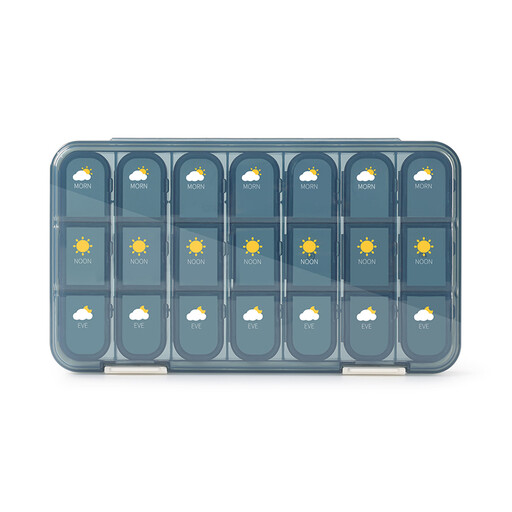
Why This Fits Their Persona: A portable pill organiser with removable daily boxes for holidays, office use or carers preparing a week away from home.
The listed snap-lock lid and silicone sealing ring address accidental opening and moisture concerns, although the seal should be checked regularly.
Seven removable daily compartments, 21 total compartments and a stated silicone sealing ring.
A daily pill case is convenient when the organiser stays beside the bed or in a kitchen cupboard. A detachable pill case is more practical when only one day’s doses need to be carried.
For users taking three doses daily, a detachable 3 times a day pill organiser can separate morning, afternoon and evening tablets. A four-dose layout may be preferable when the schedule includes breakfast, lunch, dinner and bedtime. Before buying, confirm that the labels match your actual routine rather than adapting your routine to the box.
We have compiled a complete, real-time list of products that fully satisfy these strict selection criteria and UK safety regulations.
Wash or wipe the organiser according to its instructions and ensure every compartment is completely dry. Fill it in a quiet, well-lit place, checking the day and dosing labels against your medicine list. Keep medicines in their original packaging when required by the label or pharmacist.
Lifespan depends on the plastic, hinges, labels and frequency of opening. Replace the organiser if a lid no longer closes, a compartment cracks, labels become unreadable or the seal is damaged. Product cycle claims are useful for comparison, but everyday handling and cleaning affect wear.
A travel pill organiser can reduce bulk, particularly when daily sections detach. For air travel or prescription medicines, keep medicines and relevant documentation in line with current travel advice, and check whether original packaging is recommended. Choose a secure closure and avoid leaving the organiser in direct sunlight or excessive heat.