
24/7 全天候客户支持

免费退货

当日/次日达

品质保障

开启新人专享福利: 全场免邮 | 低至 2 折 | 免费试用 30 天 JoyPlus 会员
下载 Joybuy
A weekly pill organiser can make daily medication, vitamins and supplements easier to manage, whether you live independently, support an older relative or travel regularly. However, choosing the right design involves more than counting compartments.
Some products look practical online but become frustrating when lids are difficult to open, labels fade or compartments are too shallow for larger capsules. Before buying, check how the organiser matches your routine, dexterity, storage needs and travel habits.
A compact case may suit a few tablets, but it can be unsuitable for fish oil, large vitamins or several supplements taken together. Marketing descriptions sometimes focus on the overall size without explaining usable compartment space.
Check whether the product provides separate capacity details. A large capacity pill dispenser should accommodate the items you take regularly without forcing lids open or mixing different doses.
A daily medicine organiser may have small tabs, stiff hinges or lids that require considerable finger pressure. These details matter for people with arthritis, limited hand dexterity or long nails.
Look for push-button or ergonomic lids, smooth hinges and a closure that can be operated without excessive force. A secure lid is useful, but it should not make every opening unnecessarily difficult.
A pill box described as moisture-resistant is not automatically waterproof. Likewise, a snap-shut lid may reduce exposure to humidity without creating a tested airtight seal.
For bathrooms, handbags or humid travel conditions, look for a stated silicone sealing ring or moisture-resistant construction. Even then, avoid immersing the organiser unless the manufacturer specifically says it is waterproof.
Start with your schedule. A standard 7-day pill organiser normally provides one compartment for each day, while an AM/PM pill organiser separates morning and evening doses. If you take medicine three or four times daily, choose a layout that reflects those timings rather than trying to divide one compartment manually.
For occasional trips, a travel pill box or portable pill case may be more convenient than carrying a full weekly organiser. A four- or six-compartment case can hold a small selection of tablets, vitamins or supplements in a handbag or washbag.
Also check the dimensions and compartment depth. Product descriptions may provide external measurements but not the capacity of each section.
Large, clearly marked day labels help reduce confusion when preparing medicines. Permanently etched or fade-resistant markings are preferable to thin stickers, particularly if the organiser is opened and closed frequently.
For an organiser for arthritis, look for broad lids, push buttons or ergonomic edges. A carer preparing medicines for someone else may also prefer strong visual contrast between compartments and days.
BPA-free plastic is commonly used for pill containers. Food-grade or medical-grade plastic can be a useful material detail, but it does not mean the organiser is suitable for every type of medicine or liquid.
A secure snap closure helps keep tablets contained if the box is knocked over. An airtight pill container with a silicone seal may offer additional protection from humidity, but the seal should be checked regularly for cracks or distortion.
For routine care:
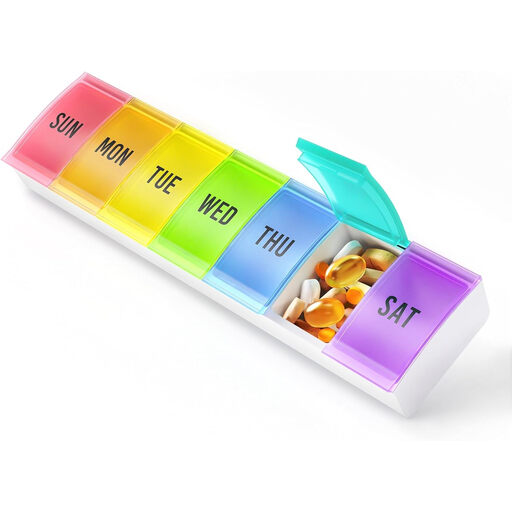
Why This Fits Their Persona: A straightforward seven-compartment format suits someone starting a weekly medication, vitamin or supplement routine at home.
The product lists ergonomic lids, secure snap-shut closures and fade-resistant 3D day labels, addressing difficult opening and unclear markings.
Seven compartments; BPA-free food-grade plastic; stated capacity of up to 8 fish oils or 17 capsules per compartment.
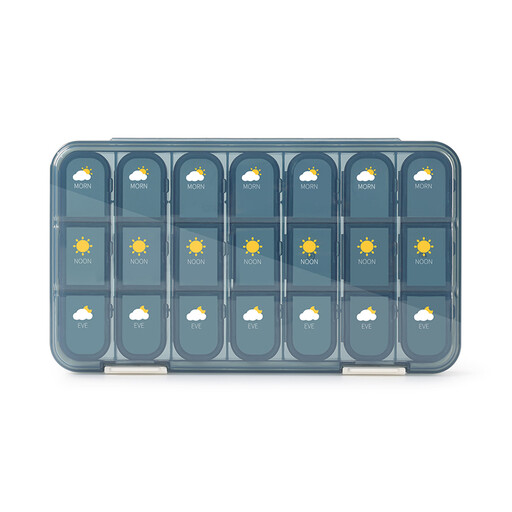
Why This Fits Their Persona: Suitable for users who want separate daily sections with additional space for more than one dosing time or several supplements.
Its removable daily compartments and silicone sealing ring provide a clearer separation system than a single undivided weekly tray.
Seven removable daily boxes; 21 compartments; snap-lock lid with a silicone sealing ring; designed for home, office and travel use.
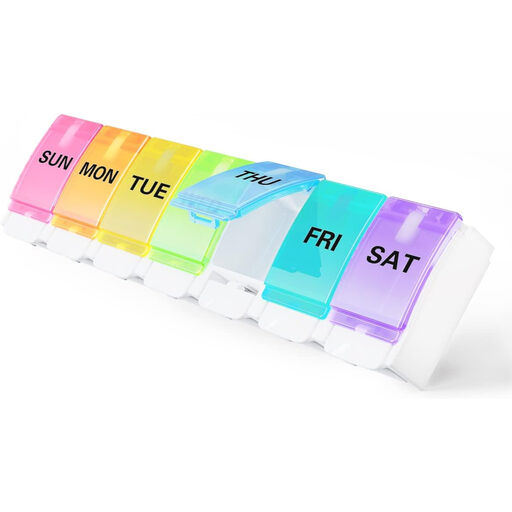
Why This Fits Their Persona: A practical match for people taking separate morning and evening medication, vitamins or supplements throughout the week.
The AM/PM arrangement reduces the need to place two daily doses in one compartment, helping address capacity and schedule mix-ups.
Push-button lids; large compartments; seven-day morning and evening format; BPA-free polypropylene construction.
We have compiled a complete, real-time list of products that fully satisfy these strict selection criteria and UK safety regulations.
Refill the organiser on a consistent day and compare each compartment with the original medicine packaging. A written schedule or reminder can help carers check whether the correct dose has been prepared.
For holidays or weekends away, consider transferring only the amount needed into a portable pill case, while keeping prescription details and original packaging available where appropriate. Do not leave medicines in direct sunlight, excessive heat or damp areas.
A pill organiser is a storage aid, not a substitute for medical advice. If a medicine must remain in its original packaging, needs refrigeration or should not be exposed to air or moisture, follow the label and ask a pharmacist before using a separate container.
Lifespan depends on the plastic, hinges, seals and how often it is opened. Replace the organiser if it develops cracks, loose closures, unreadable labels or a damaged silicone seal. A stated opening-cycle figure can provide useful context, but it is not a guarantee of service life in every household.
Not always. Some medicines have specific storage requirements or should remain in their original blister or packaging. Check the dispensing label or ask a UK pharmacist before transferring tablets and capsules.
A daily medicine organiser usually provides one section per day. An AM/PM pill organiser divides each day into two dosing periods, making it more suitable for routines that distinguish morning and evening medication. For four daily doses, choose a product specifically designed with four time sections.