
24/7 Customer Support

Free returns

Same-day & Next-day Delivery

Quality Guaranteed

Unlock Your Welcome Offers: FREE Delivery | Up to 80% OFF | Free 30-day JoyPlus trial
Download the APP
Managing daily medication, vitamins or supplements is easier when every compartment has a clear purpose. However, a weekly pill organiser is only useful if its layout, capacity and closures match your routine. A compact daily pill box may suit occasional use, while a 7-day pill organiser with multiple sections can be more practical for complex schedules.
Before buying, look beyond colour and promotional phrases. The following checks can help UK households avoid common design and storage problems.
A slim medicine organiser may look convenient but leave little room for large tablets, fish-oil capsules or several supplements. Check the internal capacity rather than relying on external dimensions. Some product descriptions provide a useful indication, such as space for approximately eight fish oils or 17 capsules per compartment.
If you take several items at once, consider a large-capacity pill dispenser or a layout with multiple daily sections. Overfilling compartments can make lids difficult to close and may cause tablets to mix.
A stiff snap lid can be frustrating for users with arthritis, reduced grip strength or long nails. Conversely, a lid that opens too easily may be unsuitable for carrying in a handbag or suitcase.
Look for practical details such as:
An arthritis-friendly pill box should be easy to open without compromising the security of the contents.
A listing may use terms such as moisture-proof, sealed or waterproof, but these descriptions do not necessarily mean the organiser can be submerged or exposed to heavy rain. A silicone sealing ring and snap-lock lid can help limit moisture entry, but the organiser should still be kept dry and away from bathrooms with high humidity.
For medicines with specific storage requirements, follow the instructions supplied with the product or ask a pharmacist. Do not transfer medicines if the original packaging contains important directions, expiry information or safety warnings that you need to retain.
First, count how many doses you need each day. A basic daily pill box may have one compartment, while an AM and PM pill organiser separates morning and evening doses. Other designs provide three or four sections per day for more complicated routines.
A 7-day organiser with seven removable daily boxes can be useful for preparing a full week, while a 21- or 28-compartment system may offer more frequent dosing divisions. Check whether the compartments are removable, as this affects how easily you can carry one day’s supply.
Food-contact plastic such as BPA-free polypropylene is commonly used for pill containers. The material should be described clearly, with no strong odour, sharp edges or loose hinges when received.
Cleaning instructions matter. Many organisers can be wiped with a damp cloth or washed gently with mild soap and water. Allow every compartment to dry completely before refilling. Avoid abrasive cleaners, dishwashers or heat unless the product instructions specifically permit them.
Permanent or fade-resistant day labels can be more practical than stickers, particularly if the organiser is opened repeatedly. For travel, check the overall size, weight and whether the daily sections can be removed.
A portable pill case should fit your intended bag or pocket without forcing the lids open. If you need protection from humidity, choose a design that specifically describes a sealing ring or moisture-resistant construction, while still storing it in a cool, dry place.
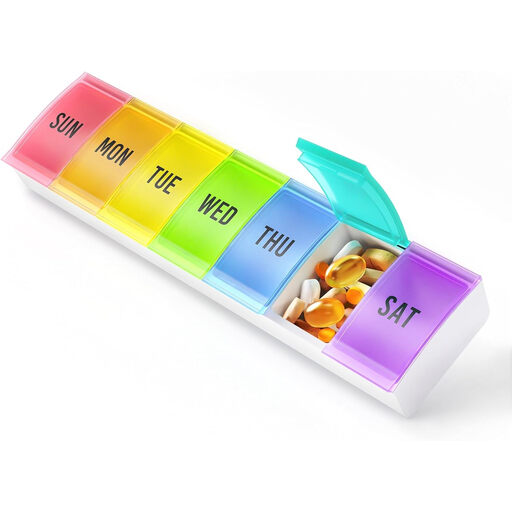
Why This Fits Their Persona: Its seven-day layout offers a straightforward way to organise a regular medication, vitamin or supplement routine without adding multiple daily sections.
The product description specifies ergonomic lids, secure snap-shut closures and clearly printed day labels, addressing difficult opening and unclear identification.
Seven compartments; BPA-free plastic; stated capacity for larger supplements; colour covers and fade-resistant 3D day printing.
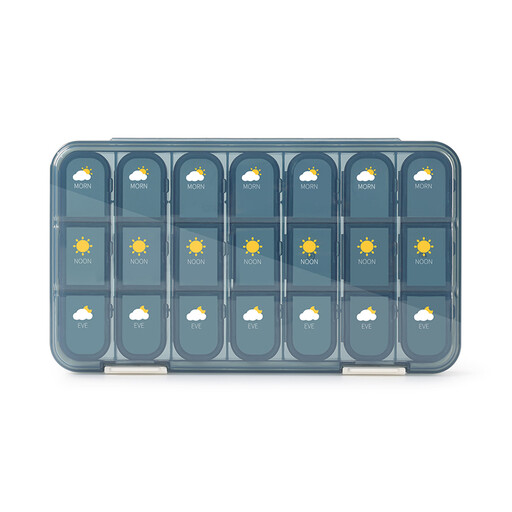
Why This Fits Their Persona: This option suits users who want a prepared weekly system for home, work, bedside storage or travel, particularly when moisture protection is a consideration.
Its listed snap-lock lid and silicone sealing ring provide more specific closure information than a generic “sealed” label.
Seven removable daily boxes; Monday-to-Sunday markings; food-grade PP plastic; large-capacity format for tablets, capsules and supplements.
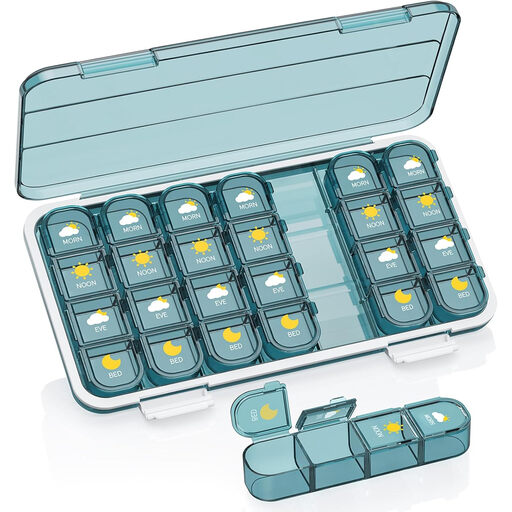
Why This Fits Their Persona: Users with several daily dosing points can separate medicines, vitamins or supplements across four labelled periods for each day.
The four-times-a-day structure avoids forcing multiple doses into one small compartment and helps reduce mix-ups between dosing periods.
Seven-day format; four daily sections; separate case design; intended for vitamins, fish oils and supplements.
We have compiled a complete, real-time list of products that fully satisfy these strict selection criteria and UK safety regulations.
When filling a weekly organiser, use clean, dry hands and check each label against your prescription or supplement routine. Keep the original boxes, blister packs and leaflets so that medicine names, expiry dates and storage instructions remain available.
Do not place liquids, creams or unsuitable tablets into a compartment unless the product instructions and medicine guidance allow it. Store the organiser away from children and pets, direct sunlight and high temperatures. A car dashboard or steamy bathroom may expose contents to conditions that are unsuitable for some products.
It can be suitable for some routines, but not every medicine should be removed from its original packaging. Check the dispensing label and ask a pharmacist if you are unsure about light, moisture, packaging or storage requirements.
Lifespan depends on the plastic, hinges, labels and frequency of use. Inspect the organiser regularly for cracks, loose lids, damaged seals or faded markings. Replace it if compartments no longer close securely or labels are difficult to read.
A travel pill organiser is usually smaller and designed for carrying a limited number of doses. A weekly pill organiser generally provides seven days of storage and may offer larger compartments or multiple sections per day. Choose according to the number of doses, capsule size and length of your trip.