
24/7 全天候客户支持

免费退货

当日/次日达

品质保障

开启新人专享福利: 全场免邮 | 低至 2 折 | 免费试用 30 天 JoyPlus 会员
下载 Joybuy
A weekly pill organiser can make a daily routine easier to manage, whether you are sorting prescription medicines, vitamins, fish oil or supplements. However, the first product that looks convenient may not suit your dosing schedule, hand strength or travel habits.
The useful choice is not necessarily the largest box. It is the one with the right compartment layout, readable labels, dependable closures and enough room for the items you take each day.
Product photos can make a pill box look spacious, but dimensions vary considerably. Large capsules, fish oils and several tablets may quickly fill a standard compartment. Check the stated capacity and internal dimensions where available, rather than relying on the phrase “large capacity”.
A 7-day pill box with one compartment per day may suit a simple routine, but it is less practical if you take medicines in the morning and evening or need separate doses throughout the day.
A lid that is easy to open should still close securely. Loose covers may spill contents in a handbag or suitcase, while stiff hinges can be frustrating for older users or people with arthritis. Look for the actual opening mechanism, such as a push button, ergonomic tab or snap-shut lid, instead of relying only on promotional wording.
Some medicines may be affected by moisture, light or being removed from their original packaging. Before transferring prescription medicine, ask a pharmacist whether a weekly medicine organiser is appropriate for that product. Keep medicines away from children, pets, heat and damp areas, and follow the storage instructions on the packaging.
An organiser is a storage aid, not a replacement for professional dosage advice. It should not be used to change when or how much medicine you take.
Start by counting the doses you need each day:
For carers, a layout with clear day and dose markings can make weekly preparation easier. Detachable sections may also be useful when only one day needs to be taken to work, an appointment or a relative’s home.
Users with limited hand dexterity should prioritise:
An easy-open pill case still needs to be tested against your own hand strength. If possible, check customer images and dimensions before ordering. A detachable pill box can be convenient, but small removable units should be stored safely and kept away from children.
A BPA-free pill container made from food-grade or polypropylene plastic may be preferable for users who want a clearly specified material. BPA-free labelling describes the material composition; it does not mean every medicine is suitable for long-term storage outside its original packaging.
For a pill organiser for travel, check its closed dimensions, weight and closure style. A compact design is easier to pack, while a moisture-resistant or sealed construction may offer additional convenience. Nevertheless, keep the organiser in a dry place and retain original medicine information when travelling.
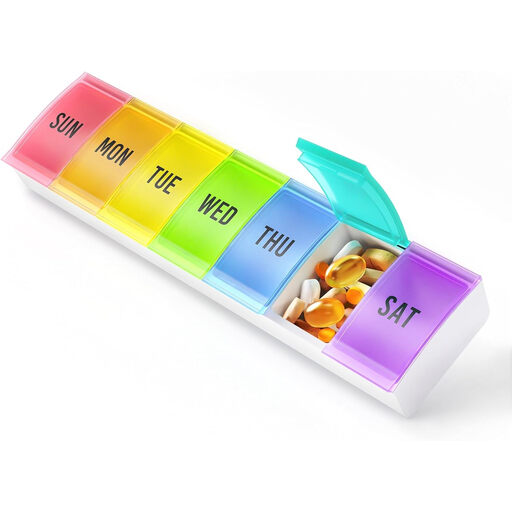
Why This Fits Their Persona: A straightforward seven-compartment design for people starting a daily medication or supplement routine at home.
The product specifies seven compartments, secure snap-shut lids and ergonomic covers, addressing unclear layouts and difficult closures.
BPA-free plastic; stated capacity of up to 8 fish oils or 17 capsules per compartment.
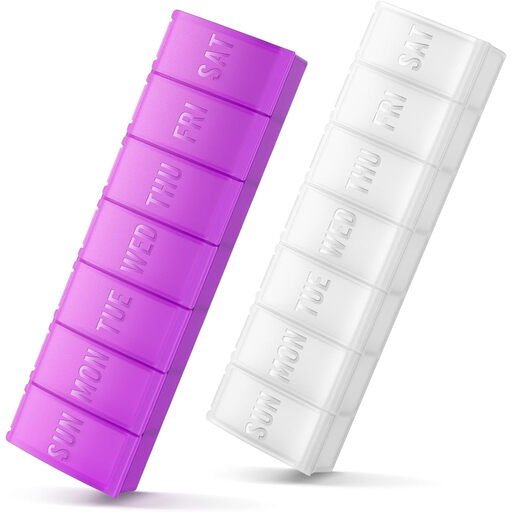
Why This Fits Their Persona: Suitable for users who want two weekly organisers for home and work, or separate medication and supplement routines.
Permanently etched day labels are specified, reducing reliance on labels that may peel or become difficult to read.
Two-piece set; BPA-free plastic with large compartments and easy-open lids.
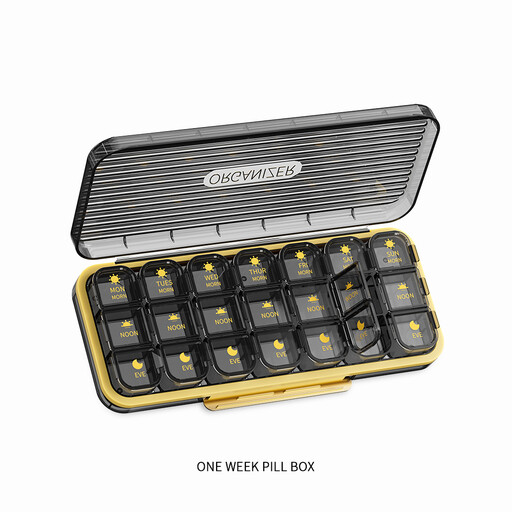
Why This Fits Their Persona: Designed for users who need morning, afternoon and evening separation across a week.
Its stated three-times-daily sorting avoids mixing doses in a single seven-day compartment.
Seven-compartment detachable format; intended for vitamins, fish oil and supplements.
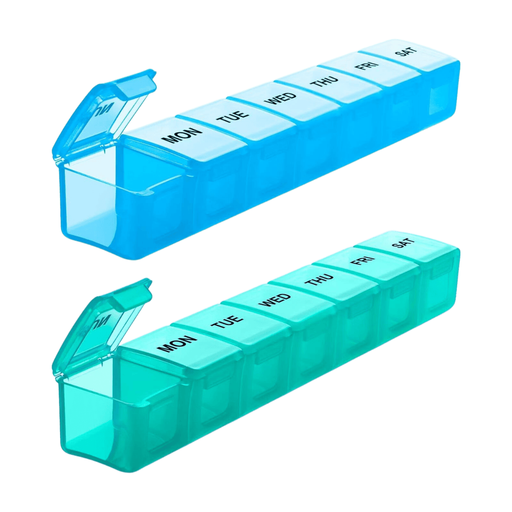
Why This Fits Their Persona: A practical option for bulky supplements, longer trips or keeping one organiser packed as a spare.
The listed 1.6mm construction, reinforced hinges and snap-shut lids address concerns about flimsy cases and accidental opening.
Two organisers; each compartment is stated to hold up to 12 fish oils or 13 large vitamins.
We have compiled a complete, real-time list of products that fully satisfy these strict selection criteria and UK safety regulations.
Lifespan depends on the plastic, hinges, labels, cleaning routine and how often the lids are opened. Replace it if a compartment no longer closes securely, labels become unreadable, cracks appear or the material becomes difficult to clean. Keep it dry before refilling and avoid abrasive cleaners unless the product instructions specifically allow them.
A compact, secure pill organiser for travel can be convenient, but check airline, destination and medicine requirements before departure. Keep prescription labels, original packaging and documentation with you where practical. For international travel, confirm requirements with the destination authorities or the relevant embassy.
It depends on your schedule. An AM/PM design is more suitable when doses are taken twice daily, while a 21-section organiser is designed for three daily time periods. If you only need one daily dose, a simple seven-compartment daily medication organiser may be easier to fill and carry.