
24/7 Customer Support

Free returns

Same-day & Next-day Delivery

Quality Guaranteed

Unlock Your Welcome Offers: FREE Delivery | Up to 80% OFF | Free 30-day JoyPlus trial
Download the APP
A weekly pill organiser can simplify medication, vitamin and supplement routines, but the right choice depends on more than colour or compartment count. A box that looks convenient online may be difficult to open, too shallow for fish oil capsules or prone to opening inside a handbag.
For UK households, carers and frequent travellers, three common purchasing traps deserve attention:
A pill box is an organisational aid, not a replacement for medicine labels or professional advice. Keep medicines in their original packaging where required, check storage instructions and ask a pharmacist whether a particular medicine is suitable for transfer to a weekly container.
A standard 7-day pill organiser usually provides one compartment for each day. This can work well for a simple routine, but users taking medicines or supplements at different times may need an AM and PM pill organiser or a box with three or four sections per day.
Look for:
A daily medication organiser with four sections per day may be more practical than a basic seven-section box where doses must be combined.
For older users and people looking for a pill organiser for arthritis, the lid design is a practical priority. Small tabs can be difficult to grip, while a very loose lid may open in transit.
Consider whether you need:
An easy-open pill case should still close securely after filling. Test the opening action with the fingers you would normally use rather than judging it from product photographs.
A BPA-free pill container may be preferable for shoppers who specifically want BPA-free plastic. However, BPA-free does not automatically mean that every medicine is suitable for long-term storage in that container. Follow the medicine’s instructions and keep the box clean and completely dry before refilling.
Useful details include:
Do not store liquid medicines, powders or hazardous substances in a general pill organiser unless the product and medicine instructions expressly allow it.
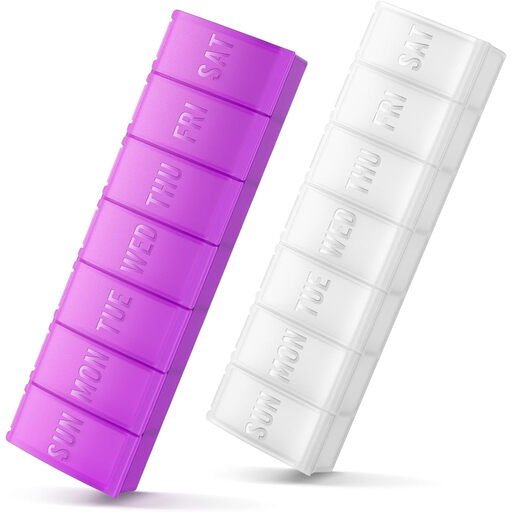
Why This Fits Their Persona: A two-piece weekly set suits shoppers starting a regular routine or wanting a spare for travel, work or a carer.
The product information specifies roomy compartments, permanently etched day labels and easy-open lids rather than relying only on appearance.
BPA-free plastic, large compartments and a 2-pack format. The listed dimensions are 7.99 x 4.69 x 1.42 inches.
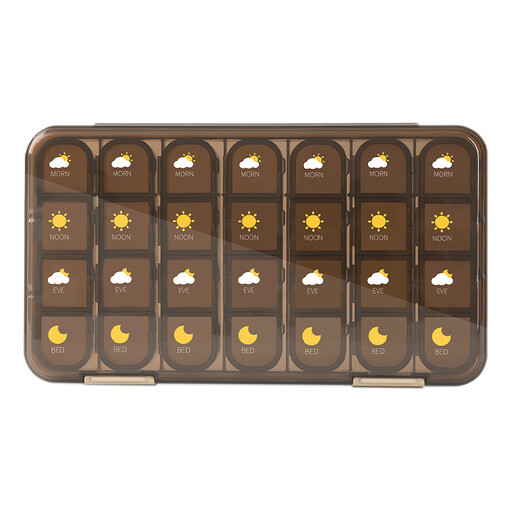
Why This Fits Their Persona: Suitable for shoppers who prioritise a structured four-times-a-day layout and a closure designed for regular carrying.
Twenty-eight compartments reduce the need to mix doses, while the listed snap-lock lid and silicone sealing ring address accidental opening and moisture concerns.
Seven removable daily compartments, Monday-to-Sunday markings and capacity for multiple pill sizes.
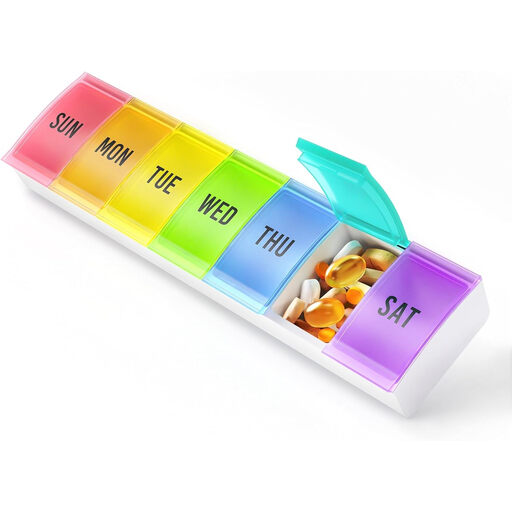
Why This Fits Their Persona: Broad ergonomic lids and easy-open sections are aimed at users who find small tabs or stiff closures uncomfortable.
The specification lists ergonomic lids, seven compartments and secure snap-shut closures, helping balance accessibility with closure security.
BPA-free food-grade plastic and stated capacity of up to eight fish oils or 17 capsules per compartment.
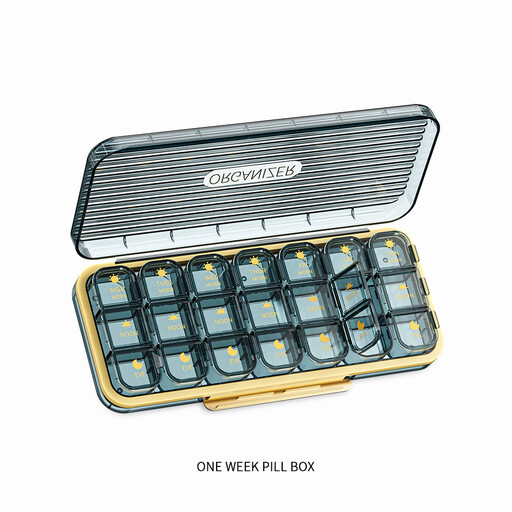
Why This Fits Their Persona: The three-section-per-day design helps travellers, carers and supplement users separate different doses without carrying several boxes.
It avoids the one-compartment-per-day limitation by providing three compartments per day and detachable daily sections.
Portable format, 7-day organisation and separate sections for vitamins, fish oils or other supplements.
We have compiled a complete, real-time list of products that fully satisfy these strict selection criteria and UK safety regulations.
A portable pill box is convenient for short trips, but medicines may have specific temperature, light or moisture requirements. Confirm travel arrangements with a pharmacist, particularly for prescription medicines.
No. Some medicines should remain in their original packaging, and certain products are sensitive to moisture, light or air. Check the label or ask a pharmacist before transferring tablets or capsules. A pill organiser should not be used for liquid medicines unless specifically designed for them.
Its usable life depends on the plastic, hinges, seals and frequency of opening. Replace it if labels become unreadable, lids no longer close securely, or cracks and residue appear. A container with etched markings and robust hinges may remain practical for longer, but it should still be checked regularly.
It depends on the routine. A basic 7-day pill organiser suits one daily dose, while an AM and PM pill organiser provides clearer separation for morning and evening medicines or supplements. Users with more frequent doses may need three or four compartments per day.