
24/7 Customer Support

Free returns

Same-day & Next-day Delivery

Quality Guaranteed

Unlock Your Welcome Offers: FREE Delivery | Up to 80% OFF | Free 30-day JoyPlus trial
Download the APP
Setting up a workout space at home offers incredible convenience, but choosing the right equipment can feel overwhelming. With so many options available, it’s easy to get lost in technical specifications and marketing claims. The goal is to find effective, safe and space-conscious tools that align with your fitness journey.
This guide is designed to help you understand the different types of weights for home gym use. We will walk through key considerations and provide practical advice to help you select the strength training equipment that fits your space, budget and goals, whether you're just starting or looking to enhance your existing routine.
Before adding items to your basket, consider these three factors. A thoughtful approach ensures you invest in equipment you will use consistently.
In many UK homes, space is a premium. Bulky equipment that can't be stored neatly often ends up gathering dust. Consider the footprint of your weights. A dumbbell set with rack is an excellent solution for keeping multiple weights organised and accessible without cluttering your floor. For those in smaller flats, compact or adjustable options can provide variety without demanding significant storage space. Always measure your intended workout and storage area before purchasing.
The type of free weights for home use you need depends entirely on what you want to achieve.
The material and shape of your weights impact both safety and performance.
Based on functionality, design and user feedback, here are some standout options for building your home gym.
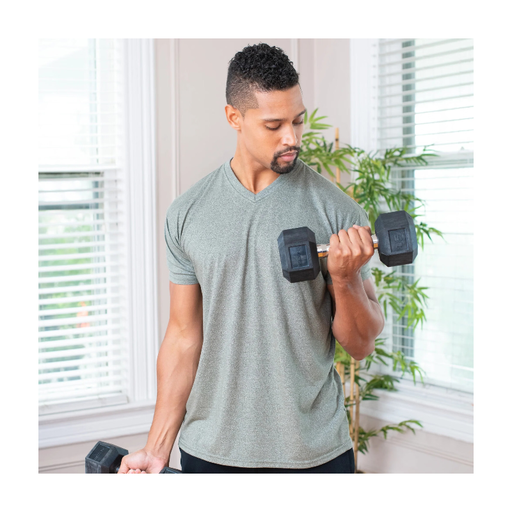
Why It Stands Out: This is a classic, no-nonsense dumbbell that delivers on durability and performance. Its solid cast iron core and protective rubber coating make it a long-lasting addition to any home weights collection. The 15lb (approx. 6.8kg) weight is a versatile choice for a wide range of exercises.
Pros:
Who is it for?: Individuals with some experience in strength training who are looking to add a reliable, mid-range weight to their routine for exercises like lunges, rows and presses.
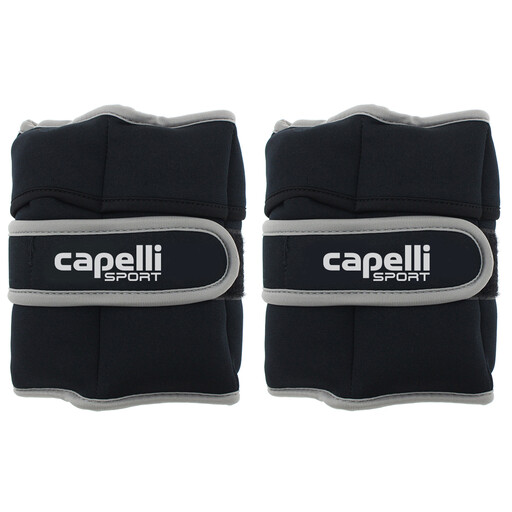
Why It Stands Out: These weights offer exceptional versatility. By allowing you to add or remove weight in small increments, they can be adapted for physical therapy, enhancing cardio or light resistance training. The soft neoprene material prioritises comfort, even during longer sessions.
Pros:
Who is it for?: Beginners, individuals undergoing physical rehabilitation or anyone looking to add a low-impact challenge to their cardio and toning workouts.
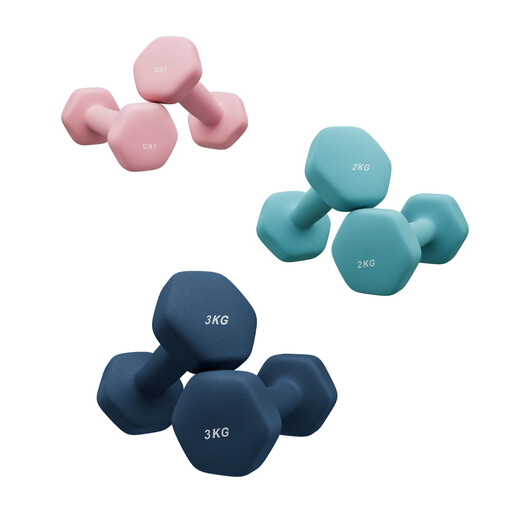
Why It Stands Out: This is an ideal starter kit. It provides three pairs of commonly used light weights in a neat, compact package. The included stand eliminates clutter, making it a perfect home weights set for those with limited space who want to begin their fitness journey.
Pros:
Who is it for?: Beginners to strength training or individuals who focus on high-repetition, low-weight workouts for toning and endurance.
Building a home gym is just one part of an active lifestyle. For staying warm during your cool-down or on your way to and from a class, having the right apparel is essential. Explore our selection of gym coats to complete your fitness wardrobe.
For a beginner, the focus should be on mastering proper form before increasing weight. A light set, such as the Ochama Dumbbell Set with 1, 2 and 3 kg pairs, is an excellent starting point. This allows you to learn movements correctly and safely, reducing the risk of injury.
This depends on your priorities. Adjustable dumbbells are fantastic for saving space and can be more cost-effective than buying a full range of fixed weights. However, fixed-weight dumbbells are generally more durable and allow for quicker transitions between exercises, which is beneficial for certain styles of training like circuits or supersets.
Absolutely. Free weights for home workouts are highly effective for building muscle because they force you to engage smaller stabilising muscles in addition to the primary muscles being targeted. The key to muscle growth is progressive overload—consistently challenging your muscles by gradually increasing the weight, repetitions or intensity of your workouts over time.