
24/7 Customer Support

Free returns

Same-day & Next-day Delivery

Quality Guaranteed

Unlock Your Welcome Offers: FREE Delivery | Up to 80% OFF | Free 30-day JoyPlus trial
Download the APP
A wet and dry vacuum cleaner can remove crumbs, pet hair and liquid spills in one cleaning session, but not every model suits every home. Some are designed mainly for sealed hard floors, while others can also handle rugs, carpets, upholstery, cars and garage debris.
The right choice depends less on impressive advertising language and more on practical details: floor compatibility, cleaning capacity, battery runtime and how much maintenance is required after use.
Many cordless vacuum mop machines are intended for sealed hard floors such as tile, vinyl, laminate, sealed wood and stone. Using water on unsealed timber or unsuitable surfaces may cause damage. A model that vacuums and washes hard floors may not replace a dedicated carpet vacuum.
Check the manufacturer’s stated surface compatibility before buying. If you need one appliance for rugs, carpets and hard floors, look for a genuine multi-surface floor cleaner with clearly listed modes.
Suction may be shown in kPa, watts or motor speed. These measurements describe different aspects of performance and should not be treated as directly interchangeable. For example, a 1,000W corded wet vacuum and a cordless model rated at 15kPa are not measured in the same way.
Consider the cleaning task instead. Liquid spills and larger debris require suitable airflow and a correctly designed floor head, while pet hair performance also depends on the roller brush, scraper and filtration system.
A self-cleaning vacuum mop still needs attention. The dirty-water tank normally needs emptying, filters must be rinsed or replaced and removable parts should be allowed to dry. Otherwise, damp residue can create unpleasant odours and restrict airflow.
Hot-air drying, roller spinning and hair-scraping features can reduce manual work, but they do not remove the need to follow the care instructions.
Decide whether you need a hard floor cleaner, a pet hair vacuum mop or a more general wet and dry appliance.
Never assume that “wet and dry” means safe for every surface. Follow the product manual, particularly for wood, rugs and electrical areas.
A cordless wet and dry vacuum cleaner is convenient for quick cleaning, but quoted runtime usually varies by mode. Washing floors can use more power than dry vacuuming. Compare the stated runtime in the mode you expect to use most.
Tank capacity affects how often you need to stop. Larger clean and dirty water tanks can suit bigger homes, while smaller tanks may make an appliance lighter and easier to store. Also check charging time, battery replacement options and whether the battery is removable.
For unlimited operation, a corded floor washing vacuum may be more suitable. A 7.5-metre cable, for example, can cover several rooms without recharging, although cable management is less convenient.
For households with pets or long hair, look for:
A self-cleaning function is particularly useful when used frequently, but the cycle may require the appliance to be placed on its charging or storage base.
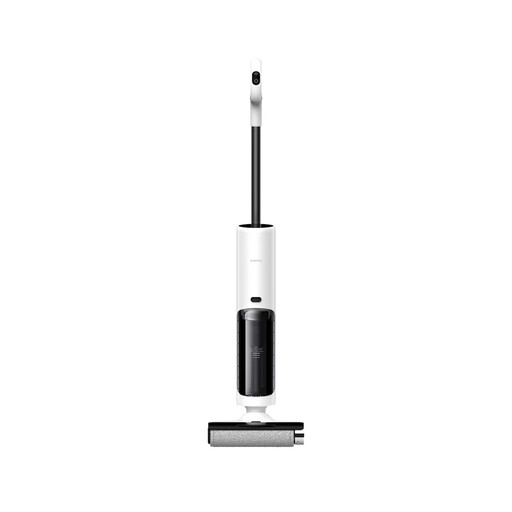
Why This Fits Their Persona: A practical cordless floor cleaner for flats, smaller homes and households wanting vacuuming, mopping and self-cleaning in one appliance. Its stated runtime is up to 30 minutes.
The dual-tank system separates clean and dirty water, while a one-tap self-cleaning cycle addresses the maintenance issue common to wet appliances.
Up to 15kPa stated suction, brushless motor, self-propelled movement and a hair scraper. Designed specifically for hard floors.
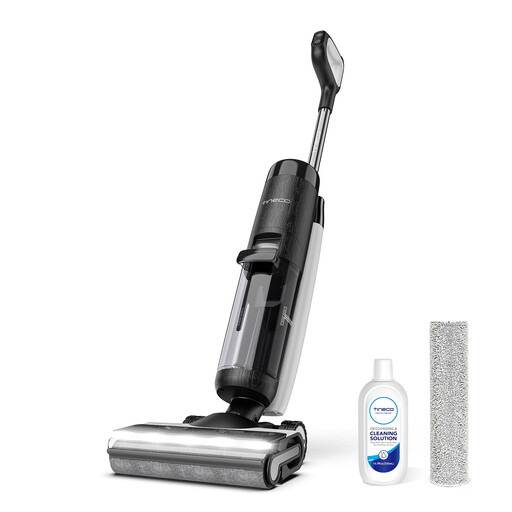
Why This Fits Their Persona: Suitable for larger homes where longer floor-washing sessions and easier movement around furniture are priorities.
Its stated up-to-40-minute runtime and separate tanks reduce interruptions, while the self-cleaning and centrifugal drying functions support regular maintenance.
Bi-directional self-propulsion, dual-sided edge cleaning and a self-cleaning cycle with roller drying.
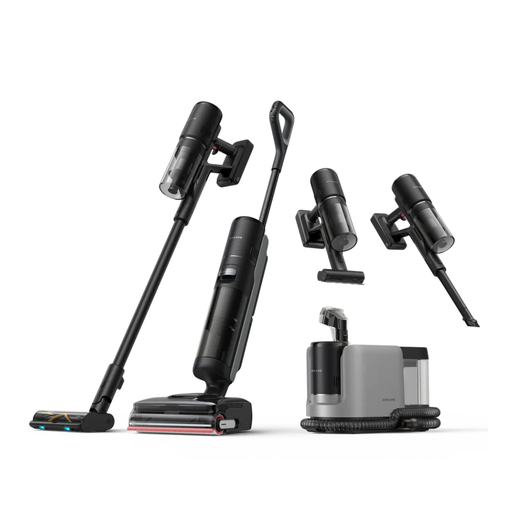
Why This Fits Their Persona: A broad-use option for families and pet owners who want floor washing alongside dry vacuuming, spot cleaning, upholstery and car cleaning.
Its removable battery, multiple attachments and tangle-management scraper make it more adaptable than a floor-only vacuum mop.
Stated 23,000Pa suction, up to 65 minutes in floor-wash mode, 7-in-1 functionality and 180-degree lie-flat cleaning.
Choose cordless if you value quick deployment, easy stair access and no cable changes between rooms. Keep in mind that battery runtime, charging time and eventual battery replacement affect long-term ownership.
A corded wet vacuum can be useful for garages, cars, workshops and larger spill-clearing jobs. The Kärcher WD 2 Plus, for example, has a 1,000W motor, a 12-litre capacity, a 4-metre cable and onboard accessory storage. It is a utility vacuum rather than a floor-washing vacuum mop, so it suits a different cleaning pattern.
For sealed hard floors and everyday spills, a cordless floor washer may be more convenient. For mixed household and workshop use, a corded wet and dry vacuum can offer greater practicality.
Not always. Floor-washing models are designed mainly for hard floors and may have limited carpet functionality. If your home contains thick carpets, check the supported surfaces and attachments carefully. A convertible model with dry-vacuum and handheld modes may cover more tasks.
Empty the dirty-water tank after each use, rinse removable components and run the self-cleaning programme where available. Allow the roller, filter and tanks to dry according to the manual. Frequent pet-hair cleaning may require removing hair from the roller or scraper more often.
Electricity use depends on charging frequency, power rating and cleaning time. Cordless models also involve battery wear over time. Compare the warranty, availability of replacement batteries, cleaning solution requirements and filter costs rather than considering the purchase price alone.
We have compiled a complete, real-time list of products that fully satisfy these strict selection criteria and UK safety regulations.