
24/7 Customer Support

Free returns

Same-day & Next-day Delivery

Quality Guaranteed

Unlock Your Welcome Offers: FREE Delivery | Up to 80% OFF | Free 30-day JoyPlus trial
Download the APP
Navigating the cat food aisle can feel overwhelming. With endless options for wet cat food, it's easy to fall for clever marketing or buy something that doesn't suit your cat's needs. As a Joybuy Product Recommendation Officer, my role is to help you see past the hype and make informed choices. Many cat owners find themselves wasting money on products that are either rejected by their fussy eaters or aren't as nutritious as the packaging suggests.
Let's look at a few common pitfalls to avoid:
To ensure you're getting the right product, focus on these core parameters. They are far more important than the glossy picture on the front of the box.
The ingredients list is your most powerful tool. It's listed in order of weight, so the first few items make up the majority of the food.
A cat's nutritional requirements change dramatically throughout its life.
The format can be just as important as the contents, both for your cat's preference and your convenience.
Based on these practical considerations, here are a few options matched to different types of cat owners across the UK.

Why This Fits Their Persona: For households with multiple cats or those who prioritise convenience and value, this 40-pouch bulk pack is a practical choice. The variety of fish flavours helps prevent mealtime boredom, and the cost-per-serving is very economical for the weekly shop.
This pack helps avoid the "bulk buy blunder" by offering four different, popular fish flavours. This variety makes it a safer bet that your cat will enjoy the selection, reducing the risk of being left with a large quantity of a single, rejected flavour.
Provides excellent value with a large pack size. The inclusion of zinc supports a healthy skin and coat and the jelly formulation aids hydration.
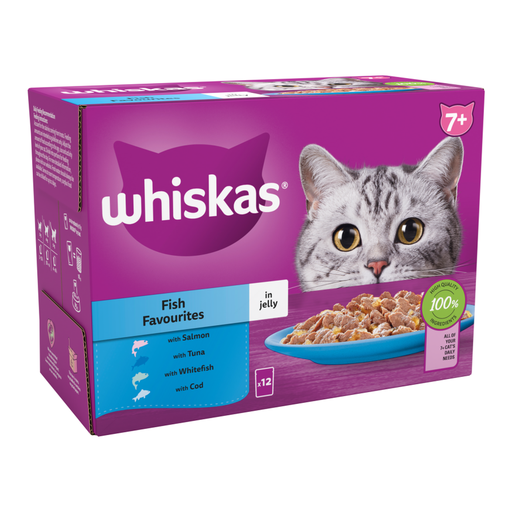
Why This Fits Their Persona: This food is specifically for owners who are conscious of their cat's changing needs as they enter their senior years. It provides targeted nutrition to help maintain health and vitality, moving beyond a generic adult formula.
It directly counters the "one-size-fits-all" trap by providing a life-stage-specific diet. Instead of just being 'complete', it's complete for a senior cat, with balanced minerals and added vitamins tailored to support an ageing immune system.
Formulated for cats aged 7 and over to support their overall well-being. The jelly consistency is also excellent for maintaining hydration, a common concern for older felines.
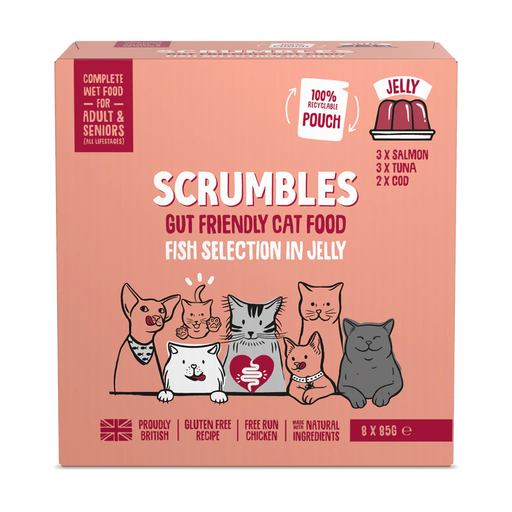
Why This Fits Their Persona: Ideal for the cat owner who carefully reads labels and seeks out grain-free or hypoallergenic options. This food is designed for gentle digestion, making it a strong candidate for cats with dietary sensitivities or fussy appetites.
This product avoids the "flavour illusion" trap by being transparent with its composition. It clearly states a high percentage of chicken in the chunks, with the named fish as an additional flavour and includes prebiotics (inulin) for gut health—details you won't find in many standard foods.
A grain-free and hypoallergenic recipe that is suitable for both kittens (from 8 weeks) and adult cats. The addition of prebiotics actively supports digestive health.
We have compiled a complete, real-time list of products that fully satisfy these strict selection criteria and UK safety regulations.
1. How much wet food should I feed my cat? This depends on several factors: your cat's age, weight, activity level and whether you also feed them dry food. Always start by checking the feeding guide on the packaging, which provides a recommended daily amount. You can then adjust this based on whether your cat is gaining or losing weight. It's often best to divide the daily portion into two or more meals.
2. Can I mix wet and dry cat food? Yes, mixed feeding is a popular and practical approach. It combines the hydration and palatability benefits of wet food with the convenience and dental-cleaning properties of dry kibble. To do this correctly, you need to reduce the portion of each food type to avoid overfeeding. For example, if you feed half the recommended daily amount of wet food, you should pair it with half the recommended daily amount of dry food.
3. How long can I leave wet cat food out? Wet cat food should not be left out at room temperature for more than a few hours (typically 1-2 hours is a safe limit). After this, bacteria can begin to grow, making it unsafe for your cat to eat. It's best to offer a portion your cat will finish in one sitting. Any leftovers should be covered and refrigerated immediately and used within 24 hours.