
24/7 Customer Support

Free returns

Same-day & Next-day Delivery

Quality Guaranteed

Unlock Your Welcome Offers: FREE Delivery | Up to 80% OFF | Free 30-day JoyPlus trial
Download the APP
Buying wet cat food pouches can look straightforward until you compare life-stage labels, recipes, textures and pack sizes. A colourful multi-pack may offer assorted cat food flavours, but it may not suit your cat’s age, appetite or dietary needs.
The most useful approach is to look beyond front-of-pack wording and check the statutory product description, feeding guidance and analytical constituents. This guide explains the main buying pitfalls, then matches selected products to different UK household needs.
Some products are intended as treats or additions rather than a sole diet. Look for wording such as “complete pet food” or “complete and balanced cat food” for the relevant life stage. A product described as complete for adult cats should not automatically be used for kittens or senior cats.
A pouch labelled “with chicken” or “with salmon” may contain a specified percentage of that named ingredient, while the rest of the composition includes meat and animal derivatives, cereals, fish derivatives, minerals and other ingredients. Read the composition carefully rather than relying on the flavour name alone.
A 40-pouch pack can be economical for a cat that enjoys every recipe, but wasteful if your cat rejects one flavour. Once opened, most products should be refrigerated and used within the period stated on the label, commonly within 24–48 hours or two days. Individual 85g servings can help with portion control, but unopened pouches still need cool, dry storage.
Choose food that matches your cat’s age:
Do not use an adult formula for a kitten simply because the flavour is popular. Likewise, a senior recipe is not automatically suitable for every older cat if your vet has advised a specific diet.
Check the label for complete pet food status and the intended species and life stage. Analytical constituents such as moisture, protein and fat help you compare products, although they should not be treated as a complete assessment of dietary suitability.
Wet foods commonly contain around 74–84.5% moisture in the products listed here. This contributes to the food’s soft texture and high water content, but fresh drinking water should still be available at all times.
Gravy cat food, jelly cat food and pâté-style or formed textures appeal to different cats. Gravy may suit cats that prefer a softer, more aromatic meal, while jelly can hold chunks in an easy-to-serve portion.
For variety, compare the number of recipes in each box. A 12-pouch pack may be sensible for trying assorted cat food flavours, while a 40-pouch multi-pack cat food box is more suitable when you already know your cat accepts the recipes. Also compare the net quantity: most pouches in this selection contain 85g.

Why This Fits Their Persona: A 40-pouch box offers four adult recipes—white fish, salmon, chicken and lamb—for households seeking familiar jelly cat food in a larger format.
The product is identified as complete pet food for adult cats, while the recipe percentages and analytical constituents are provided for comparison.
40 x 85g portions; four flavours; 83% moisture and 8.5% protein listed for the recipes.
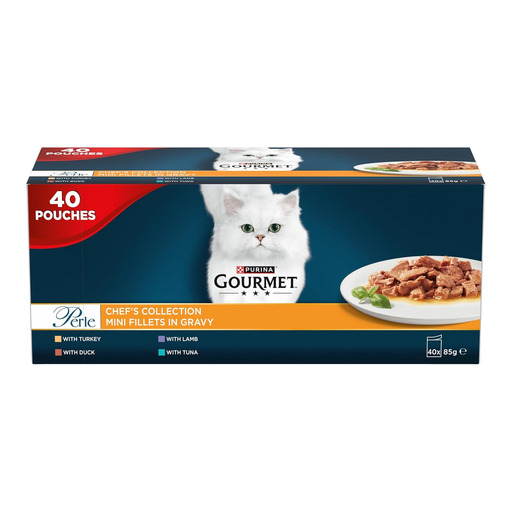
Why This Fits Their Persona: Suitable for adult-cat owners who prioritise a miniature fillet texture, gravy and four recipes: turkey, duck, lamb and tuna.
It is labelled as complete and balanced for adult cats, rather than being presented as an occasional gourmet cat food treat.
40 x 85g pack; 80% moisture; 13% protein and 2.5% fat listed for the varieties.
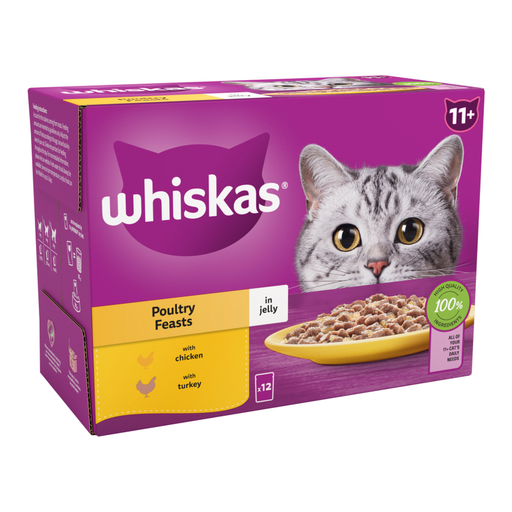
Why This Fits Their Persona: Designed for owners feeding a cat aged 11 or above who want smaller pieces, poultry recipes and age-specific guidance.
The age range is clearly stated, with feeding quantities provided for 3kg, 4kg and 5kg cats rather than one generic serving suggestion.
12 x 85g pouches; jelly texture; 84.5% moisture; recipes with chicken and turkey.
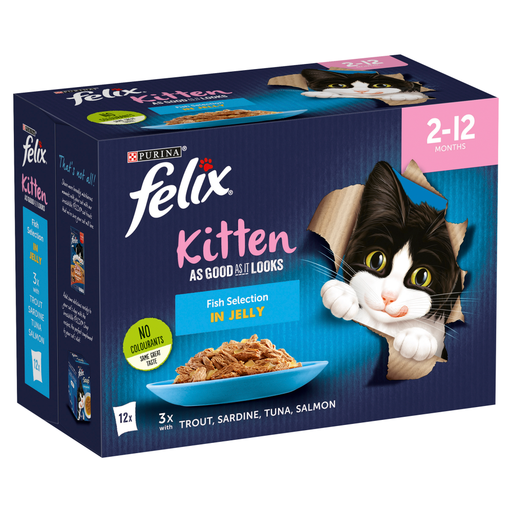
Why This Fits Their Persona: A kitten-specific option for owners who need smaller individual portions and four fish flavours during the 2–12-month growth stage.
Its stated life stage is kittens aged 2–12 months, avoiding the common mistake of using adult wet cat food during growth.
12 x 85g portions; trout, sardine, tuna and salmon recipes; 13.5% protein listed.
Serve pouches at room temperature unless the label says otherwise. Follow the product’s feeding guide and adjust portions for body size, activity and treats. Introduce a new food gradually over about seven days where possible.
Refrigerate unused food after opening and follow the stated use-by period. Discard damaged, leaking or spoiled pouches. Keep packaging away from children and pets, and provide clean drinking water.
We have compiled a complete, real-time list of products that fully satisfy these strict selection criteria and UK safety regulations.
They can be when the pack states that the product is complete pet food for the correct life stage. Complementary products should not be used as the sole diet unless advised otherwise by a veterinary professional.
The amount varies by product, cat size, activity and whether dry food or treats are also given. Several products listed here suggest around three to four 85g pouches daily for an average 4kg adult cat, but the label’s feeding guide should take priority.
Neither texture is automatically suitable for every cat. Gravy cat food may appeal to cats that prefer a sauce, while jelly cat food provides a firmer set texture. Choose a complete recipe that your cat eats consistently, then compare ingredients, portions and pack size.