
24/7 Customer Support

Free returns

Same-day & Next-day Delivery

Quality Guaranteed

Unlock Your Welcome Offers: FREE Delivery | Up to 80% OFF | Free 30-day JoyPlus trial
Download the APP
Buying wet cat food pouches in jelly looks straightforward until you compare life-stage labels, pouch sizes, flavour percentages and feeding instructions. A colourful multipack may offer variety, but it is not automatically suitable for every cat or good value for money.
As the Joybuy Product Recommendation Officer, I focus on the details that help shoppers avoid marketing assumptions and choose food that fits their cat’s age, diet and routine.
Terms such as “salmon”, “chicken” or “fish selection” describe a recipe, but they do not necessarily mean that the named ingredient makes up most of the pouch. For example, several fish recipes in this category specify 4% of the named fish in the chunk.
Check the composition rather than relying on the flavour name. If a product contains several meat and animal derivatives, fish derivatives or cereals, make sure that fits your preferences and your cat’s dietary needs.
A 40-pouch multipack may contain 3.4kg of food when each pouch is 85g. Another pack may contain 12 x 100g pouches, while a small selection might contain only 680g.
Compare:
This is particularly important when comparing 85g cat food pouches, larger pouches and smaller complementary foods.
Some jelly products are labelled complete pet food, while others are complementary and should be served alongside a nutritionally complete diet. Encore Fish Selection in Jelly, for example, is described as complementary pet food and is intended to accompany dry food.
For everyday feeding, look for a clear complete and balanced cat food statement appropriate to your cat’s life stage. A “natural wet cat food” description alone does not confirm nutritional completeness.
Adult wet cat food is generally intended for mature cats, while kitten wet food should meet the nutritional requirements of growth. Senior cat food pouches may be labelled for cats aged 7+ or 11+, depending on the recipe.
Do not assume that a senior recipe is suitable for a kitten, or that an adult multipack is appropriate for a growing cat. For example:
Always check the current packaging, especially if your cat is pregnant, nursing, underweight or following a diet recommended by a veterinary professional.
The ingredients list shows what is included, while the analytical constituents provide percentages for protein, fat, moisture, fibre and ash. These figures help you compare products objectively, although they do not alone determine whether one recipe suits your individual cat.
For example, the reference adult jelly products list moisture levels commonly between 82% and 86%. This contributes water to the meal, but fresh drinking water should still be available at all times.
Look for:
“Grain-free kitten food” may suit owners who specifically want to avoid cereals, but grain-free does not automatically mean nutritionally superior. The complete nutritional declaration remains more important than a front-of-pack claim.
Feeding guidance varies by recipe, body weight and activity level. Several 85g products suggest around 3–4 pouches daily for an average 4kg adult cat, divided between at least two meals. This is only a starting point; adjust portions to maintain a healthy body condition.
Serve wet food at room temperature where the label recommends it. After opening, refrigerate unused portions and follow the stated time limit, which may be 24 hours, 48 hours or up to 3 days depending on the product.
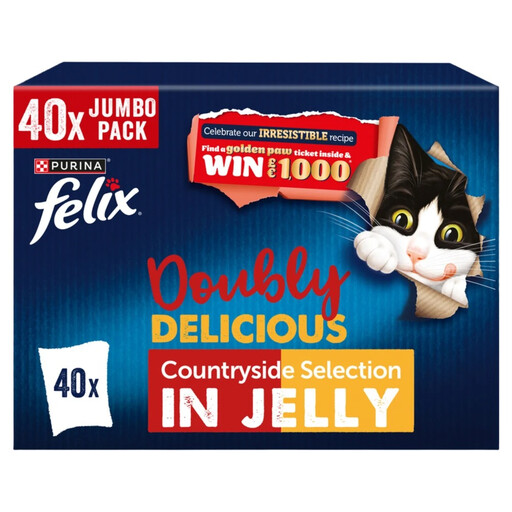
Why This Fits Their Persona: A 40-pouch, 3.4kg multipack is practical for households that feed an adult cat regularly and want several meat and poultry flavours in one purchase.
It is identified as complete and balanced adult food, with feeding guidance and composition details available for checking before purchase.
40 x 85g portioned pouches; four two-flavour meat and poultry recipes; listed sources of vitamins A and E and omega-6 fatty acids.
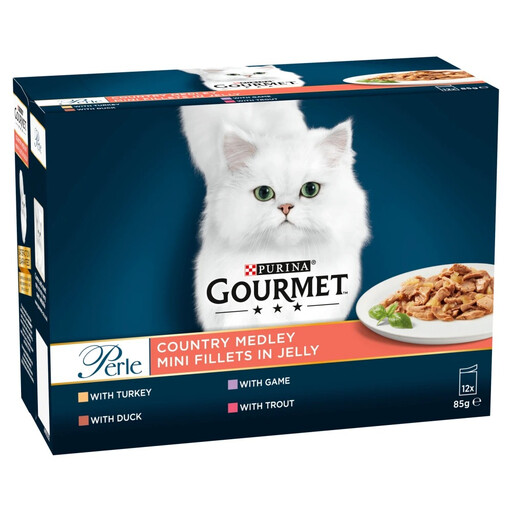
Why This Fits Their Persona: Suitable for adult-cat owners who prefer a smaller trial-sized cat food variety pack with four recipes and a more finely presented texture.
The 12 x 85g format limits overbuying while the product description clearly states adult suitability and complete nutritional status.
Four flavours including turkey, trout, duck and game; 12 convenient 85g portions; no added colourants, artificial flavourings or preservatives listed.

Why This Fits Their Persona: Designed for owners who regularly feed a senior cat aged 7 or above and want a large poultry-focused supply.
The age range is stated clearly, helping prevent the common mistake of using adult-only food for an older cat without checking suitability.
40 x 85g pouches; four poultry recipes; 100% complete and balanced according to the supplied product information.

Why This Fits Their Persona: A targeted option for owners of kittens aged 2–12 months who want small portions and both poultry and fish recipes.
Its kitten-specific age range is clearly stated, and the product is described as grain-free with a gradual transition recommended when changing food.
8 x 85g pouches; four listed flavours; 14.5% crude protein and 81 kcal per pouch according to the supplied product information.
We have compiled a complete, real-time list of products that fully satisfy these strict selection criteria and UK safety regulations.
They can be, provided the packaging identifies the product as complete pet food for the correct life stage. Complementary jelly foods should be combined with a complete diet according to the label instructions.
The amount depends on weight, age, activity and whether dry food or treats are also being given. Several adult products suggest approximately 3–4 pouches daily for a 4kg cat, divided into two or more meals. Use the product’s feeding guide as a starting point and monitor body condition.
No. Jelly recipes contain substantial moisture, but every cat should still have access to clean, fresh drinking water. Refrigerate unused food after opening and follow the storage period printed on the packaging.