
24/7 Customer Support

Free returns

Same-day & Next-day Delivery

Quality Guaranteed

Unlock Your Welcome Offers: FREE Delivery | Up to 80% OFF | Free 30-day JoyPlus trial
Download the APP
Choosing the right food for your cat can feel like a significant task. The aisles are filled with options and every brand promises to be the one your feline companion will love. Wet cat food pouches offer a convenient, portion-controlled way to provide moisture-rich meals, but navigating the different ingredients, textures and nutritional claims can be confusing.
This guide is designed to help you understand the key factors to consider when selecting wet cat food. We will look at different types of food, what to look for on the label and provide some recommendations to help you make an informed choice for your cat's needs.
Before you buy, understanding a few key terms can make all the difference. Here are some practical points to consider to ensure you are choosing a suitable food for your cat.
One of the most important distinctions on a cat food label is whether it is 'complete' or 'complementary'.
Cats are obligate carnivores, meaning their diet requires nutrients found only in animal products. When looking at ingredients, a high percentage of named meat or fish is often a good indicator of the food's composition.
Many owners also seek out natural wet cat food with no artificial colours, flavours or preservatives. For cats with sensitivities, a grain free cat food formula may be a suitable option to support digestive comfort.
The texture is also a matter of feline preference. Some cats prefer chunks of meat in a light cat food in broth, while others favour the texture of cat food in jelly. Observing what your cat enjoys can help guide your selection.
A cat's nutritional needs change as they age. Kittens require more calories and specific nutrients for growth, while senior cats may benefit from formulas that support joint health and are easier to digest. If you have an older cat, looking for senior cat food pouches specifically designed for cats aged 7+ can help meet their changing dietary requirements.
Here are a few options that cater to different needs, from high-protein complementary foods to complete meals for senior cats.
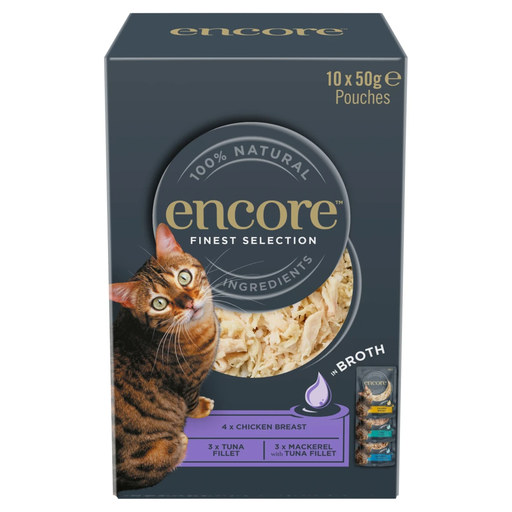
Why It Stands Out: This food is notable for its simple, natural composition. Each pouch contains a high percentage of real meat or fish fillet, such as 65% chicken breast or 65% tuna fillet, served in a simple broth. It is a complementary food, making it an ideal addition to a balanced diet.
Pros:
Who is it for: Cat owners who want to supplement their cat's main meals with a high-quality, natural protein source. It is particularly suitable for those who feed a mix of wet and dry food.

Why It Stands Out: This is a complete wet cat food formulated with a very high meat content. It contains 93% turkey, beef and chicken, providing a rich source of protein. The grain free cat food formula is designed to be gentle on a cat's digestive system.
Pros:
Who is it for: Owners looking for a premium, high-meat and nutritionally complete meal that can be served on its own. It is an excellent choice for those prioritising grain-free diets for their adult cats.

Why It Stands Out: This cat food multipack is specifically formulated for the needs of older cats. As a complete and balanced food for cats aged 7 and over, it provides all the necessary nutrients for their life stage. The large pack size offers convenience and value, making it a practical choice for daily feeding.
Pros:
Who is it for: Owners of senior cats who need an affordable, nutritionally complete and age-appropriate daily food. The large pack size is ideal for households that get through a lot of pouches.
If these recommendations are not quite what you are looking for, or if you want to explore different flavours and textures, there is a wider selection available.
Discover our full range of protein pouches to find the perfect match for your feline friend.
1. Is it okay to feed my cat only wet food pouches?
Yes, provided the pouch is labelled as a 'complete' food. A complete wet cat food contains all the essential nutrients, vitamins and minerals your cat needs to thrive. If the food is 'complementary', it must be fed alongside a complete food to ensure a balanced diet.
2. How do I switch my cat to a new wet food?
To avoid potential digestive upset, it is advisable to introduce a new food gradually. Start by mixing a small amount of the new food with their current food. Over 7-10 days, slowly increase the proportion of the new food while decreasing the old food until the transition is complete.
3. How much wet food from a pouch should I feed my cat?
Feeding amounts vary depending on the cat's age, weight and activity level. All food packaging includes a feeding guide with recommendations based on your cat's weight. This is a good starting point, but you may need to adjust the amount to help your cat maintain a healthy body condition. Always ensure fresh drinking water is available.