
24/7 Customer Support

Free returns

Same-day & Next-day Delivery

Quality Guaranteed

Unlock Your Welcome Offers: FREE Delivery | Up to 80% OFF | Free 30-day JoyPlus trial
Download the APP
Choosing the right food for your feline companion can feel like navigating a minefield of marketing claims and confusing labels. With so many wet cat food pouches on the shelves, it is easy to make a purchase you later regret. As the Joybuy Product Recommendation Officer, my role is to help you see past the hype and focus on what truly matters for your cat's health and your budget. This guide will break down the common pitfalls and highlight the key factors to consider, ensuring your cat gets a meal they love that is also good for them.
Many well-intentioned cat owners fall into a few common traps, often due to clever packaging or ambiguous wording. Being aware of these can save you money and ensure your cat is properly nourished.
To make an informed choice, focus on these three non-negotiable parameters.
A cat's nutritional needs change dramatically with age. Feeding the wrong life-stage formula can impact their long-term health.
The choice between cat food in gravy and jelly often comes down to your cat's personal preference.
Both are great options for increasing your cat's water intake, a common concern for cats on a dry-food-only diet.
This is where you find the facts. Look for a named protein source (e.g., chicken, tuna, salmon) as one of the first ingredients. The "Analytical Constituents" section provides a breakdown of the nutritional content:
Based on these practical criteria, here are a few options from our catalogue matched to different owner needs.
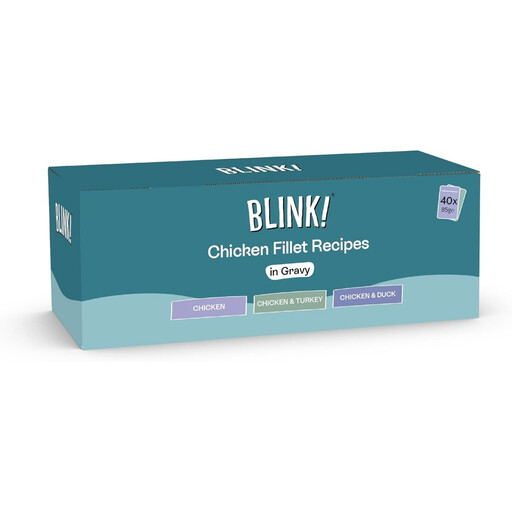
Why This Fits Their Persona: Ideal for new kitten owners in the UK who want to provide a high-protein, complete diet without guesswork. The bulk pack of 40 pouches offers convenience and value for a growing cat's large appetite.
This is a complete food specifically for kittens. The ingredients list is clear, with high percentages of named UK-sourced meats like "UK Chicken Breast Slices 58.5%", avoiding the vague "derivatives" trap.
High protein content (14.5%) supports healthy growth. Contains salmon oil for development and is suitable for pregnant or lactating mother cats too.
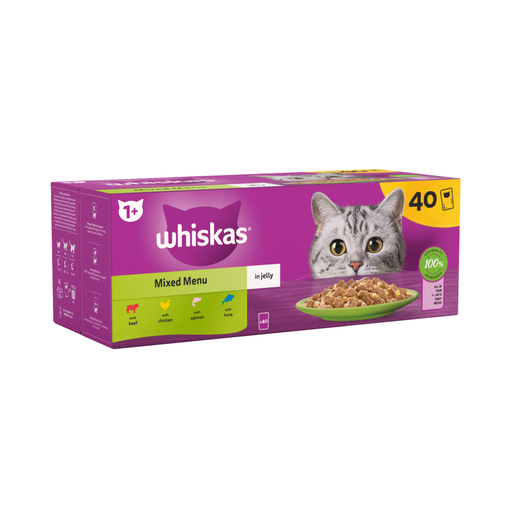
Why This Fits Their Persona: Perfect for UK households with one or more adult cats, where cost-effectiveness and convenience are priorities. This bulk cat food pack provides a reliable, balanced diet without a premium price.
It is clearly labelled as a 100% complete and balanced food for adult cats, removing any risk of it being a complementary treat. The large Whiskas multi-pack format offers excellent value per meal.
Provides all essential daily nutrients for an adult cat. Contains zinc for a healthy coat and Vitamin C to help support natural defences.
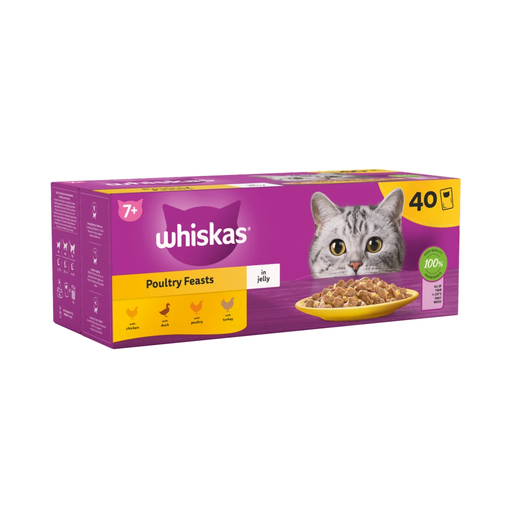
Why This Fits Their Persona: For the caring owner of an older cat in the UK. This food is tailored to the specific dietary needs of senior cats, providing peace of mind that their changing health is being supported.
This is a complete food that directly addresses the life-stage pitfall. It is not a generic adult formula but one specifically balanced for cats aged 7 and over, ensuring they get appropriate nutrition.
Formulated to be easy to eat and digest for older cats. Provides 100% of a senior cat's daily nutritional needs in a hydrating jelly format.
We have compiled a complete, real-time list of products that fully satisfy these strict selection criteria and UK safety regulations.
To avoid digestive upset, you should always transition your cat to a new food gradually. Start by mixing a small amount of the new food (around 25%) with their old food (75%). Over the course of 7-10 days, slowly increase the proportion of the new food until you have completely switched over.
This depends entirely on your cat's weight, age and activity level, as well as the specific food's calorie count. Always check the feeding guide on the packaging for a recommendation. As a general guideline, an average 4kg adult cat might need between 2 and 4 85g pouches per day if fed exclusively on wet food. Adjust this amount if you are also feeding dry food.
Yes, mixed feeding is a popular and beneficial approach. It combines the dental benefits and calorie density of dry kibble with the high moisture content of wet food, which is excellent for your cat's hydration and urinary tract health. If you mix-feed, remember to reduce the portion size of each food type to prevent overfeeding and weight gain.