
24/7 Customer Support

Free returns

Same-day & Next-day Delivery

Quality Guaranteed

Unlock Your Welcome Offers: FREE Delivery | Up to 80% OFF | Free 30-day JoyPlus trial
Download the APP
Wet cat food pouches can make daily feeding simple, particularly in busy UK households. Individual portions are easy to store, serve and refrigerate, while the high moisture content can complement a cat’s water intake. However, colourful packaging and phrases such as “natural”, “premium” or “meaty” do not always tell you whether a product suits your cat’s age, feeding routine or nutritional needs.
This guide explains what to check before buying, with practical recommendations for adult cats, kittens, senior cats and homes that need larger multi-pack cat food pouches.
The most important distinction is whether the pouch is labelled complete pet food or complementary pet food. Complete and balanced cat food is formulated to provide the nutrients a cat needs when fed according to the label. Complementary food is intended to be combined with another balanced food.
For example, Encore Finest Selection in Broth is described as complementary pet food. Its meat or fish content is clearly stated, but it should be served alongside balanced dry or wet food rather than used as the sole daily diet.
“Chicken”, “salmon” or “tuna” on the front of a pouch does not necessarily mean the recipe consists mainly of that ingredient. Check the composition and the percentage beside the named meat or fish. Some recipes list meat and animal derivatives, cereals or fish derivatives before the named ingredient.
A recipe such as Meowing Heads Paw Lickin Chicken lists 43% fresh deboned chicken, 25% chicken broth and 25% fresh deboned beef. That is more informative than relying on the flavour name alone.
A 40-pouch box may reduce the cost per serving, but it is not economical if your cat refuses the texture or develops digestive upset during a sudden change. Selection packs are useful for discovering preferred flavours, while larger packs work better once your cat reliably accepts the recipe.
Always introduce a new food gradually over 7–10 days, unless your vet advises otherwise.
Check the intended age range before ordering:
Do not use an adult-only product for a young kitten unless the packaging specifically confirms suitability.
Look for protein, fat, moisture, fibre and ash percentages, then compare similar products on a like-for-like basis. Wet food commonly contains around 78–85% moisture, so crude protein figures should not be compared directly with dry food percentages without accounting for water content.
A complete recipe should also list nutritional additives such as taurine, vitamins and minerals. This does not mean a higher listed protein percentage automatically makes a pouch more suitable: age, calories, portion size and your cat’s overall diet also matter.
Choose between:
For households with different preferences, cat food selection packs can reduce repetition without committing to one flavour.
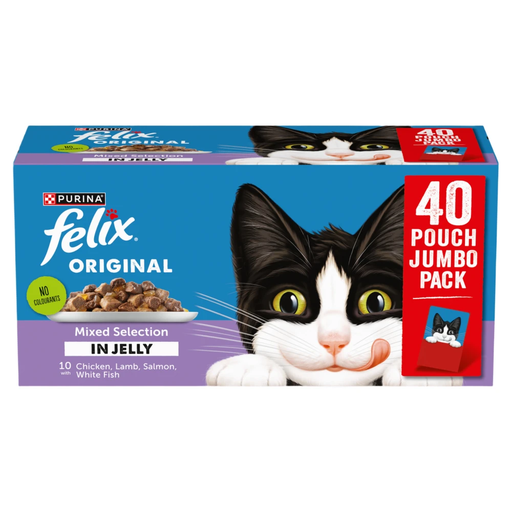
Why This Fits Their Persona: A 40-pouch selection offers four flavours in familiar 85g portions, making it practical for households seeking a straightforward adult feeding routine.
The listing identifies it as complete pet food for adult cats, rather than relying only on a flavour-led front label.
40 x 85g pouches; white fish, salmon, chicken and lamb varieties; no artificial colourants listed.
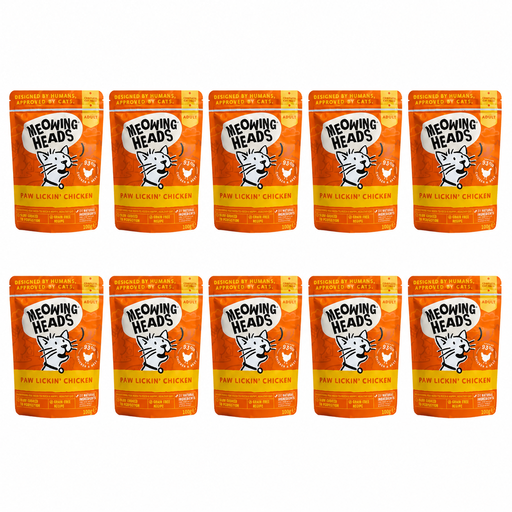
Why This Fits Their Persona: Suitable for kittens over eight weeks and adult cats, this is a useful option for owners who prioritise a grain-free recipe with clearly stated meat ingredients.
Its composition states 93% chicken and beef ingredients, with no artificial colours, flavourings or preservatives listed.
10 x 100g pouches; grain-free recipe; 80% moisture; taurine and vitamins listed.
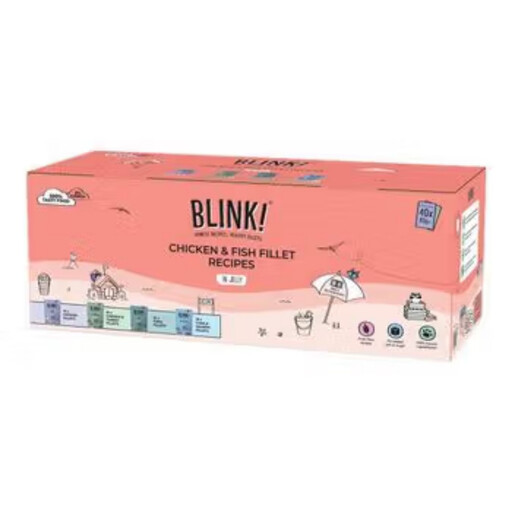
Why This Fits Their Persona: Despite the product title, the supplied listing describes this 40-pack as adult food for cats aged one year and above, making it relevant to multi-cat homes that use several pouches daily.
The age range, three recipe styles and feeding guidance are stated in the listing, helping buyers check suitability before purchasing a large box.
40 x 85g pouches; chicken, chicken and turkey, and fish formulas; no grains, sugar or salt added according to the listing.
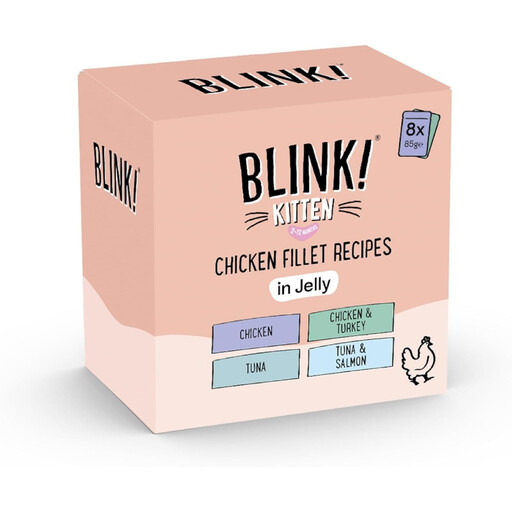
Why This Fits Their Persona: A smaller selection pack lets owners introduce different flavours while following kitten-specific feeding guidance.
It is specifically labelled for kittens aged 2–12 months, rather than leaving owners to infer suitability from the flavour.
Four flavours; 8 x 85g portions; grain-free recipe; 14.5% crude protein and 81 kcal per pouch listed.
We have compiled a complete, real-time list of products that fully satisfy these strict selection criteria and UK safety regulations.
Use the feeding table on the individual pouch rather than copying a portion size from another product. A 4kg adult cat may require around three to four pouches daily for some recipes, while a kitten’s needs depend on growth, weight and activity.
Serve wet food at room temperature and provide fresh drinking water. Refrigerate opened pouches in a sealed container and follow the label’s time limit, which may be 24–72 hours. Unopened pouches should remain in a cool, dry place.
To compare cost, calculate the price per 100g and then multiply it by your cat’s recommended daily amount. This gives a more useful running-cost estimate than comparing pack prices alone.
Yes, if the product is clearly labelled complete pet food and is fed according to its guidance. Complementary pouches should be combined with a complete food.
Follow the product label. Many products recommend using an opened pouch within two days, while some specify 24 hours. Keep it sealed and discard food that has changed in smell, colour or texture.
It can cost more per day because wet recipes contain substantial water and are often fed in multiple pouches. Compare the cost per 100g, daily feeding amount and pack size. Multi-pack cat food pouches may reduce unit cost, but only purchase in bulk once your cat accepts the recipe.