
24/7 Customer Support

Free returns

Same-day & Next-day Delivery

Quality Guaranteed

Unlock Your Welcome Offers: FREE Delivery | Up to 80% OFF | Free 30-day JoyPlus trial
Download the APP
Choosing wet dog food can seem straightforward until you compare tins, pouches and trays with different recipes, life-stage labels and feeding quantities. A lower price per pack may not mean lower cost per meal, while phrases such as “natural”, “with meat” or “grain-free” need careful reading.
This guide explains the practical checks UK dog owners should make before buying complete wet dog food, including options for adult, senior, sensitive and active dogs.
Under UK pet food labelling conventions, wording such as “with beef” does not necessarily mean the recipe is mostly beef. For example, a product labelled “with” an ingredient generally identifies a minimum inclusion level rather than the total recipe composition.
Check the ingredients list and percentages. A recipe may list meat and animal derivatives first, but the named meat could still represent a relatively small proportion of the finished food.
Natural wet dog food and grain-free wet dog food may appeal to owners seeking simpler recipes, but these terms do not automatically confirm that a food suits a sensitive stomach or a particular dietary requirement. Read the full composition, identify potential allergens and check whether the food is marked as complete.
Grain-free recipes can be useful for owners who specifically want to avoid cereals, but they should not be selected solely because the packaging sounds more wholesome.
A variety pack wet dog food can offer flavour rotation, while dog food tins and dog food pouches may be convenient for multi-dog households. However, opened wet food normally needs refrigeration and should be used within the period stated on the label.
Also compare the pack quantity with your dog’s daily allowance. A 40 x 100g pouch pack and a 12 x 400g tin pack contain different serving formats, even when the total food weight appears similar.
A product marked “complete pet food” is intended to provide the necessary nutrients when fed according to its guidelines. This differs from complementary food, mixers and treats, which are designed to be fed alongside a complete diet.
Check the life-stage wording:
The ingredients list shows what is included, while the analytical constituents provide percentages for protein, fat, crude fibre, crude ash and moisture. Wet food commonly has a high moisture level, often around 70–83%, so its protein percentage cannot be compared directly with dry food without accounting for water content.
For example, Forthglade’s variety pack lists 75% duck or turkey in its recipes, while Butcher’s Recipes in Gravy lists specific meat percentages alongside vegetables and salmon oil. These are different recipe profiles, so compare the stated composition rather than relying on front-of-pack descriptions.
Owners seeking sensitive stomach dog food may prefer a recipe with clearly listed ingredients and no grains, but any known intolerance should be discussed with a vet.
Review the feeding table, not just the pack size. A 400g tin may not equal one meal for a larger dog, and smaller dogs may need only part of a tray or tin.

Why This Fits Their Persona: A practical multipack for owners wanting familiar adult meals in larger tins, with chicken, beef and turkey varieties.
The listing identifies it as complete adult food and provides feeding quantities by dog size, rather than leaving portion planning to guesswork.
12 x 400g tins, three flavours and 81.5% moisture listed for each recipe.

Why This Fits Their Persona: Suitable for owners who prioritise a grain-free recipe, named vegetables and British & Irish farmed ingredients.
The product details provide recipe-specific meat and vegetable percentages, so “grain-free” can be assessed alongside the full composition.
Three gravy recipes, 12 x 400g tins and 82% moisture per recipe.
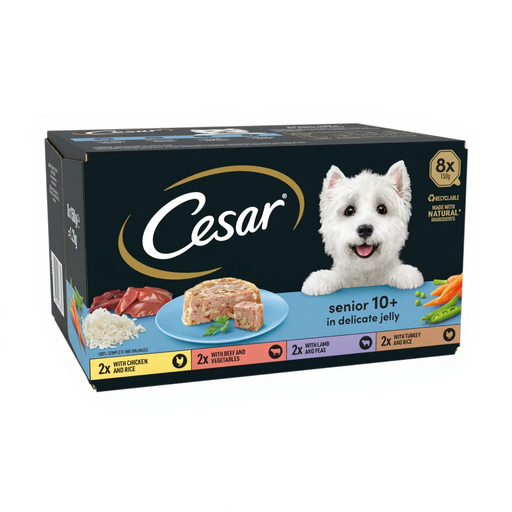
Why This Fits Their Persona: Individual 150g trays and four jelly-based recipes can help owners manage smaller, portioned meals for older dogs.
It is labelled as complete pet food for senior dogs, rather than requiring owners to adapt an adult-only meal.
Eight meals across four recipes, with 83% moisture and 150g trays.
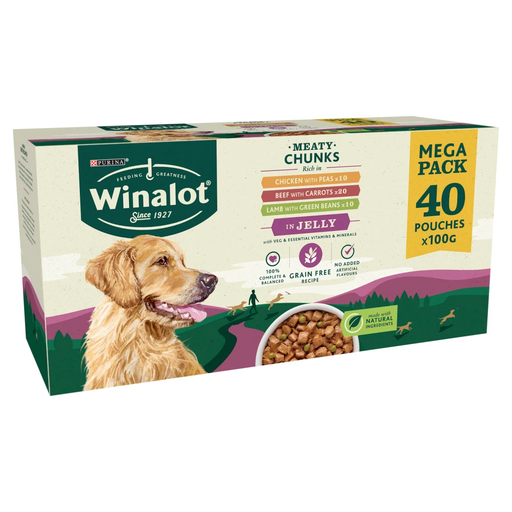
Why This Fits Their Persona: A large pouch multipack suits households that value individual portions and rotation between beef, chicken and lamb recipes.
The feeding table includes wet-only and mixed-feeding quantities, helping owners avoid treating one pouch as a universal serving.
40 x 100g pouches, three recipes and 83% moisture listed in the product information.
We have compiled a complete, real-time list of products that fully satisfy these strict selection criteria and UK safety regulations.
Yes, if the packaging states complete pet food for your dog’s life stage and you follow the feeding guidance. Complementary foods, mixers and treats should not replace a complete diet. Introduce any new food gradually and provide fresh drinking water.
Refrigerate unused food and follow the product label. Many products specify use within 24–48 hours, while some allow up to 72 hours. Keep opened tins, trays and pouches covered, and discard food that has been left out or shows signs of spoilage.
The answer depends on portion size, pack price and your dog’s daily calorie needs. Wet food contains considerably more water than kibble, so compare the cost per day, not simply the price per tin or pouch. Mixed feeding can also change the total amount required, so use the manufacturer’s replacement guidance rather than adding full portions of both foods.