
24/7 Customer Support

Free returns

Same-day & Next-day Delivery

Quality Guaranteed

Unlock Your Welcome Offers: FREE Delivery | Up to 80% OFF | Free 30-day JoyPlus trial
Download the APP
Choosing wet dog food is not simply a matter of picking the flavour your dog enjoys. UK shoppers also need to compare life-stage suitability, nutritional completeness, ingredients, storage requirements and the cost of feeding a full daily portion.
Marketing terms such as “natural”, “meat-rich” and “grain-free” can sound persuasive, but they do not automatically tell you whether a recipe suits your dog. The practical approach is to read the label first, then match the format and recipe to your household routine.
A recipe can contain natural ingredients yet still be unsuitable as your dog’s only meal if it is labelled complementary rather than complete. Look for wording such as “complete pet food” and check that the food is intended for your dog’s life stage.
A complete and balanced dog food should provide the nutrients required for the stated stage, but individual feeding needs still vary according to weight, activity, breed and health. Treats and dry food also contribute to daily calorie intake.
Grain-free wet dog food can be useful for owners avoiding particular ingredients, but removing grains does not automatically make a recipe more nutritious or suitable for a sensitive stomach. Grain-free recipes may still contain ingredients that do not agree with an individual dog.
Check the full composition rather than relying on front-of-pack language. For example, recipes may use potatoes, vegetables or other carbohydrate sources instead of cereals. If your dog has a diagnosed allergy or ongoing digestive problem, seek veterinary guidance before changing its diet.
Dog food multipacks can reduce shopping frequency and offer useful flavour variety, but a large pack is only economical if your dog eats the food before it passes its recommended storage period. Opened tins and pouches usually need refrigeration and should be used within the time stated on the label.
Consider whether your dog prefers one recipe, whether several varieties are tolerated and whether you have enough fridge space. Dog food pouches are convenient for portioning, while dog food tins can be more practical for larger servings.
Start with the statutory product description. Adult wet dog food is intended for adult dogs, while puppy wet dog food should be formulated for growth and clearly labelled for puppies. Some products are suitable from a stated age, whereas others are not suitable for very young puppies.
Do not use an adult recipe as a puppy’s main diet unless the label specifically confirms suitability. Puppy food should be fed according to age, expected adult weight and activity level, usually divided into several meals.
Read the ingredient list in descending order and compare the analytical constituents, including:
A named meat percentage can help you compare recipes, but check what the percentage refers to. Some labels specify meat “in the chunks”, rather than the total product. This distinction prevents shoppers from overestimating the overall meat content.
Wet food in jelly, gravy, loaf or tray formats can suit different preferences. Jelly and gravy may make meals more appealing to some dogs, while loaf textures can be easier to portion with a spoon.
Compare the daily feeding guide, not just the price per tin or pouch. A 400g tin may look inexpensive, but the actual cost depends on how many tins your dog needs each day. Mixed feeding can reduce the amount of wet food required, but use the manufacturer’s guidance and adjust portions to maintain a healthy body condition.
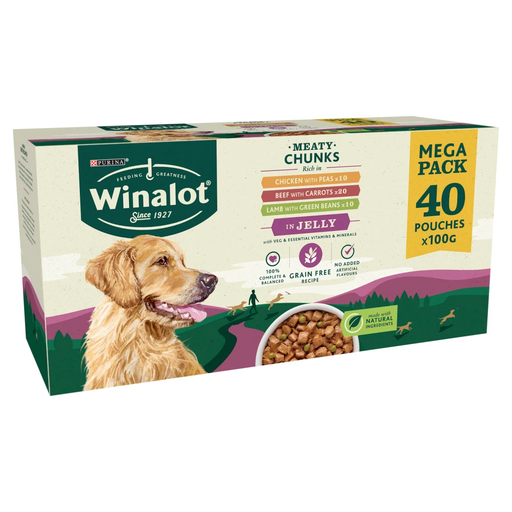
Why This Fits Their Persona: A 40-pack of 100g pouches provides portion-sized servings and several adult recipes, useful for households wanting convenient everyday meals with less opened food to store.
The product information states that it is complete and balanced for adult dogs, with feeding guides for wet-only and mixed feeding rather than relying only on promotional wording.
40 x 100g format; three jelly recipes; listed at 75 kcal per 100g for the stated varieties.
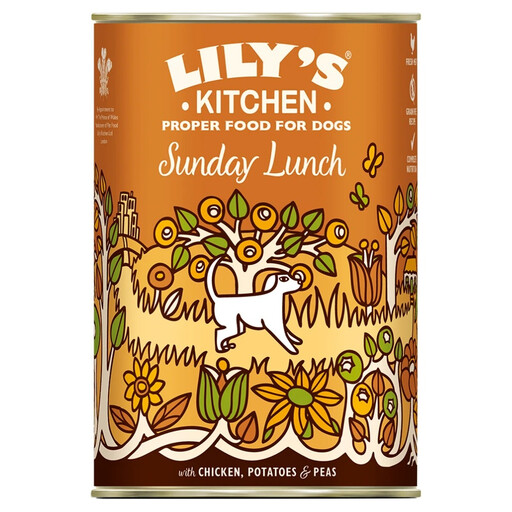
Why This Fits Their Persona: This 400g adult recipe suits owners who want a grain-free meal with a clearly specified fresh chicken composition and a traditional Sunday-lunch flavour profile.
The composition lists 60% fresh chicken and identifies the recipe as complete and balanced for adult dogs aged four months and older.
Grain-free recipe; 10.1% crude protein; 91 kcal per 100g as listed by the product information.

Why This Fits Their Persona: A 12-tin multipack is practical for owners feeding wet food daily, particularly those who prefer larger servings and rotating chicken, beef and turkey recipes.
The label information identifies it as complete food for adult dogs and gives a clear 400g serving reference, while the grain-free status is stated as a recipe feature rather than a universal health promise.
12 x 400g tins; three gravy recipes; listed at 8.5% crude protein and 5% fat.
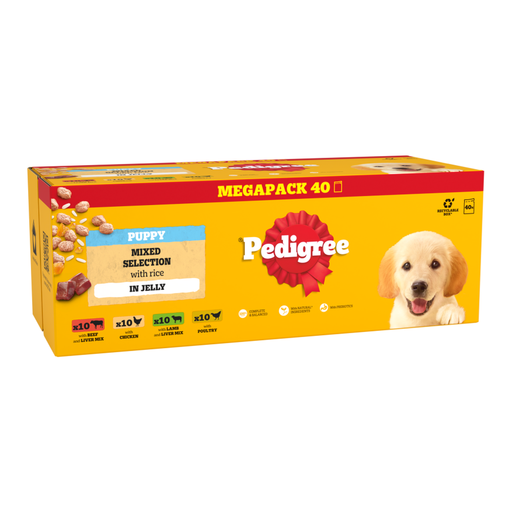
Why This Fits Their Persona: The 40-pouch mixed selection is designed for puppies and offers small, portioned servings across four recipes, useful during the frequent-meal stage.
It is identified as complete puppy food, with feeding guidance based on age, expected adult weight and activity rather than adult-dog portions.
40 x 100g pouches; four jelly recipes; listed at 89 kcal per 100g for the stated variants.
We have compiled a complete, real-time list of products that fully satisfy these strict selection criteria and UK safety regulations.
Introduce a new wet dog food gradually over five to ten days, unless the label provides different guidance. Mix increasing amounts of the new recipe with the existing food and monitor appetite, stools and general tolerance.
Serve at room temperature and provide fresh drinking water. Refrigerate unused food promptly in a covered container, following the product label’s timeframe. Discard food that has been left out or stored beyond the recommended period. Do not use dented, swollen or damaged tins.
Yes, provided it is labelled complete pet food for your dog’s life stage and fed according to the stated guide. Complementary food should not replace a complete diet unless advised as part of an appropriate feeding plan.
Not necessarily. Pouches can reduce waste and make portions easier to measure, while dog food tins may offer a lower cost per gram in some multipacks. Compare the total pack weight, price per 100g and your dog’s daily feeding amount.
Puppy food is formulated for growth and may not match an adult dog’s energy requirements. Use an adult recipe for adult dogs unless a veterinary professional recommends another approach. Always check the age suitability on the packaging before buying.