
24/7 Customer Support

Free returns

Same-day & Next-day Delivery

Quality Guaranteed

Unlock Your Welcome Offers: FREE Delivery | Up to 80% OFF | Free 30-day JoyPlus trial
Download the APP
Choosing wet dog food can feel straightforward until you compare tins, trays, pouches, recipes and feeding claims. A lower price may reflect a larger water content rather than better value, while “natural” or “high-meat” wording does not always tell you whether a product is nutritionally complete.
For UK dog owners, the practical priorities are simple: choose food suitable for your dog’s life stage, check that it is labelled as complete pet food and match the recipe to your dog’s tolerance, activity and portion requirements.
Some wet foods are designed as toppers or treats rather than a sole diet. If you want to feed wet food every day, look for wording such as “complete pet food for adult dogs” or an equivalent complete-and-balanced statement on the packaging.
A complementary product may need to be combined with another food to provide the full range of nutrients. Do not assume that an attractive ingredient list automatically makes a recipe complete.
A recipe may highlight a high percentage of meat, but the full composition still matters. Check whether the named meat is fresh meat, meat meal, broth or a combination. Moisture also affects comparisons: wet food commonly contains around 70–82% moisture, so protein percentages cannot be compared directly with dry food without considering the different formats.
Ingredients such as oils, vegetables, minerals and added vitamins can all have a place in a balanced recipe. The useful question is whether the food meets your dog’s nutritional needs, not simply whether one ingredient appears first.
Bulk packs can reduce the number of shopping trips, but an opened tray, tin or pouch usually needs refrigeration and must be used within a stated period. The guidance varies between products: some recommend using leftovers within 24 hours, while others allow two or three days.
A large pack is only economical if your dog enjoys the recipe and you can use it safely before it spoils. For smaller dogs, dog food pouches or 150g trays may reduce waste. Larger dogs may use dog food tins or 300–400g trays more efficiently.
Adult dog food is not automatically suitable for puppies or older dogs. Puppy wet food should be clearly intended for growth and development, with feeding guidance based on age and expected size. Senior dog food is generally formulated for older dogs, but the appropriate changeover depends on the individual dog and the product label.
Check the target age carefully. For example, some adult recipes are labelled for dogs from one year, while senior recipes may be intended for dogs aged seven and above.
Look for a complete pet food statement and review the analytical constituents, including:
Feeding amounts are guidelines rather than fixed prescriptions. Adjust portions according to body condition, exercise, age and whether you are mixing wet food with dry food.
Grain-free dog food may suit owners who prefer recipes without grains, but “grain-free” is not automatically necessary for every dog. If your dog reacts to a particular ingredient, read the complete composition and consider possible cross-contact statements.
For dogs with a sensitive stomach, look for a clearly labelled recipe with a manageable ingredient list and introduce it gradually over approximately five to seven days. Products described as hypoallergenic dog food should still be checked against your dog’s known sensitivities. Seek veterinary advice for persistent digestive symptoms or a suspected food allergy.
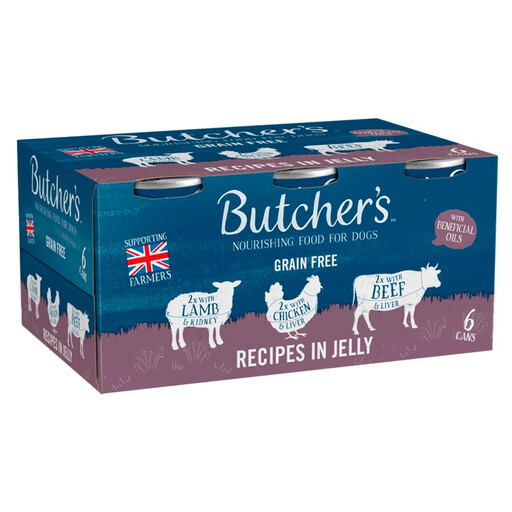
Why This Fits Their Persona: A straightforward multipack for owners who want familiar 400g tins and several meat varieties for everyday adult feeding.
It is listed as complete pet food for adult dogs, with feeding and storage instructions rather than relying only on broad natural-food wording.
The pack contains chicken and liver, beef and liver and lamb and kidney varieties; each 400g tin has 82% moisture and 5% fat content.
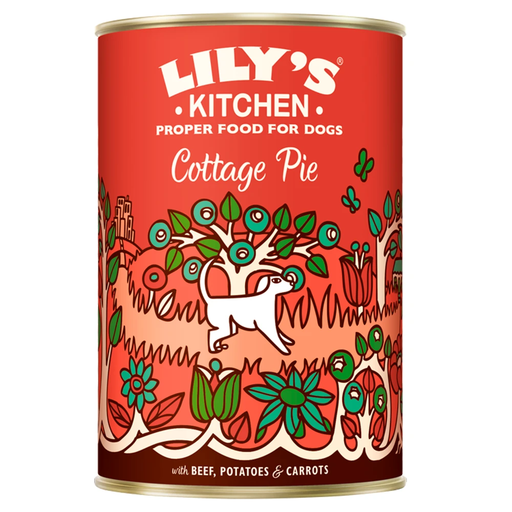
Why This Fits Their Persona: Suitable for owners seeking a grain-free adult recipe with a named meat ingredient and vegetables.
The product information identifies it as complete and balanced for adult dogs and provides a detailed composition rather than leaving the meat content unclear.
The recipe lists 60% fresh beef, potatoes, carrots and other vegetables, with 74% moisture and 6.9% crude fat.
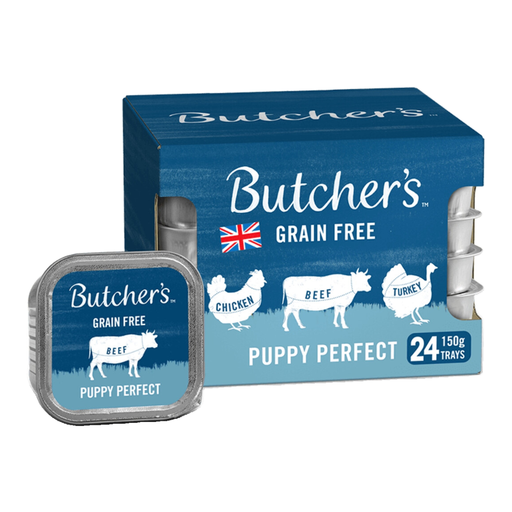
Why This Fits Their Persona: Designed for puppy owners who need small portions, multiple flavours and feeding guidance by puppy size and age.
It is specifically identified for puppies and includes separate portion guidance for toy, small and medium puppy sizes.
The 24 x 150g tray format supports portion control, while the grain-free recipe includes salmon oil and prebiotic mannan-oligosaccharide.
We have compiled a complete, real-time list of products that fully satisfy these strict selection criteria and UK safety regulations.
Introduce new natural wet dog food gradually, mixing increasing amounts with the existing recipe. Serve at room temperature unless the label states otherwise and provide fresh drinking water at all times.
Refrigerate opened dog food tins, trays and pouches promptly. Use the product within the label’s stated timeframe, keep utensils and bowls clean and discard food that has been left out for too long. If your dog has a diagnosed condition, persistent symptoms or a suspected intolerance, discuss dietary changes with a veterinary professional.
Yes, provided the packaging identifies it as complete pet food for the correct life stage. Complementary wet food should only be used alongside a suitable complete food according to the label instructions.
It may suit a dog that does not tolerate a particular grain, but grain-free does not guarantee that a recipe will suit every sensitive dog. Check all ingredients, transition gradually and seek veterinary advice if problems continue.
They can offer a lower cost per gram and make regular feeding more convenient. However, compare the price per 100g, check the feeding amount and choose a pack size your dog can use before opened portions exceed their recommended storage period.