
24/7 Customer Support

Free returns

Same-day & Next-day Delivery

Quality Guaranteed

Unlock Your Welcome Offers: FREE Delivery | Up to 80% OFF | Free 30-day JoyPlus trial
Download the APP
Buying a wet dog food multipack can make daily feeding easier, reduce last-minute supermarket trips and offer useful flavour variety. However, a larger box is not automatically better value or suitable for every dog. The important details are often hidden in small print: life-stage suitability, whether the food is complete, serving size and storage instructions.
This guide from the Joybuy Product Recommendation Officer explains what to check before buying, including adult wet dog food, puppy wet dog food, senior wet dog food and options for sensitive digestion.
Terms such as natural wet dog food, “meaty chunks” and “with chicken” describe ingredients or presentation, but they do not necessarily confirm that the food provides all required nutrients. For everyday feeding, look for wording such as complete pet food or complete and balanced dog food on the packaging.
A product described as complementary food may need to be served alongside another food. Feeding it as the sole diet could create an unsuitable nutritional balance.
A mixed selection dog food box may contain several recipes, but the range must still match your dog’s age. Puppy, adult and senior recipes are formulated for different stages of life. For example, puppy food is not a substitute for senior dog food, while adult recipes may be unsuitable for young puppies.
Also check whether the product is intended for dogs under or over a particular age. Some adult products in this range are not suitable for puppies under 12 months, while senior options are intended for dogs aged seven years and over.
A 40-pack dog food variety pack may look economical, but portion sizes vary considerably. A small dog may take longer to use a large box, increasing the importance of storage after opening. Pouches and trays are convenient, but opened portions normally need refrigeration and should be used within the timeframe shown on the label.
Compare price per 100g, not simply the box price. A larger multipack can be more practical for multi-dog households or larger breeds, but a 6- or 12-pack may create less waste for a smaller dog.
Start by matching the food to your dog:
If your dog has a diagnosed condition, food allergy or ongoing digestive problem, consult a vet before changing diet. “Hypoallergenic dog food” and “sensitive stomach dog food” are useful search terms, but marketing language alone does not confirm suitability for a particular medical need.
Ingredients are listed in descending order by weight. Compare the named meat content, cereals, vegetables and added nutrients rather than relying only on front-of-pack claims.
The analytical constituents show the percentage of protein, fat, fibre, ash and moisture. Wet foods naturally contain a high proportion of water, so protein percentages cannot be compared directly with dry food without considering moisture content.
For shoppers seeking grain-free dog food, check the full composition. Grain-free does not automatically mean lower calorie, more digestible or suitable for every sensitive dog. Also look for cross-contact statements where relevant.
Choose between:
Flavour and texture also matter. Some dogs prefer dog food in gravy, while others eat dog food in jelly more readily. A variety pack can help identify preferences, but introduce new food gradually to reduce the chance of digestive upset.
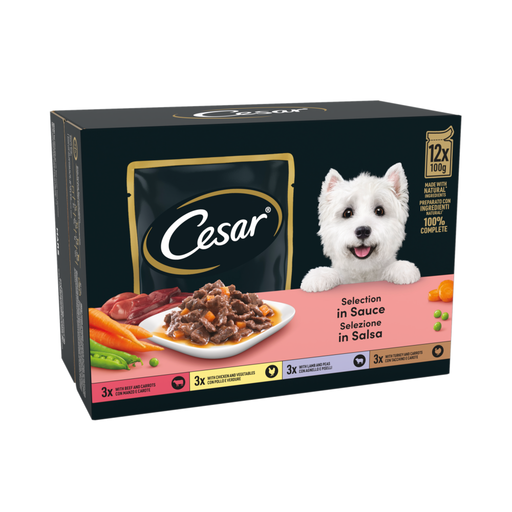
Why This Fits Their Persona: Individually packed 100g pouches offer measured portions for smaller adult dogs and households starting with wet food.
It is labelled as complete pet food for adult dogs, helping distinguish a daily meal from complementary food.
12 x 100g pouches; beef, chicken, lamb and turkey varieties in sauce.
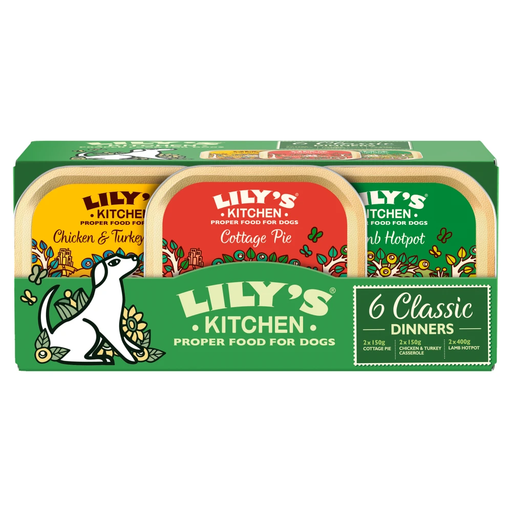
Why This Fits Their Persona: A smaller multipack provides recipe variety for owners who want clearly listed ingredients and fresh meat-based recipes.
The listed recipes identify meat, vegetables, grains and botanicals rather than relying only on broad front-label wording.
Six 150g portions; wheat-, corn- and soya-free recipes with adult complete nutrition.
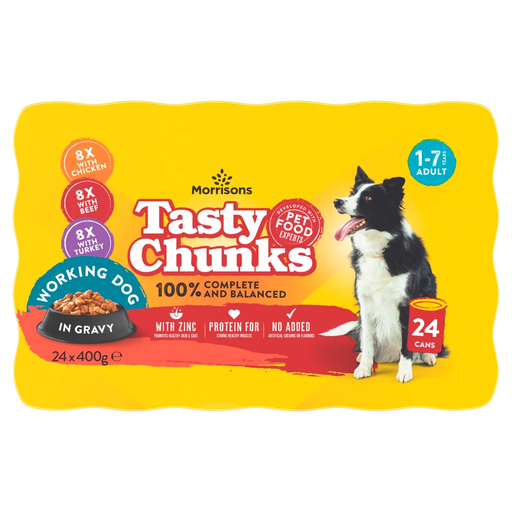
Why This Fits Their Persona: The 24 x 400g format suits larger dogs, multi-dog homes or owners who use substantial daily portions.
The pack size is clearly stated, so buyers can compare total weight and storage needs before ordering in bulk.
400g portions; chicken, beef and turkey recipes in gravy; stated as complete food for adult dogs.
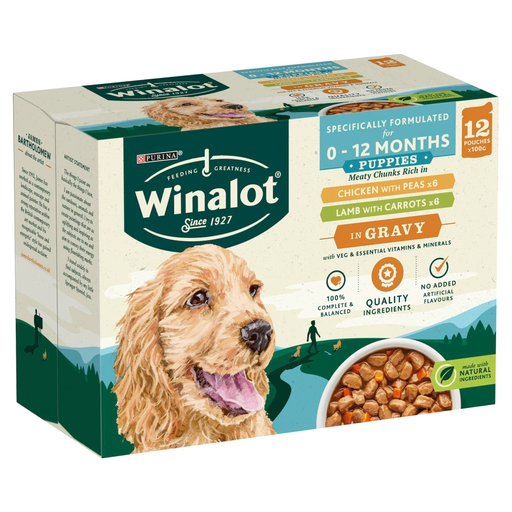
Why This Fits Their Persona: Designed for puppies aged 0–12 months, with small pouches that make feeding guidance easier to follow.
The stated age range helps prevent the common mistake of feeding an adult multipack to a growing puppy.
12 x 100g pouches; chicken and lamb recipes in gravy; labelled as complete and balanced puppy food.
We have compiled a complete, real-time list of products that fully satisfy these strict selection criteria and UK safety regulations.
It can reduce the price per 100g, but value depends on the total weight, feeding rate and waste after opening. Calculate the cost per portion and check that your dog will use the pack within its storage period.
Adult recipes should not normally replace puppy food. Choose a product specifically labelled for puppies and follow its age guidance. When changing from puppy to adult food, transition gradually and consider your dog’s breed size and individual needs.
The exact period varies by product. Many pouches and trays advise refrigerating unused food and using it within 24–48 hours, while some larger packs specify up to three days. Always follow the product label and discard food that looks or smells unusual.