
24/7 Customer Support

Free returns

Same-day & Next-day Delivery

Quality Guaranteed

Unlock Your Welcome Offers: FREE Delivery | Up to 80% OFF | Free 30-day JoyPlus trial
Download the APP
Choosing wet dog food can seem straightforward until you compare tins, trays and pouches with different life-stage labels, textures and feeding instructions. A colourful pack may promise “natural” ingredients, while a large multipack appears economical but may not suit your dog’s appetite or storage space.
For UK dog owners, the practical choice comes down to nutritional completeness, life-stage suitability, ingredients, portion control and packaging. Here is how to compare products without relying on vague marketing language.
Words such as “with chicken”, “in gravy” or “natural” describe particular features, but they do not automatically mean the food is suitable as a sole daily meal. Check the statutory description on the label. For everyday feeding, look for wording such as complete pet food for adult dogs, puppies or senior dogs.
A food described as complementary may need to be fed alongside another food. It should not replace a complete diet unless the packaging specifically explains how to use it.
Ingredient names can be presented prominently even when the recipe contains other ingredients in significant amounts. “With beef” does not necessarily mean the recipe is mostly beef. Check the composition and the stated percentages, particularly where your dog has known dietary sensitivities.
Similarly, grain-free dog food is not automatically more suitable for every dog. It may be a useful preference for some households, but the full nutritional profile and your dog’s individual needs matter more than a front-of-pack claim.
A multipack dog food offer may reduce the number of shopping trips, but the format affects daily convenience. A 100g pouch is easy to portion, while a 400g tin may suit a larger dog or a multi-dog household. If opened food regularly remains unused, the apparent saving may disappear.
Check refrigeration instructions, use-by guidance after opening and whether your dog can finish each serving within the recommended period.
Choose food according to your dog’s age and expected adult size:
Do not assume an adult recipe is suitable for puppies. Several products in this range specifically exclude young puppies or state a minimum age.
A complete and balanced wet food should provide the nutrients required for the stated life stage when fed as directed. Compare the label’s analytical constituents, including protein, fat, crude fibre, moisture and ash.
Moisture levels in wet food are commonly high, so compare calorie information where available rather than judging portion size by weight alone. For example, the listed energy values differ between products, so feeding guides should not be transferred from one recipe to another.
If combining wet and dry food, reduce the amount of each according to the manufacturer’s instructions. Overlooking mixed-feeding guidance can lead to excessive daily portions.
Texture is a practical consideration, not just a matter of taste:
Always serve food according to the packaging instructions, provide fresh drinking water and refrigerate unused portions as directed.
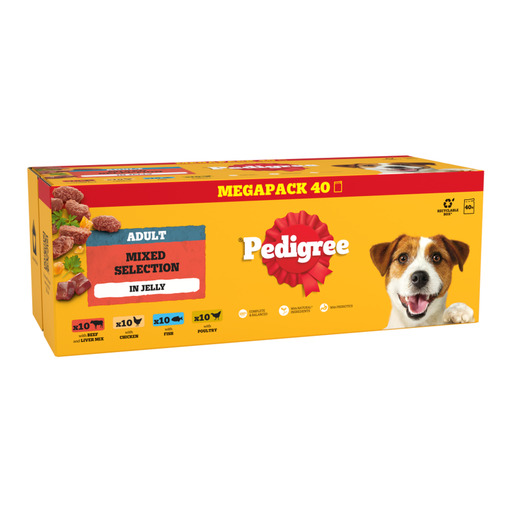
Why This Fits Their Persona: Forty 100g pouches provide portion control and several recipes, making this practical for owners starting a wet-food routine or managing daily servings.
The pack states that it is complete and balanced for adult dogs, while the individual pouches reduce the risk of repeatedly over-serving an opened tin.
Four recipes; 40 x 100g format; no added artificial colours, flavours or preservatives according to the product information.
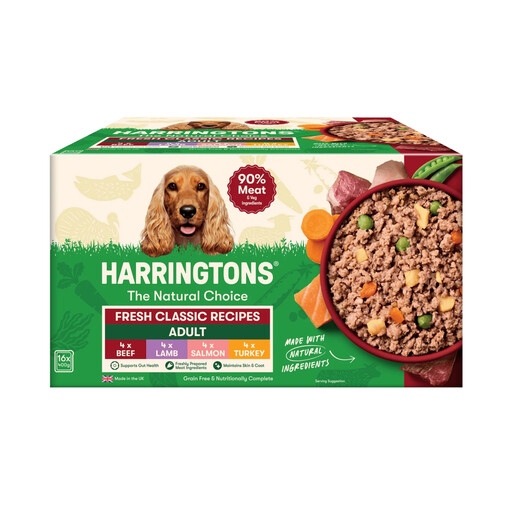
Why This Fits Their Persona: This larger UK-made multipack suits owners who prioritise a grain-free recipe, varied flavours and clearly stated ingredient information.
The listing identifies the recipe as complete, grain-free and free from artificial colours and flavours, rather than relying only on a general “natural” front-of-pack message.
Sixteen 400g trays; beef, lamb, salmon and turkey flavours; includes salmon oil and vegetables.
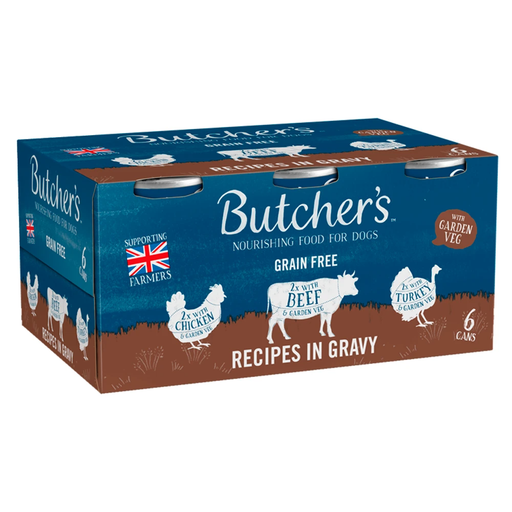
Why This Fits Their Persona: The larger tins and complete adult-dog recipes are suited to households with medium or large dogs that use wet food as a regular meal.
The composition gives named percentages for key ingredients and identifies the food as grain-free and complete for adult dogs.
Six 400g tins; chicken, beef and turkey recipes; natural gravy and garden vegetables.
We have compiled a complete, real-time list of products that fully satisfy these strict selection criteria and UK safety regulations.
Introduce a new wet dog food gradually over several days, particularly if your dog has a sensitive stomach. Follow the specific feeding guide rather than estimating by pouch or tin count. Age, weight, breed, activity and mixed feeding all affect the appropriate portion.
Serve food at room temperature unless the label says otherwise. Once opened, cover and refrigerate unused food, then use it within the period stated on the packaging. Discard food that has been left out beyond the recommended time. Keep unopened packs in a cool, dry place away from direct sunlight.
For dogs with ongoing digestive problems, allergies or other specific dietary needs, speak to a veterinary professional before making a major diet change.
Yes, provided the label states that it is complete pet food for your dog’s life stage and you follow the feeding instructions. Complementary food is not intended to provide the whole daily diet on its own.
The answer depends on your dog’s daily portion and how much food can be used after opening. Pouches offer measured servings and less leftover food, while tins may provide a lower packaging-to-food ratio for larger portions. Compare the total weight, price and feeding guide rather than the pack price alone.
Storage periods vary by product. Many listings advise refrigerating unused portions and using them within 24–72 hours. Always follow the product label, use a clean covered container where appropriate and discard food that looks or smells unusual.