
24/7 Customer Support

Free returns

Same-day & Next-day Delivery

Quality Guaranteed

Unlock Your Welcome Offers: FREE Delivery | Up to 80% OFF | Free 30-day JoyPlus trial
Download the APP
As a pet owner, you know that keeping your furry friend happy and well-fed is a top priority. Buying wet pet food multipacks seems like a smart choice—it’s convenient, often cost-effective and ensures you always have a meal ready. However, the sheer variety on the shelves can be overwhelming, and marketing claims can sometimes be confusing.
This guide, from your Joybuy Product Recommendation Officer, is designed to help you navigate the options. We'll highlight common purchasing pitfalls and break down the essential factors to consider, so you can choose a food that genuinely suits your pet's needs without overpaying for marketing hype.
Navigating the pet food aisle can feel like a minefield of buzzwords. Here are two common traps that UK shoppers fall into, leading to wasted money and unsuitable meals for their pets.
Labels like "gourmet", "fine flakes" or "succulent selection" paint a picture of premium quality. While these foods can be highly palatable, the terms themselves are not regulated and do not guarantee a higher nutritional value or meat content. Often, you are paying a premium for branding and texture rather than superior ingredients. The key is to look past the fancy name and check the composition list on the back.
When a package says it's made "with chicken," many of us assume chicken is the main ingredient. However, under UK and EU labelling regulations, the term "with" only requires the named ingredient to make up a minimum of 4% of the product. A food labelled "Chicken Recipe" or "All Chicken" must contain a much higher percentage. This 4% rule means the bulk of the food could be other, less desirable proteins or fillers. Always check the ingredients list to see the true primary protein source.
To ensure you're making an informed choice, focus on these two non-negotiable parameters.
The ingredients on a pet food label are listed in descending order by weight. This is the most reliable way to judge the quality of a food.
wet cat food and wet dog food pouches, provides all the nutrients your pet needs daily. Complementary foods are treats and should not be used as a sole source of nutrition.kitten food with extra calcium for growth or senior cat food with ingredients to support ageing joints and organs. For pets with sensitivities, a grain-free dog food or cat food might be a suitable option.The choice between cat food in gravy and dog food in jelly often comes down to your pet's preference.
Ultimately, the texture is secondary to the nutritional content. The most important thing is that your pet enjoys their meal and it provides them with a complete, balanced diet.
Instead of providing a generic list, we've matched some popular options to the specific needs of different pet owners.
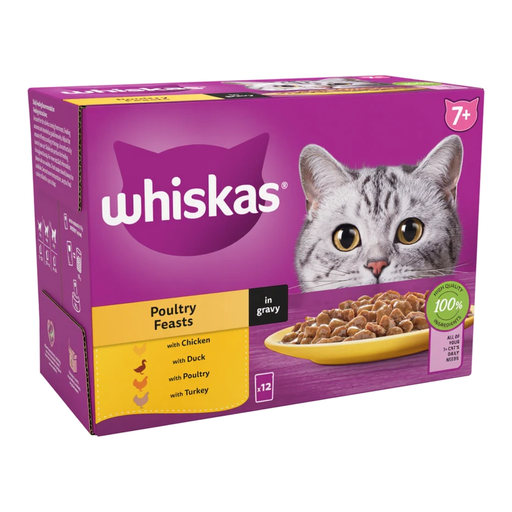
Why This Fits Their Persona: This owner is looking for a reliable, complete meal specifically for their ageing cat. They prioritise health support over fancy marketing and want a trusted brand that delivers consistent nutrition.
Instead of a generic "adult" food, this is specifically formulated for cats aged 7+, addressing their changing dietary needs directly and avoiding the one-size-fits-all pitfall.
Formulated with balanced mineral levels to support urinary tract health, a common concern in older cats. Provides 100% of a senior cat's daily nutritional needs.

Why This Fits Their Persona: This owner's cat gets bored with the same meal every day. They need a multipack with genuine variety and a texture that appeals to a more discerning palate to prevent food from going to waste.
This multipack offers four different poultry recipes, tackling the "variety pack trap" where a pet might reject one or two of the flavours. The focus on texture ("soft, delicate slices") also counters the "gourmet" illusion by delivering a genuinely palatable meal.
Features four distinct poultry combinations (Duck, Chicken, Poultry, Duck & Turkey) in a savoury gravy. The recipes are free from added artificial flavours and preservatives.
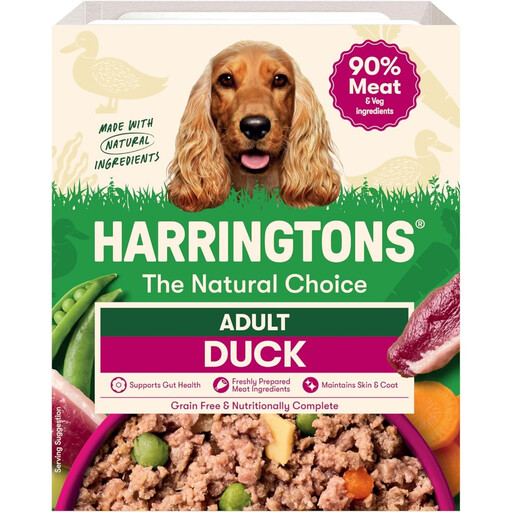
Why This Fits Their Persona: This owner carefully reads labels and prioritises high meat content and natural ingredients. They are wary of fillers like grain and artificial additives, seeking a wholesome, complete meal for their dog.
This food clearly states its high meat content (65% duck and chicken) and is 100% grain-free, directly countering the "4% meat" rule and the use of cheap grain fillers common in other foods.
Contains 26% freshly prepared duck and is free from artificial colours, flavours, dairy and soy. The convenient 400g dog food trays are easy to store and serve.
We have compiled a complete, real-time list of products that fully satisfy these strict selection criteria and UK safety regulations.
To avoid an upset stomach, transition your pet gradually over 7-10 days. Start by mixing a small amount of the new food (around 25%) with their old food (75%). Every couple of days, increase the proportion of the new food until you have fully switched over.
This depends on your pet's age, weight and activity level. All complete pet foods include a feeding guide on the packaging. For an average 4kg adult cat, this is typically 3-4 pouches per day. For dogs, the amount varies significantly by size. These are just guidelines, so monitor your pet's body condition and adjust portions as needed.
Nutritionally, there is often little difference between high-quality jelly and gravy recipes from the same brand. The choice largely comes down to your pet's preference. Some cats and dogs love licking up every last drop of gravy, while others prefer the texture of jelly. It can be useful to try both to see which your pet enjoys more.