
24/7 Customer Support

Free returns

Same-day & Next-day Delivery

Quality Guaranteed

Unlock Your Welcome Offers: FREE Delivery | Up to 80% OFF | Free 30-day JoyPlus trial
Download the APP
Choosing Whiskas cat food is not simply a matter of picking the most attractive pouch design. UK cat owners also need to check whether the recipe is suitable for their cat’s age, whether it is a complete and balanced cat food, and whether the pack size makes sense for everyday feeding.
From Whiskas adult cat food and kitten food to senior recipes, dry kibble, wet pouches, tins and treats, the range covers different routines and preferences. The guide below highlights common buying traps and practical checks before you add a product to your basket.
Not every Whiskas product is intended to replace a daily meal. For example, WHISKAS Temptations with Chicken & Cheese 60g is labelled as a complementary pet food for adult cats. It can be offered as a treat, but the packet’s feeding guidance says to reduce the main meal accordingly.
For everyday nutrition, look for wording such as “complete pet food” or “100% complete and balanced” on the label. Treats should remain a small part of the overall diet.
A cat aged one year, a growing kitten and an older cat may have different nutritional requirements. A product labelled 1+ is intended for adult cats, while senior recipes may be marked 7+ or 11+.
Do not assume that a popular flavour is suitable for every cat. Check the age guidance first, then compare salmon, tuna, chicken, poultry or mixed recipes.
Large boxes can reduce the need for frequent shopping, but they are not always practical if your cat refuses a flavour or if storage space is limited. Once opened, wet food should be covered and refrigerated according to the product label. Several Whiskas cat food pouches specify that unused food should be consumed within two days, while some senior products advise using opened portions within 24 hours.
If you are changing food, introduce it gradually over around seven days where the label recommends this. This gives you time to observe whether your cat accepts the texture and recipe.
Start with the age printed on the packaging:
If your cat has an allergy, diagnosed condition or prescribed diet, review the ingredients with your veterinary practice before switching foods.
A complete recipe is designed to provide the required daily nutrients when fed as directed. The Whiskas adult wet pouches, tins and many dry recipes listed here are described as complete and balanced meals.
Treats, toppers and snacks are different. The 60g chicken and cheese treats, for example, provide fewer than two kilocalories per treat according to the listing, but they are still complementary rather than a replacement for food.
Whiskas wet cat food in jelly has a high moisture content. The listed adult pouch recipes contain approximately 84.5% moisture, while the 400g chicken tin lists 83.7%. Jelly can also suit cats that prefer soft textures.
Whiskas dry cat food is easier to portion and store after opening. Listed adult dry recipes provide approximately 30% protein and 11.5–12.2% fat, depending on the flavour and product. Feeding quantities vary by recipe, so use the product label rather than copying amounts from another bag.
Mixed feeding can offer variety, but portions must be adjusted. Several listings state that one 85g pouch can replace approximately 15–18g of dry food. Treat calories should also be included in the daily amount.
Flavour names do not always mean that the named ingredient makes up most of the recipe. For example, the listed wet pouch compositions specify around 4% salmon, tuna, chicken or another named ingredient in the chunks. Read the full composition if your cat has sensitivities.
Pack sizes range from small 300g or 800g dry bags to 1.9kg bags and multipacks of 12 or 40 pouches. Smaller packs are useful for trying a recipe; larger packs may suit multi-cat households or cats with an established preference.
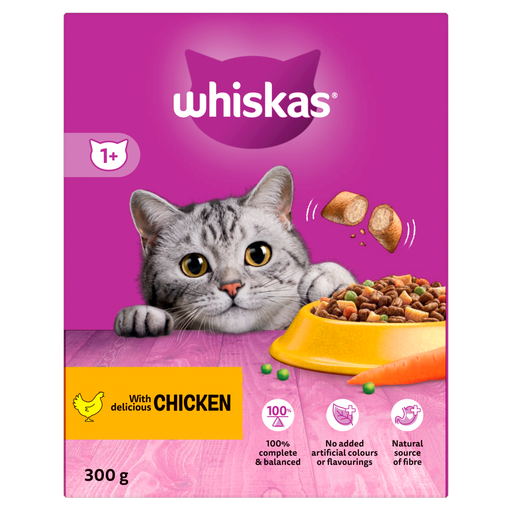
Why This Fits Their Persona: A compact dry-food pack lets a new adult-cat owner try the recipe without committing to a large bag. It is suitable for cats aged 1+ and provides a stated complete and balanced diet.
The 300g size helps avoid waste if your cat does not accept the flavour, while the adult age guidance reduces the risk of choosing kitten or senior food accidentally.
Dry kibbles include a stated natural source of fibre, with listed Vitamin A, taurine and zinc additives.
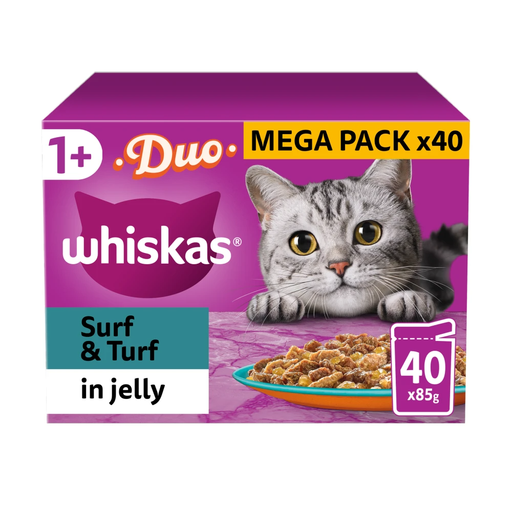
Why This Fits Their Persona: This large multipack suits owners who want varied fish-and-meat combinations in individual portions for an adult cat.
The pack is clearly identified as a complete meal for adult cats, rather than a treat, and the 85g portions help limit opened-food storage.
The recipe combines dual protein varieties and lists 83.7% moisture, with feeding guidance for 3kg, 4kg and 5kg cats.
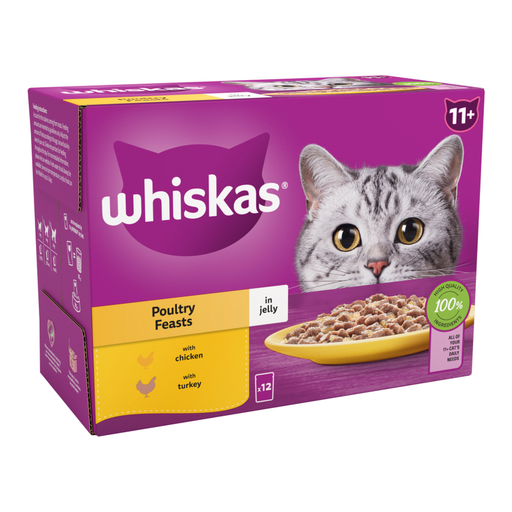
Why This Fits Their Persona: Designed for owners feeding an older cat aged 11 and above who prefers soft, portioned meals with chicken or turkey flavours.
The 11+ label makes the life-stage match clear, avoiding the common mistake of feeding a general adult recipe to a cat needing senior-specific guidance.
The pouches contain 84.5% moisture, smaller pieces and listed taurine, with feeding guidance for cats weighing 3–5kg.
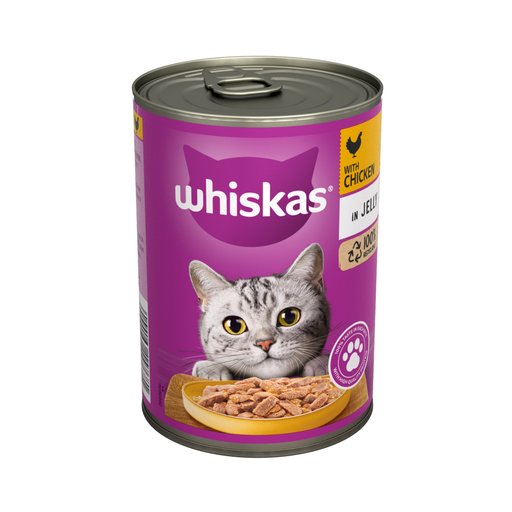
Why This Fits Their Persona: A 400g tin can suit owners who prefer serving wet food by weight or combining it with measured dry food for an adult cat.
The product is labelled as a complete adult meal, and the stated wet-to-dry replacement guidance helps owners calculate portions instead of overfeeding.
The tin contains 83.7% moisture and provides feeding ranges for 3kg, 4kg and 5kg cats.
We have compiled a complete, real-time list of products that fully satisfy these strict selection criteria and UK safety regulations.
Many adult and senior Whiskas recipes listed as complete and balanced are intended for everyday feeding when portions are adjusted to the cat’s weight, age and activity level. Check the label carefully, as treats and complementary products should not replace the main diet.
This depends on your cat’s preference, feeding routine and portion requirements. Wet food in jelly has a high moisture content and comes in ready-portioned pouches or tins. Dry food is convenient to store and measure. A mixed approach is possible, but reduce each portion so the total daily intake remains appropriate.