
24/7 Customer Support

Free returns

Same-day & Next-day Delivery

Quality Guaranteed

Unlock Your Welcome Offers: FREE Delivery | Up to 80% OFF | Free 30-day JoyPlus trial
Download the APP
Choosing Whiskas cat food can look straightforward until you compare life stages, pouch counts, flavours and feeding instructions. Packaging often highlights tempting flavours or added vitamins, but these details do not automatically mean a food is suitable for your cat’s age, routine or dietary needs.
This guide explains what to check before buying, including the difference between Whiskas wet cat food, Whiskas dry cat food, adult and senior recipes, and larger variety packs.
Chicken, poultry, salmon and tuna can all appeal to cats, but flavour is only one part of the decision. A food labelled for adult cats is not necessarily appropriate for kittens, while senior recipes are designed for specific age brackets such as 7+ or 11+.
Check the wording on the pack carefully:
Some products, such as Whiskas Temptations with Chicken & Cheese, are complementary treats. They are not designed to replace your cat’s main food. The pack recommends up to 12 pieces daily, with the main meal reduced accordingly.
For everyday feeding, look for the statutory description “complete pet food” or equivalent wording. A complete and balanced cat food is formulated to provide the required nutrients when fed as directed. Treats should remain a small part of the overall diet.
A large box may appear more economical, but wet food is usually fed in several pouches per day. For example, the listed feeding guidance for several 85g adult pouch recipes is around 3–4 pouches daily for an average 4kg cat. A 12-pack and a 40-pack therefore serve different shopping needs.
Compare:
This is the most important label check. Wet pouches such as Whiskas cat food in jelly are listed as complete meals when intended for adult or senior cats. Dry recipes are also sold as complete diets for particular life stages.
By contrast, treats are complementary. They should not provide the majority of your cat’s daily calories.
Feeding recommendations are starting points, not fixed rules. A 4kg indoor cat may need a different portion from a highly active outdoor cat of the same weight. Use the pack’s guidance and monitor body condition rather than topping up the bowl automatically.
For reference, the supplied products give examples such as:
When switching food, introduce it gradually over around seven days where the label advises this. Cats with allergies, diagnosed conditions or unusual eating habits may need tailored advice from a veterinary professional.
Whiskas wet cat food contains high moisture and is served in jelly or another wet format. This can suit cats that prefer softer textures or owners who want individually portioned meals. Once opened, unused food should be refrigerated and used within the timeframe stated on the label.
Whiskas dry cat food is easier to store and measure. It can be convenient for households where meals need to be portioned in advance. Fresh drinking water should always be available, particularly when feeding dry food.
Mixed feeding can be practical, but reduce portions rather than adding a full wet meal alongside a full dry ration. Some listed guidance indicates that one 85g pouch can replace approximately 15–16g of dry food, although the exact figure varies by product.
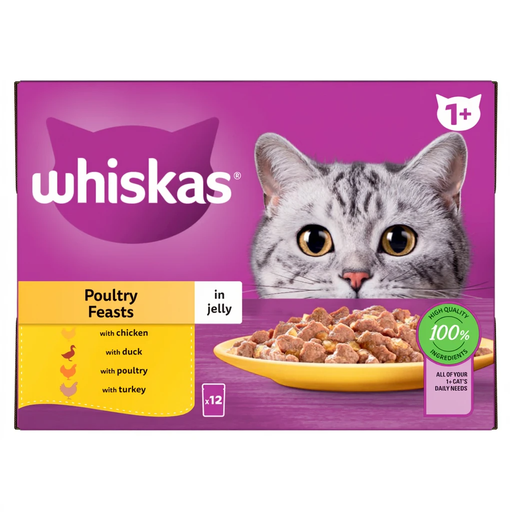
Why This Fits Their Persona: A manageable 12-pouch pack gives new or budget-conscious owners a practical way to check whether their adult cat enjoys poultry flavours before buying a larger case.
The product is identified for adult cats aged 1+ and listed as a complete meal, helping avoid buying kitten or complementary food by mistake.
12 x 85g individual pouches; poultry recipe in jelly; listed feeding guidance for adult cats.
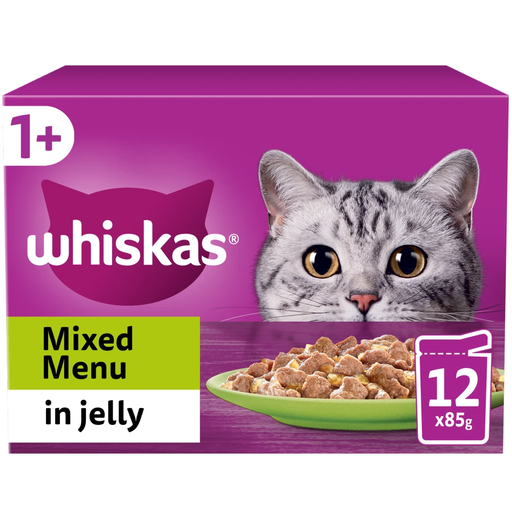
Why This Fits Their Persona: Suitable for owners who want more variety at mealtimes, with beef, chicken, salmon and tuna recipes in one adult pouch selection.
The flavour variety reduces reliance on one appealing front-of-pack image while the pack still states adult suitability and complete nutrition.
Four flavour profiles; 12 individually portioned 85g pouches; listed as meeting adult cats’ daily nutritional needs.

Why This Fits Their Persona: A larger pack suits multi-cat households or owners who feed a senior cat wet food regularly and want fewer repeat purchases.
The age marking is clear at 7+, so owners can avoid selecting a standard adult recipe solely because the flavour sounds familiar.
40 x 85g pouch format; senior wet recipe; poultry flavour selection; jelly consistency.
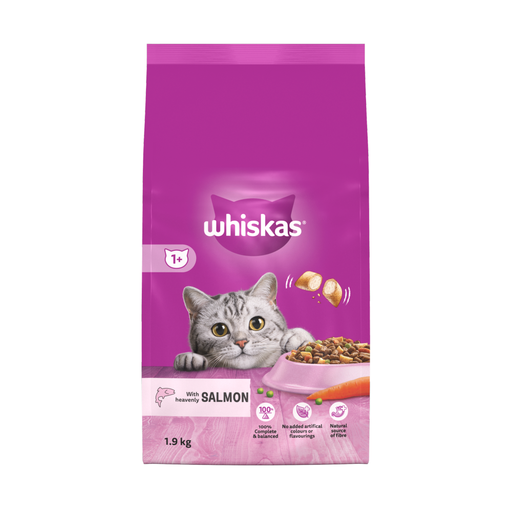
Why This Fits Their Persona: The 1.9kg bag works for owners who prefer measured dry portions and a cupboard-friendly format for an adult cat.
The pack identifies the recipe as adult food and provides gram-based feeding guidance, making portion control clearer than free-pouring.
1.9kg quantity; salmon recipe; listed protein content of 30.4%; natural fibre and feeding guidance by cat weight.
We have compiled a complete, real-time list of products that fully satisfy these strict selection criteria and UK safety regulations.
Many listed adult and senior pouch recipes are described as 100% complete and balanced. Always confirm the exact wording on the product label, as treats and complementary products are not substitutes for a main meal.
Follow the individual label. Several pouch listings advise refrigerating unused food and consuming it within two days, while some senior products advise disposal after 24 hours. Keep opened food covered and serve it at room temperature where instructed.
The answer depends on daily portions, pack size and whether you include treats. Dry food generally stores for longer after opening and is measured by grams, while wet pouches offer pre-portioned servings. Calculate the daily cost rather than comparing shelf prices alone, and always provide fresh water.