Regular shared-house dip maker
If you make enough dip for flatmates or meal prep, a processor bowl or jug that accommodates your usual portion can avoid repeated small batches. Consider the room its attachments will need afterwards.


Choose a food processor or blender system with a processing bowl if you regularly make white bean dip for several people. If cupboard space matters more and batches are small, a hand blender with a mini processor is a more compact route. Match the bowl to your usual portion and plan how its parts will be cleaned and stored; dishwasher-safe parts alone do not establish that shared equipment is suitable for allergen-free food.
If you make enough dip for flatmates or meal prep, a processor bowl or jug that accommodates your usual portion can avoid repeated small batches. Consider the room its attachments will need afterwards.
For smaller batches and limited cupboard space, a hand blender with a mini processing attachment may be easier to accommodate than a jug-based system. Check the attachment capacity before choosing it for group portions.
If other users prepare foods containing sesame, nuts or dairy, agree how every food-contact part will be cleaned. When someone requires allergen-free food, consider separate equipment rather than assuming routine washing removes the risk; Coventry City Council highlights the cleaning difficulty of blenders in its food-business guidance.
Choose when: you regularly make dip for several people and will use the appliance for other preparation tasks.
Allow for: bowls, blades and lids that need washing and storage in a shared kitchen.
Choose when: you usually make a small batch and have limited storage space.
Allow for: repeat batches when the mini processor cannot hold your usual group portion.
Choose when: you want a processor bowl and blender attachment without prioritising personal cups or numerous automatic programmes.
Allow for: hands-on control of texture; Kenwood lists two speeds plus pulse for the FDP31.170GY.
For white bean dip in a shared kitchen, start with the portion you normally make, then consider texture control, cleaning and where the appliance will live.
| Concern | What to check | Who this matters to |
|---|---|---|
| Consistent texture | Check the included processing attachment, usable capacity and controls for stopping and scraping down. | If smooth dip is my priority, I want control over a batch that fits the bowl rather than relying on motor wattage alone. Around 31% of consumers put texture first. |
| Cleaning and allergens | Check which food-contact parts can be removed and washed as instructed; plan separate equipment if allergen-free preparation is required. | When I share blades and lids, I need a cleaning routine everyone can follow, without treating it as proof of allergen-free safety. Cleaning or allergen control comes first for around 25% of consumers. |
| Portions and space | Compare bowl capacity with your usual portion, then measure the space available for the appliance and its attachments. | I need enough room for the dip I normally make, but I cannot give up the shared cupboard to a system I seldom use. Around 25% of consumers prioritise that capacity-and-space fit. |
| Other preparation tasks | Compare the accessories actually included with the chopping, blending or other tasks you regularly do. | If one appliance will also handle my other prep work, I can justify keeping its extra attachments organised. Versatility is the primary concern for around 19% of consumers. |
Motor wattage alone does not settle how a particular bowl, blade, batch size and set of controls will handle your recipe. Which? considers consistency and ease of use alongside other factors in its blender testing.
Choose the format and capacity for your usual batch first, then check the exact model’s processing attachment and controls.
A multi-function system can cover more tasks, but its bowls, lids and blades also need somewhere to go between uses.
Measure the available cupboard space and consider whether you will use the additional tools often enough to store and clean them.
Coventry City Council’s food-business guidance identifies blenders as complex equipment that can be difficult to clean adequately for both allergen-containing and allergen-free preparation.
If someone needs allergen-free food, arrange separate equipment or seek appropriate food-safety advice rather than relying on a dishwasher-safe claim.
Ninja’s TB401UK and BN800UK illustrate the processor-and-blender route for shared batches and other preparation tasks.
Braun’s MQ55755M represents a hand-blender route with a mini processor for smaller portions.
Kenwood’s FDP31.170GY illustrates a compact food processor with a blender attachment and in-bowl accessory storage.
These food-processor and blender systems suit consideration for shared batches; the hand blender offers a smaller-batch option when storage space is tighter. Compare each model’s included parts with the portion you usually make.
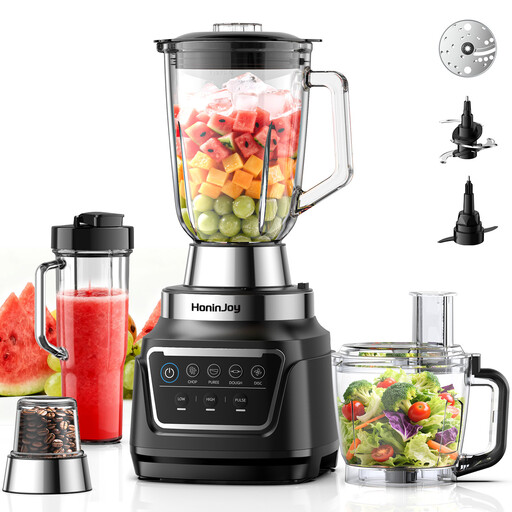 No image available
Consider this format if you want a processing bowl for dip alongside other food-preparation tasks. The product name identifies a 10-in-1 system and describes it as dishwasher-safe; check the instructions for the individual parts, and make room to store its accessories.
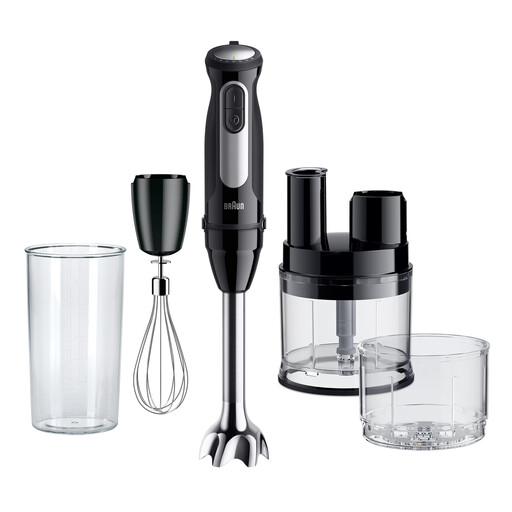 No image available
This is the smaller-batch route when storage is tight: Braun specifies a 500ml mini processor for the MQ55755M. The product name lists a 1000W hand blender, whisk and beaker; a group portion may take more than one processor batch.
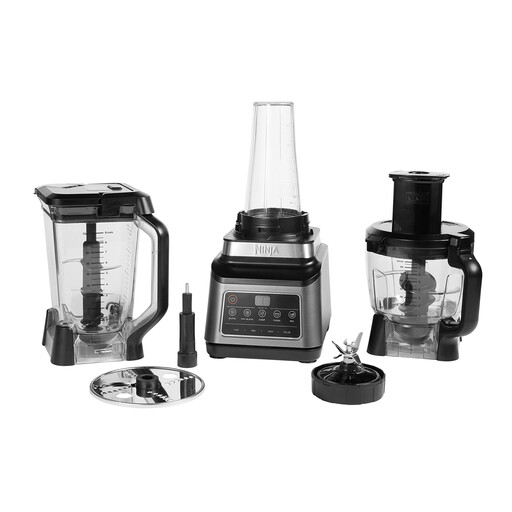 No image available
For regular shared portions, the 1.8L processor bowl provides a different batch option from a mini chopper. The BN800UK listing also specifies a 2.1L jug, 700ml cup, 1200W motor and Purée programme. Account for the bowls, blades and lids when planning cleanup and storage.
 No image available
Consider this system if you want a larger processor bowl and expect to use several preparation tools. Its product name specifies a 3L bowl, 1000W motor, 13 accessories, variable speed and pulse. Check where the accessories will be kept in the shared kitchen.
 No image available
This processor-and-blender format is worth considering if your usual dip portion calls for more space than a mini processor offers. The product name specifies a 2L bowl and 750W motor. Check the controls and the cleaning instructions for the parts you expect to use.
A food processor or blender system with a processing bowl suits regular portions for several people, while a hand blender with a mini processor is a compact option for smaller batches. Check the attachment capacity against the amount you normally make.
No: dishwasher-safe status describes a cleaning option, not suitability for allergen-free preparation after shared use. Coventry City Council’s food-business guidance identifies blenders as equipment that can be difficult to clean adequately for both allergen-containing and allergen-free foods.
GOV.UK’s cited allergen guidance addresses food businesses in England, Northern Ireland and Wales, not an informal meal shared at home. If you sell or cater the dip, check the current requirements for the relevant UK nation and how they apply to your activity.
Clean the bowl or jug, blades, lid, seals and any processing attachments according to the model’s instructions. In a shared kitchen, agree who will wash and put away the parts before someone else uses them.