Who is choosing the bar?
The intended serving matters more than the fact that each option is sold as one bar.
Hosts sharing one bar at a small private party
If several people will have a piece, compare net weights before settling on a flavour. The referenced conventional bars are 90g or 100g, while the M&S dairy-free example is 35g; one bar is not a consistent serving size.
Hosts catering for declared dietary or allergen needs
Choose against each guest’s requirements using the current pack. M&S says its vegan Made Without Dairy bar is not suitable for people with nut or peanut allergy; the Lindt and Green & Black’s examples also carry nut-related warnings.
Organisers providing school food in England
First establish whether the Halloween food falls under the English school-food framework and check the school’s arrangements. The Department for Education states that the school food standards are a legal requirement for state-funded schools and that confectionery is not allowed across the school day; the school-food regulations define chocolate as confectionery.
What should you check first?
Decide whether the bar is for sharing or one person, then check guest requirements and choose a flavour style. For a school event, establish which food rules apply before selecting a product.
| Priority |
What to check |
Your needs |
| Guest suitability |
Read the exact pack’s ingredients, highlighted allergens and precautionary statements. Check dietary claims separately from allergy warnings. |
I need to know whether each guest can be offered this particular bar. A vegan label alone does not settle a nut-allergy question. |
| Bar size |
Compare net weight with the number of people sharing. The referenced bars include 35g, 90g and 100g sizes. |
Will one bar be divided between guests, or is it an individual treat? The weight matters more than the bar count. |
| Flavour and sourcing |
Choose between a straightforward white bar, a vanilla-led style and an organic or Fairtrade-labelled option. Check the nutrition panel and allergens independently of those descriptions. |
I can choose a flavour or sourcing claim that matters to my guests without treating it as a nutrition or allergy guarantee. |
| Event setting |
For school-provided food, identify the UK nation and whether school-food standards apply. Keep those rules distinct from retail promotion rules for foods high in fat, salt or sugar. |
At a private party I can focus on my guests and the pack label; for a school food event, I need to check the applicable framework first. |
Relevant brand references
These examples illustrate different single-bar choices; a brand name alone does not establish the suitability of another product in its range.
Cadbury
Cadbury describes its White Chocolate Bar 90g as creamy white chocolate and vegetarian friendly.
- The 90g plain bar is a straightforward option to consider when one bar will be shared.
- For a guest with an allergy, check the current pack’s ingredient and allergen information before serving.
Lindt
The Lindt EXCELLENCE White Vanilla Bar is a 100g vanilla-led option.
- Its vanilla style offers a flavour choice for hosts who want something other than a plain white bar.
- Lindt warns that this bar may contain hazelnuts, almonds and other nuts; check its current label against guests’ requirements.
Green & Black’s
Waitrose & Partners lists the Organic 30% White Chocolate Bar as a 90g bar with organic and Fairtrade labelling.
- Its stated 30% cocoa content and sourcing labels distinguish this particular bar.
- The listing says it may contain nuts, so the sourcing labels should not be used to judge allergy suitability.
M&S
The M&S Made Without Dairy White Chocolate Bar is a 35g vegan alternative for a specific dietary requirement.
- Its smaller size may fit an individual treat rather than a bar intended for several guests.
- M&S says it is not suitable for people with nut or peanut allergy.
Single-bar options on Joybuy
These two white chocolate bars offer different weights for the party decision: a 90g bar to consider for limited sharing and a 47g bar to consider as an individual treat. Check the current pack before serving either to someone with a declared allergy.
 No image available
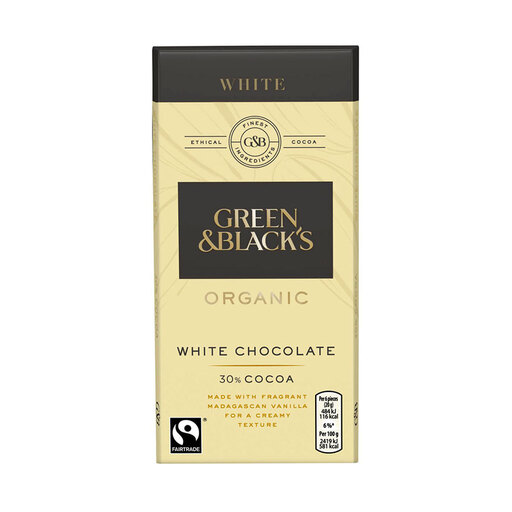
Green & Black’s White Chocolate 90g
The 90g weight is worth considering if one bar will be shared among a small group. Check the current pack’s ingredients and allergen statements against guests’ requirements before serving.
View on Joybuy
 No image available
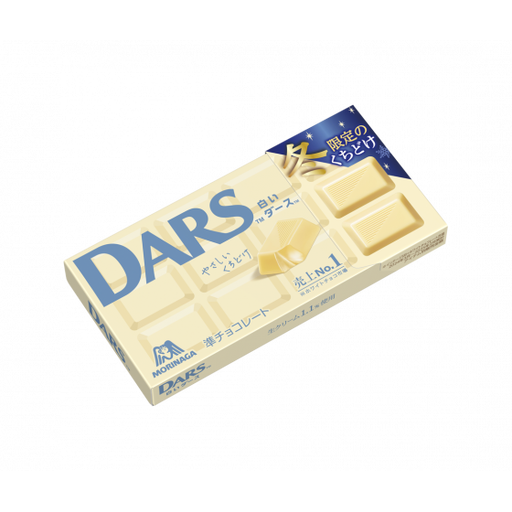
Morinaga Dars White Chocolate 47g
At 47g, this bar is a smaller option to consider for one guest or a treat bag rather than several people sharing. Check the current pack’s ingredients and allergen statements before serving.
View on Joybuy
Common questions
Can I serve white chocolate at a Halloween party at home?
Yes, the England rules described by the Department of Health and Social Care concern certain retailer promotions and placements of foods high in fat, salt or sugar, not a host serving a bar at a private party. Choose against guests’ dietary requirements and the current pack label.
Can a white chocolate bar be provided as school food in England?
Not where it is food provided under the English school-food standards: the school-food regulations define chocolate as confectionery, and Department for Education material says no confectionery across the school day. Establish whether those arrangements apply to the event and check the school’s policy; do not extend this England-specific conclusion to other UK nations.
Is a vegan white chocolate bar suitable for guests with nut allergies?
Not automatically. M&S says its vegan Made Without Dairy White Chocolate Bar is not suitable for people with nut or peanut allergy. Check the exact pack and each guest’s declared allergy rather than relying on the vegan claim.
What should I read on the pack before sharing a bar?
Check the ingredients, highlighted allergens, precautionary allergen statements and net weight on the exact bar you will serve. Read any dietary claim separately, and follow the pack’s storage and best-before information.
Does a stated cocoa percentage tell me the sugar content?
No. A cocoa percentage and a sugar figure describe different things, so compare the nutrition panels of the exact bars instead. Lindt Shop UK lists 57g sugars per 100g for its EXCELLENCE White Vanilla Bar; that figure should not be assumed for another white chocolate bar.


