Families baking cakes or biscuits together
If children are helping add chocolate to a mixture or decorate a bake, choose a format the recipe calls for, such as cooking chocolate or chunks. Check the ingredient label before anyone handles or eats it.


When the recipe calls for white chocolate to be melted, mixed into a batter or used as decoration, start with plain cooking chocolate or baking chunks: Waitrose & Partners and M&S describe products specifically for those uses. Choose a box of filled chocolates for gifting or serving alongside the finished bake, unless the recipe calls for the particular fillings. Check the ingredients and allergen information on the pack before children handle or eat either format.
If children are helping add chocolate to a mixture or decorate a bake, choose a format the recipe calls for, such as cooking chocolate or chunks. Check the ingredient label before anyone handles or eats it.
A box of truffles or assorted chocolates can be given or served after the baking activity. Keep filled pieces separate from the recipe unless their centres suit what you are making.
Check the exact pack rather than relying on the words “white chocolate”. The Lindt LINDOR white truffles listed by Lindt contain milk, lactose and soya and carry a precautionary statement for hazelnuts and other nuts; other products need their own label check.
Decide whether the chocolate is going into the recipe or is being bought to give or serve. Then check the format against the recipe and read the exact pack label.
Choose when: The recipe needs pieces in a mixture, melted chocolate or decoration; Waitrose & Partners and M&S describe products for these baking uses.
Bear in mind: These are recipe ingredients rather than ready-made gift selections, and their pack labels still need checking.
Choose when: The recipe permits a chopped or grated plain bar; Cadbury lists a 90 g white chocolate bar, while Waitrose & Partners describes its Belgian white chocolate as suitable to eat or use in recipes.
Bear in mind: Check for biscuit pieces, fillings or other inclusions before treating a bar as plain chocolate.
Choose when: The chocolate is a gift or something to serve after baking; Lindt describes its LINDOR white truffles as filled chocolates.
Bear in mind: Centres in truffles and assortments can change what a recipe contains, so do not assume they replace plain chocolate.
| Priority | What to check | Your needs |
|---|---|---|
| Recipe use | Check whether the recipe calls for pieces, grated chocolate or melted chocolate. Look for a stated cooking, baking or decorating use rather than assuming a filled chocolate will work the same way. | I want chocolate that matches what the recipe asks me to do with it, whether that is adding pieces to a mixture or making a drizzle. |
| Fillings and flavour | Read the product name and ingredients for centres, biscuit pieces or other inclusions. M&S describes caramel and orange crème centres in its mixed selection; Lindt describes a filling in its LINDOR white truffles. | If I am following a recipe for plain white chocolate, I do not want an assorted centre to become an unplanned ingredient. |
| Gift or ingredient | Check the pack format and weight against the recipe quantity, then decide whether any chocolates are intended to be served separately. | A box may be for sharing after we bake, while the chocolate going into the cake needs to be chosen for the recipe. |
| Ingredients and allergens | Read the current pack’s full ingredients, highlighted allergens and precautionary statements. Check the specific variant rather than transferring information from another bar or box. | Before a child handles or eats the chocolate, I need to check whether its ingredients and allergen information meet our household’s requirements. |
Filled truffles and mixed selections add centres that can change the ingredients and flavour of the finished bake. Lindt describes a filling in its LINDOR white truffles, while M&S lists varied centres in its selection box.
Use a plain product described for cooking or baking when the recipe requires plain chocolate. Keep a box for gifting or serving unless the recipe calls for its particular chocolates.
Ingredients differ by product: Lindt lists milk, lactose and soya in its LINDOR white truffles and says they may contain hazelnuts and other nuts.
Read the current label of the exact pack, including any precautionary statement, before purchasing or using it.
A bar can contain additions that matter to a recipe. Cadbury describes biscuit pieces and vanilla filling in its Oreo White Chocolate Bar, while Tesco describes Milka Bubbly Milk & White as milk chocolate filled with aerated white chocolate.
If the recipe calls for plain white chocolate, check the bar’s full description and ingredients before chopping or melting it.
These examples show why a brand name alone does not tell you whether a particular product is meant for baking, eating or gifting.
M&S describes its white chocolate and white chocolate chunks for home baking and dessert decoration.
Waitrose & Partners describes its Cooks’ Ingredients White Chocolate as a cooking product for uses including mousse, drizzling and cakes.
Lindt presents its LINDOR White Chocolate Truffles 200 g as a box of white-chocolate shells with filled centres for treating someone or sharing.
Cadbury lists a 90 g white chocolate bar as an eating bar rather than a dedicated cooking product.
Tesco describes Milka Bubbly Milk & White as milk chocolate filled with aerated white chocolate.
These options cover chips and chunks for baking, a white chocolate bar for recipes that permit one, and filled truffles for gifting or sharing after the bake. Check the exact pack and recipe before choosing between them.
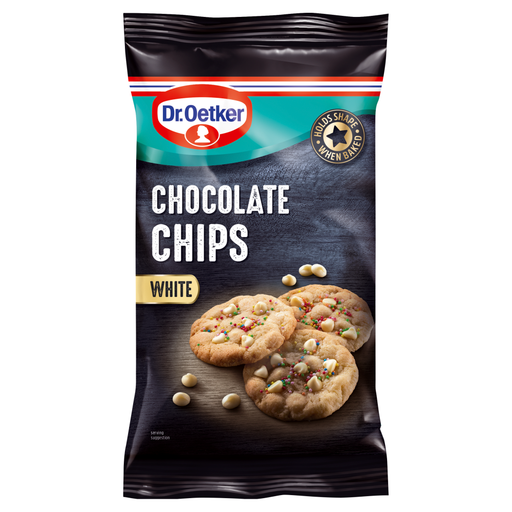 No image available
White chocolate chips for a recipe calling for pieces in a bake or melted chocolate for decoration. The product description gives melting instructions and lists milk and soya; check the current pack before use.
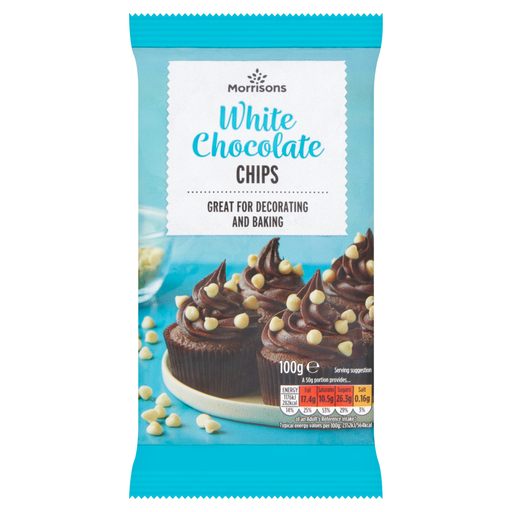 No image available
Chips described for baking and decorating, including use in biscuits, muffins and brownies. The product information lists milk and soya as allergens; read the current pack before adding them to a bake.
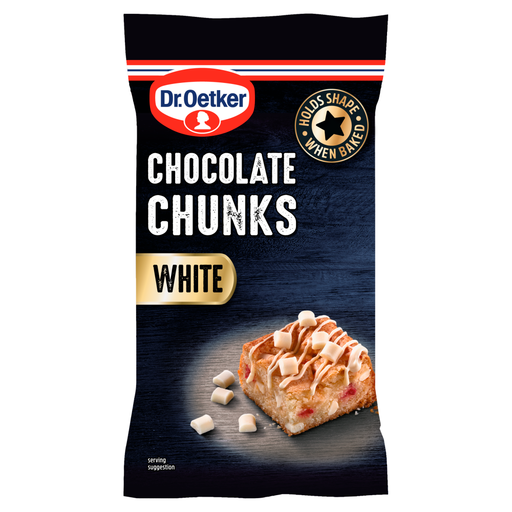 No image available
Chunks described for use in baked goods or melted for a dessert topping. Confirm the brand and exact product on the pack, as the accompanying product description contains a conflicting name; check its ingredients and allergen statement before use.
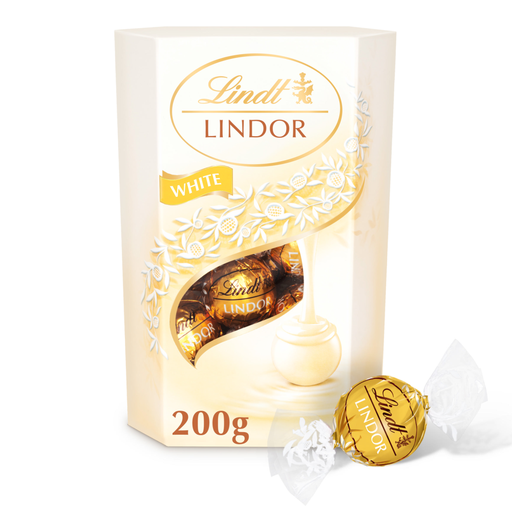 No image available
Boxed, filled white-chocolate truffles for gifting or serving after baking, rather than a direct substitute for plain recipe chocolate. Lindt lists milk, lactose and soya and says the truffles may contain hazelnuts and other nuts; check the current pack.
 No image available
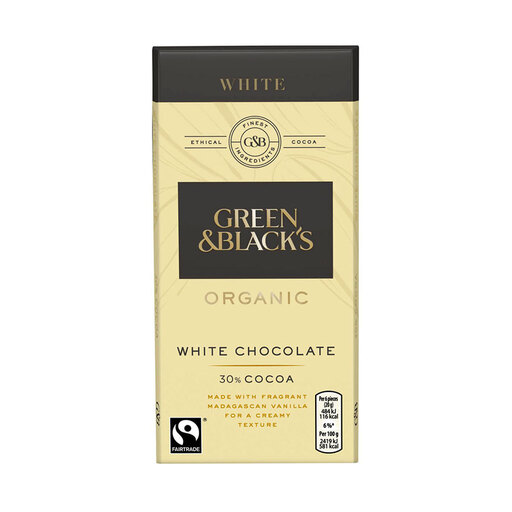
A white chocolate bar described as usable in baking when the recipe permits a bar. Its described vanilla flavour may matter to the finished recipe; the product information lists milk and soya and a possible nut warning, so check the current pack.
Not as a direct substitute when the recipe calls for plain chocolate. Lindt’s boxed LINDOR white truffles have filled centres, and M&S describes assorted centres in its mixed selection. Use those chocolates in a recipe only when their particular fillings suit it; otherwise, keep the box for gifting or serving.
Read the exact physical pack’s current ingredients, highlighted allergens and precautionary statements before the chocolate is handled or eaten. For example, Lindt lists milk, lactose and soya in its LINDOR white truffles and says they may contain hazelnuts and other nuts. Do not apply that product’s label information to a different bar, flavour or pack.
A bar is an option when the recipe permits chopped or grated white chocolate and the chosen bar’s ingredients suit the bake. Check that it is the intended plain format: Cadbury’s Oreo White Chocolate Bar contains biscuit pieces and vanilla filling, while Tesco describes Milka Bubbly Milk & White as a filled milk-and-white chocolate product.