For a long run, choose a practised carbohydrate-fuelling plan rather than treating one white-chocolate bar as a replacement for running fuel. World Athletics and the Australian Institute of Sport give guidance of 30–60 g of carbohydrate per hour for exercise lasting 1–2.5 hours, with higher intakes for longer events; the amount, timing and format need to suit the runner. A white-chocolate bar is a separate treat choice: compare the portion you would eat, its carbohydrate and fat, and its current allergen label.
Who is this decision for?
Whether a bar belongs in your shopping basket depends on what you expect to do with it: fuel a run, enjoy a treat around training, or meet a particular ingredient requirement.
Runners planning long-run fuel
You need a carbohydrate plan you can follow while running. World Athletics sets out intake ranges by exercise duration, while the Australian Institute of Sport advises practising a plan that accounts for hydration and gut comfort.
Runners choosing a training-day treat
You want white chocolate around a session without assuming the entire bar is one running-fuel serving. Pack weight and the nutrition figures for the portion you intend to eat matter more than the word “bar” on its own.
Shoppers checking dairy and allergens
You need the ingredient and allergen information for the exact product. A vegan label does not establish nut or peanut suitability: M&S explicitly warns against its Made Without Dairy White Chocolate Bar for people with those allergies.
What should you check?
Decide first whether you are buying food to consume during a run or a white-chocolate treat for another time. Then compare the amount you would actually eat, not just figures for a whole pack.
Fuel for a long run
Choose this route: When you need planned carbohydrate intake during exercise, consider a sports drink, gel, sports confectionery or sports bar.
Keep in mind: A portable format does not settle how much or how often to consume it; practise your timing, fluids and gut tolerance in training, as the Australian Institute of Sport advises.
White chocolate as a treat
Choose this route: When you want white chocolate for enjoyment around training rather than as your main on-run carbohydrate source.
Keep in mind: Check the portion’s carbohydrate and fat separately; M&S and Lindt product labels show that white-chocolate bars contain both.
| Priority |
What to check |
Your needs |
| Run duration |
Plan carbohydrate by the length of the session and by hour, rather than counting bars. World Athletics and the Australian Institute of Sport give 30–60 g per hour for 1–2.5 hours of endurance exercise; guidance for longer events extends to up to 90 g per hour, with conditions on the carbohydrate used at higher intakes. |
I want to know how a portion fits my plan for the length of run I am doing, not assume that one bar supplies an hour’s fuel. |
| Running format |
Check whether the food can be carried, opened and consumed in the portions and intervals you have practised. The Australian Institute of Sport advises testing a fuelling plan for hydration needs and gut comfort. |
If I will eat while running, I need a format and schedule I can practise before a long run or race. |
| Actual portion |
Read carbohydrate and fat per 100 g, then check the stated serving size and the amount you intend to eat. M&S lists 58.6 g carbohydrate and 37.0 g fat per 100 g for its 35 g Made Without Dairy bar; Waitrose lists 63.1 g and 30.2 g respectively per 100 g for its 180 g Belgian White Chocolate bar. |
A smaller bar or one square may suit the treat portion I want. I would count only what I actually eat, rather than the nutrition of an entire larger pack. |
| Ingredients and allergens |
Read the current pack’s ingredients, allergen declaration and any precautionary wording. M&S labels its Made Without Dairy bar vegan but says it is not suitable for people with nut or peanut allergy. |
When I need to avoid an ingredient, I cannot decide from the flavour name or a vegan label alone. |
Common mistakes to avoid
-
Treating a whole bar as one hourly serving
Pack sizes change the calculation. M&S sells a 35 g Made Without Dairy bar, while the 180 g Waitrose Belgian White Chocolate bar contains 10 servings. Neither pack size alone shows how much carbohydrate you would consume during an hour of running.
Start with your practised fuelling plan and read the nutrition for the portion you would actually eat. Keep a chocolate treat separate from the food you are relying on to meet a long run’s planned intake.
-
Assuming sugar makes white chocolate interchangeable with sports fuel
The composition differs between bars: Lindt lists 42 g carbohydrate and 51 g fat per 100 g for LINDOR White, while M&S lists 58.6 g carbohydrate and 37.0 g fat per 100 g for Made Without Dairy White Chocolate. Those figures do not establish that either bar works as a repeatable on-run portion.
For fuel during exercise, choose an amount and format you can practise in training. The Australian Institute of Sport advises finding a plan that suits individual hydration needs and gut comfort rather than trying an unfamiliar strategy on race day.
-
Using “vegan” as an allergen check
M&S labels its Made Without Dairy White Chocolate Bar vegan but explicitly says it is not suitable for people with nut or peanut allergy. A dairy-related preference and an allergy requirement are different checks.
Read the ingredients, allergen declaration and any precautionary statement on the current pack of the exact bar before eating it.
Brand and retailer references
These product-line examples show why a brand name alone cannot settle portion or allergen questions. Check the particular bar, since pack sizes and stated nutrition differ.
M&S
M&S lists a 35 g Made Without Dairy White Chocolate Bar labelled vegan.
- The product page states 58.6 g carbohydrate and 37.0 g fat per 100 g; that makes approximately 20.5 g carbohydrate in the full 35 g bar.
- M&S says this bar is not suitable for people with nut or peanut allergy. Its small pack is not, by itself, an hourly running-fuel plan.
Lindt
Lindt’s UK range includes the 100 g EXCELLENCE White Vanilla bar and the 100 g filled LINDOR White bar.
- Lindt states, per 100 g, 57 g carbohydrate and 36 g fat for EXCELLENCE White Vanilla, compared with 42 g carbohydrate and 51 g fat for LINDOR White.
- The two bars should not be treated as having the same nutrition. Their product pages also warn of possible hazelnuts, almonds and other nuts.
Waitrose
Waitrose Belgian White Chocolate is a 180 g bar listed as 10 servings.
- Waitrose states 63.1 g carbohydrate and 30.2 g fat per 100 g, allowing comparison with other bars on the same basis.
- Ten servings make the whole pack a poor proxy for one intended portion; the product page also carries a possible-nuts warning.
Cadbury
Cadbury identifies its White Chocolate Bar as a 90 g vegetarian product.
- The stated 90 g pack weight gives a starting point for checking the portion you intend to eat.
- Read the current pack’s nutrition and allergen information before counting a portion towards a training plan or choosing it for an ingredient requirement.
White-chocolate treat options on Joybuy
These options represent white-chocolate treats around training, not a selection of planned during-run fuel. The list includes a four-bar wafer multipack and a filled block as well as white-chocolate bars, so check the format before choosing a portion.
 No image available
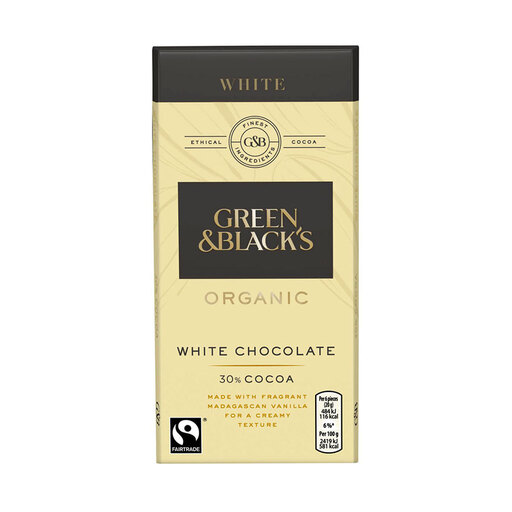
Green & Black's White Chocolate 90g
A 90 g white-chocolate bar to consider as a treat around training, rather than as a substitute for planned running fuel. Check the current pack for nutrition per portion and its allergen statement before choosing how much to eat.
View on Joybuy
 No image available
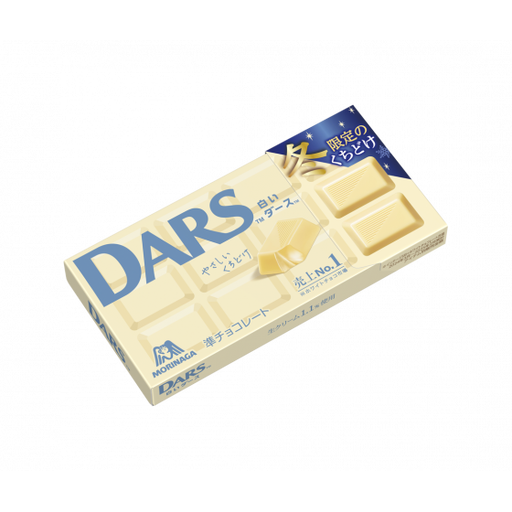
Morinaga Dars White Chocolate 47g
This 47 g pack is a white-chocolate treat option around training, not a measured on-run fuel serving. Read the current pack’s carbohydrate and fat figures for the amount you intend to eat, along with its allergen statement.
View on Joybuy
 No image available
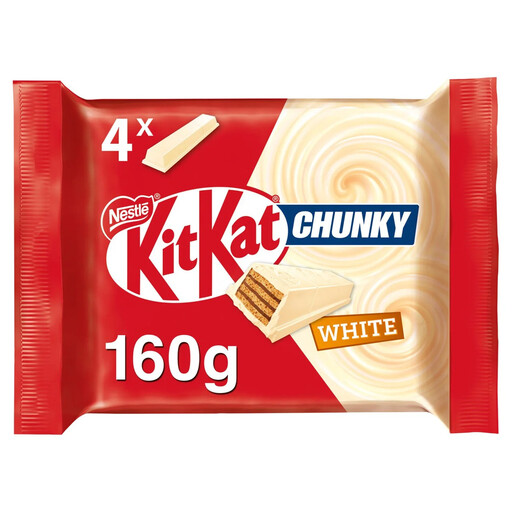
KitKat Chunky White Chocolate 4 Bars 160g
This is a four-bar wafer multipack, not one plain white-chocolate bar. If you want a single treat portion, compare the current pack’s nutrition per bar and check its allergen information; do not count the multipack as one running-fuel serving.
View on Joybuy
 No image available
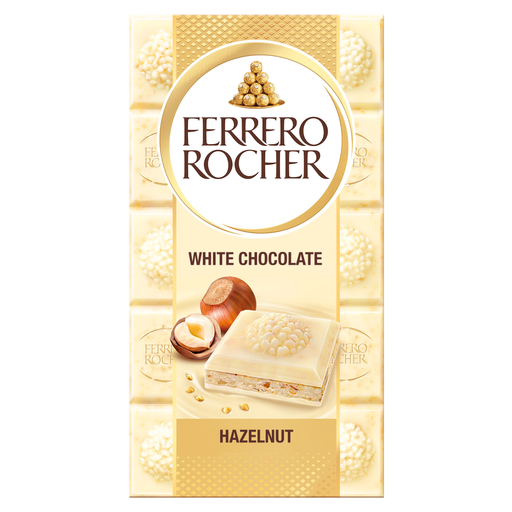
Ferrero Rocher White Block 90g
This 90 g filled hazelnut block is a treat rather than a plain white-chocolate bar or a planned running-fuel portion. Check the current pack for the nutrition of your intended portion and for its nut and other allergen information.
View on Joybuy
Questions about white chocolate and running fuel
Can one white-chocolate bar replace gels or other marathon fuel?
Do not treat one bar as a like-for-like replacement for a practised long-run fuelling plan. World Athletics and the Australian Institute of Sport give a range of 30–60 g carbohydrate per hour for 1–2.5 hours of endurance exercise; guidance for longer events reaches up to 90 g per hour, with conditions at higher intakes. A bar’s pack size does not establish its carbohydrate contribution per hour or whether its format suits repeated consumption while running.
When might white chocolate fit around marathon training?
It can be an optional treat around a session if its ingredients and portion suit you, without taking the place of planned on-run fuel. For long runs and race day, the Australian Institute of Sport advises practising the amount, timing and fluids in your fuelling plan with gut comfort in mind.
Which figures matter when comparing white-chocolate bars?
Compare carbohydrate and fat on the same basis, then check the nutrition for the portion you intend to eat. Waitrose lists 63.1 g carbohydrate and 30.2 g fat per 100 g for its Belgian White Chocolate, but its 180 g pack contains 10 servings; the whole pack is not one portion merely because it is one bar.
Does a vegan white-chocolate label settle nut or peanut suitability?
No. M&S labels its Made Without Dairy White Chocolate Bar vegan but says it is not suitable for people with nut or peanut allergy. For an ingredient or allergy requirement, check the exact current pack’s ingredients, allergen declaration and precautionary wording rather than relying on the vegan label alone.


