Runners wanting a small post-run sweet
A bite-sized format makes it easier to choose a few pieces to have alongside a normal meal or snack, rather than treating chocolate as the whole recovery plan.


For a small white-chocolate treat, Cadbury White Chocolate Buttons fit the bite-sized brief; giant buttons and truffles are different formats, even when they are easy to portion. For food before a run, Sports Dietitians Australia advises choosing familiar, carbohydrate-rich, low-fat options, so do not assume white chocolate can take the place of a training fuelling plan.
A bite-sized format makes it easier to choose a few pieces to have alongside a normal meal or snack, rather than treating chocolate as the whole recovery plan.
Compare the portion you would actually eat and its fat and carbohydrate values. Sports Dietitians Australia advises choosing familiar, well-tolerated food before exercise; try any change during training rather than for the first time on race day.
Read the current pack’s ingredients and allergen statements before eating, particularly if milk, soya or nuts are a concern. A product page is not a substitute for the label on the pack in hand.
Decide whether this is a treat to carry or food you intend to eat around a run; then compare a realistic portion rather than judging formats by pack size alone.
| Priority | What to check | Your needs |
|---|---|---|
| Training occasion | Check the carbohydrate and fat for the portion you plan to eat. Sports Dietitians Australia advises familiar, carbohydrate-rich, low-fat food before exercise. | For a long or hard run, I want my planned fuelling sorted before considering a sweet as an extra. |
| Piece size | Distinguish Cadbury’s bite-sized White Chocolate Buttons from products explicitly sold as giant buttons. Check whether a truffle or button suits the amount you want to carry. | A few small pieces would suit me better than eating directly from a sharing pouch. |
| Portion label | Compare figures on the same basis, then look at the labelled serving. Tesco lists 7.3g fat and 4.4g saturates per 25g of Cadbury White Chocolate Buttons; Lindt lists 48g fat and 35g saturates per 100g of LINDOR White Chocolate Truffles. | I want to know what the amount I would actually eat represents, not just read the pack’s per-100g figures. |
| Allergens | Read the current ingredients, declared allergens and precautionary statements on the physical pack. | If an ingredient or cross-contact warning matters to me, I need to check the particular product before eating it. |
The amount eaten can be hard to judge from the pack size. Tesco’s label gives figures for a 25g portion of Cadbury White Chocolate Buttons, while the pouch contains 100g.
Put aside the amount you intend to eat and compare labels using that portion.
White chocolate contains carbohydrate, but that does not establish whether a portion fits a particular session. Sports Dietitians Australia advises familiar, carbohydrate-rich, low-fat choices before exercise.
Plan food for the run separately, and test the timing and amount of any sweet during training.
An online description may not reflect the pack you receive, which matters when an ingredient or allergen warning affects your choice.
Check the physical pack’s ingredients and allergen statements before eating.
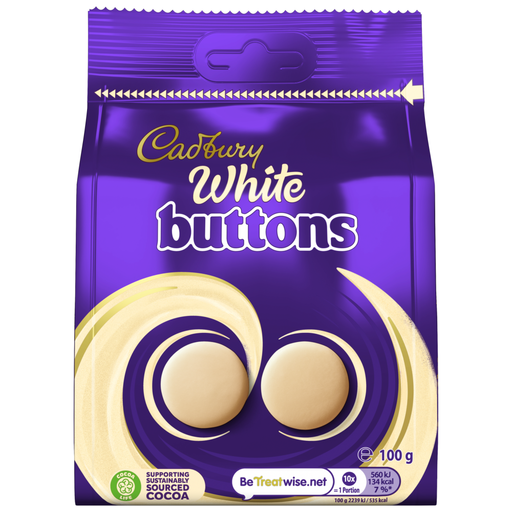
Cadbury describes its 100g White Chocolate Buttons pouch as bite-sized, making this specific product relevant when small plain pieces are the priority.
Waitrose & Partners describes Milkybar White Chocolate Giant Buttons as a 94g sharing bag.
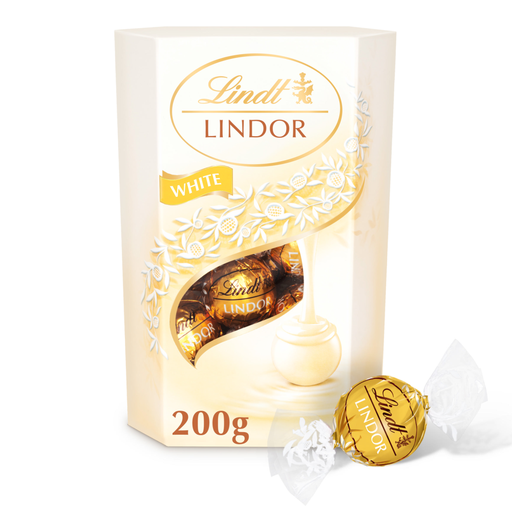
The 200g LINDOR White Chocolate Truffles box offers a truffle format rather than plain buttons.
Marks & Spencer presents its White Chocolate product for home baking and dessert decoration.
These are white-chocolate treats in truffle and giant-button formats. Neither should be confused with Cadbury’s bite-sized White Chocolate Buttons when small pieces are the deciding factor.
 No image available
Consider these as an optional sweet alongside your usual post-run food, rather than as the basis of a fuelling plan.
The 200g box contains white-chocolate truffles. Lindt lists 48g fat and 35g saturates per 100g; check the current pack for ingredients and allergens.
 No image available
Separate white-chocolate buttons may suit an occasional sweet, but this giant-button product is not the bite-sized Cadbury pouch discussed above.
The bag is 100g. Check the pack’s serving information if the amount per button matters to your choice.
Do not rely on a white-chocolate mini alone to meet a long run’s fuelling needs. Sports Dietitians Australia advises familiar, carbohydrate-rich, low-fat food before exercise; compare what you plan to eat with the needs of the session and trial it in training.
Cadbury describes its White Chocolate Buttons as bite-sized. Milkybar White Chocolate Giant Buttons and Cadbury White Giant Buttons are larger-button products, while Lindt LINDOR White Chocolate Truffles are a different format.
A few pieces should not be assumed to cover what you need after training. Sports Dietitians Australia’s recovery guidance considers the amount of carbohydrate in relation to body weight; keep any chocolate treat separate from your usual post-run food and drink plan.
Check the physical pack of the exact product before eating it. Read both the ingredients and any precautionary allergen statement rather than assuming that different white-chocolate buttons or truffles have the same formulation.
Start with the same basis, such as per 100g, then check the labelled serving against the amount you would actually eat. Look at carbohydrate, sugars, fat and saturates together rather than using sweetness or pack size as a shortcut.