Someone buying for their own desk
Look at the pack weight and decide whether you want to finish one compact bar at a break or keep a larger bar for later.


Choose the pack format before the brand: a compact bar suits one desk break, while a 90g to 100g bar makes more sense if you plan to portion it across several breaks. A 180g bar is a different choice for planned sharing; whichever format you choose, check the current pack’s ingredients and allergen statement before offering it to colleagues.
Look at the pack weight and decide whether you want to finish one compact bar at a break or keep a larger bar for later.
A bar you intend to break into squares calls for a different portioning decision from a personal snack. Check the current allergen label before leaving it in a shared area.
Check the particular product, not just its brand or vegan label. Milk ingredients and warnings about nuts, peanuts or other allergens matter when colleagues may share the food.
Start with how many breaks or people the pack needs to cover, then choose the texture and check whether its label works for everyone who may eat it.
| Priority | What to check | Your needs |
|---|---|---|
| Pack format | Compare pack weight with any stated servings. Decide whether the bar is for one break, several breaks or planned sharing. | I want a compact snack for my desk, rather than a larger bar I will need to put away or divide among colleagues. |
| Ingredients and allergens | Read the current ingredients and allergen statement, including any “may contain” or “not suitable for” wording. Check a vegan-labelled bar separately for other allergens. | If I bring chocolate into a shared space, I need to know whether its label is suitable for the people who might eat it. |
| Bar style | Check whether it is plain white chocolate, a filled bar or a wafer with white-chocolate coating. The name alone may not describe the whole texture. | Some days I want plain chocolate; on others, a filling or a crunchy wafer is the point of the snack. |
| Storage and label | Follow the pack’s storage instructions and keep chocolate away from heat. Use the current pack for the final dietary check. | I need the bar to suit where it will be kept at work, especially if it might sit in a drawer or break room. |
Waitrose describes its 180g Belgian White Chocolate bar as 10 servings and lists 97 kcal per square. The whole bar is therefore a different proposition from one square.
Compare the pack weight and serving information before deciding whether to buy it for yourself or to share.
M&S labels its 35g Made Without Dairy bar vegan, but also says it is not suitable for people with nut or peanut allergies.
Read the current pack’s full allergen statement before buying for someone else or putting food in a shared area.
Lindt describes its LINDOR White Bar as having a smooth melting filling, while Cadbury describes its 90g White Chocolate Bar as creamy white chocolate. Cadbury’s Oreo White bar adds biscuit pieces and a vanilla filling.
Check the product description for a centre, biscuit or wafer before choosing the texture you want.
Ingredients and product information can change, so a description viewed before purchase may differ from the pack being shared at work.
Make the final ingredients and allergen check against the current pack in hand.
Cadbury describes its White Chocolate Bar 90g as creamy white chocolate and vegetarian-friendly.
Lindt’s LINDOR White Bar 100g is a white-chocolate bar with a smooth melting filling.
M&S lists a 35g Made Without Dairy White Chocolate Bar and a 180g Choc Marks White Chocolate bar.
Waitrose Belgian White Chocolate is a 180g bar listed as 10 servings.
An Amazon UK listing describes a Milka White Chocolate Bar 100g.
These options include two white-chocolate bars and two multipacks of coated wafer bars. The multipacks offer separate snack units, but they are not single plain white-chocolate bars.
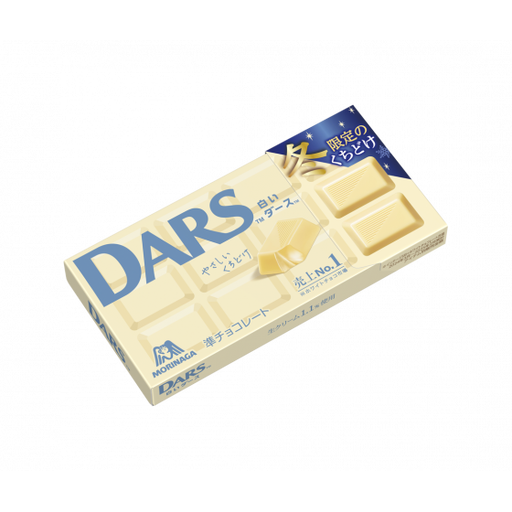 No image available
The 47g pack is an option if you want a compact personal treat; check its serving information if the amount for one break matters to you. Product information identifies milk and soya and warns that it may contain wheat and nuts, so check the current pack before sharing.
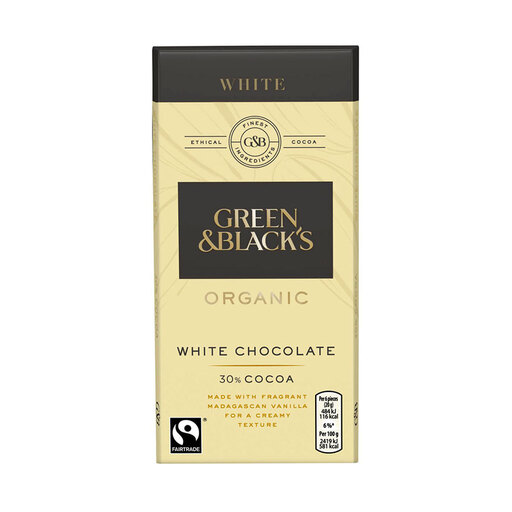 No image available
This 90g white-chocolate bar suits a plan to portion one bar across several breaks. Check the bar and its serving guidance if defined break-off portions matter. Product information lists milk and soya and warns that it may contain nuts; confirm the current pack’s allergen statement.
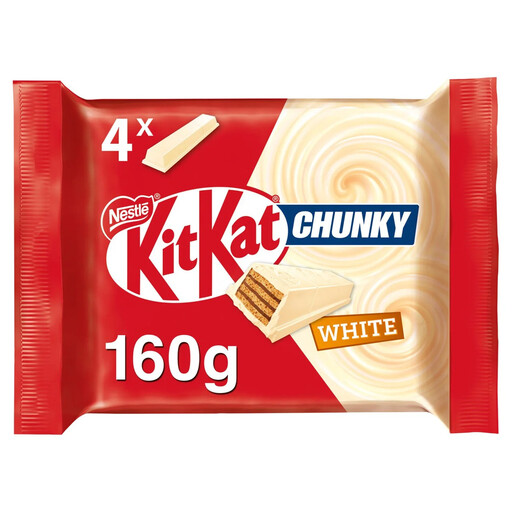 No image available
The four-pack offers separate bars for different breaks or colleagues. It is a wafer bar with white-chocolate coating, not a plain white-chocolate bar. Product information identifies milk and wheat; check the current pack’s full allergen statement before buying or sharing.
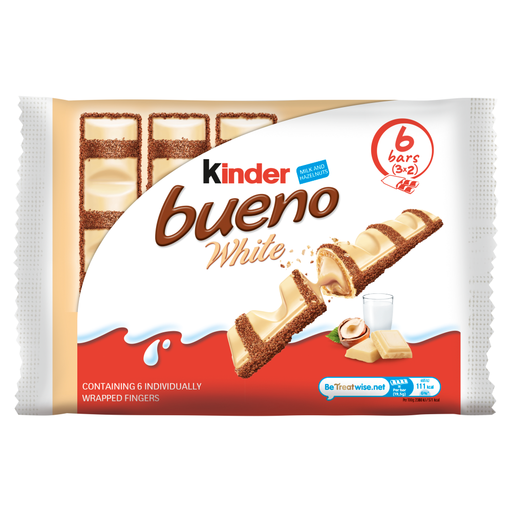 No image available
This three-pack offers separate bars if you want a filled wafer snack across multiple breaks. The bars have white-chocolate coating and hazelnut-cream filling rather than being plain white chocolate. Product information identifies dairy, soya, wheat and hazelnuts and warns of possible other nuts; check the current pack before sharing.
Not necessarily: buying one bar does not make the whole pack one serving. Cadbury lists a 90g White Chocolate Bar and Lindt lists a 100g LINDOR White Bar; either format makes sense when you intend to break off portions across breaks. Check the particular pack’s serving information for the amount you plan to eat.
M&S labels its 35g Made Without Dairy White Chocolate Bar vegan and vegetarian. M&S also says it is not suitable for people with nut or peanut allergies, so check the current pack before offering it in a shared office.
Check the storage instructions on your bar and use a cool, dry place away from heat and direct sunlight. A drawer near a heater or in a warm room may not meet those conditions.