Gym-goers wanting a sweet treat
White chocolate can be the treat alongside post-exercise food rather than its main protein component. If protein is the reason for choosing a snack, check what the whole eating occasion provides.


Choose buttons if you want to take a chosen amount from a bag; choose filled truffles if that is the kind of sweet treat you prefer. Neither format should be mistaken for the protein part of a post-exercise snack: the listed Cadbury White Giant Buttons contain 4.8g protein per 100g, while Lindt lists 4.1g per 100g for its Lindor White Chocolate Truffles.
White chocolate can be the treat alongside post-exercise food rather than its main protein component. If protein is the reason for choosing a snack, check what the whole eating occasion provides.
Buttons let you choose an amount from a bag. A product with a stated serving by number of pieces offers a different way to judge how much you are having; check the label rather than assuming each small piece is one serving.
Rules for food provided at state-funded schools are a separate question from buying chocolate for yourself. The Requirements for School Food Regulations 2014 include chocolate in the definition of confectionery; check the standards currently applicable to the school before choosing a snack for provision there.
Start with the format and the amount you intend to eat, then read the nutrition and ingredient information for the exact product.
| Priority | What to check | Your needs |
|---|---|---|
| Portion | Check the pack size and whether a serving is given by weight or number of pieces. A bag of buttons does not set aside an individual portion for you. | I would rather choose a few pieces before eating than keep reaching into a bag. |
| Format | Check whether the product is white-chocolate buttons, filled truffles or a snack with white chocolate as one component. Also check whether mini pieces are sold as decorations rather than a ready-to-eat snack format. | Am I looking for plain white-chocolate pieces, or would I prefer a filled treat? |
| Nutrition | Compare figures on the same per-100g basis and look at the portion you plan to eat. The Joybuy listing gives Cadbury White Giant Buttons 4.8g protein and 63g sugars per 100g; Lindt lists 4.1g protein and 48g fat per 100g for its Lindor White Chocolate Truffles. | If protein is my reason for having a post-exercise snack, I want to assess it across the food I am eating, not assume the chocolate supplies it. |
| Ingredients | Read the current pack label for allergens and recipe details. The Joybuy Cadbury listing declares milk and soya; Lindt says its white-chocolate truffles may contain hazelnuts and other nuts. | I need the exact product label to fit my ingredient or allergen requirements. |
| School provision | For a state-funded school in England, check the school-food standards in force at the time of provision. The Department for Education's published September 2027 secondary-school resource excludes chocolate from its permitted snacks, but the department says the updated standards are subject to Parliamentary approval. | If I am buying for a school, retail sale alone does not answer whether I can provide the product as a snack. |
The listed Cadbury White Giant Buttons provide 4.8g protein per 100g, and Lindt lists 4.1g per 100g for its white-chocolate truffles. Those figures describe the chocolate, not the protein content of everything you eat after exercise.
Choose the chocolate as a treat. If protein is your aim, consider it separately when putting together the rest of your snack.
Cadbury describes its White Chocolate Buttons as bite-sized, but a bag still leaves the amount up to you. The Waitrose listing for Milkybar Mini Eggs, by contrast, defines a serving as five eggs.
Choose the amount before eating from a loose bag, or check for a stated piece serving if counting pieces is more useful to you.
The Milkybar Mini Eggs listed by Waitrose are an Easter product, and that listing states that the item is unavailable.
Check current availability before planning to buy them again; buttons and truffles are different formats worth considering if the eggs are not offered.
England's Requirements for School Food Regulations 2014 define chocolate as confectionery. The Department for Education's published September 2027 secondary-school resource excludes chocolate from its permitted snacks, while the proposed updated standards remain subject to Parliamentary approval.
For food provided at a state-funded school in England, check the requirements currently in force rather than treating a small pack or retail availability as permission to serve it.
Cadbury UK describes its 100g White Chocolate Buttons Bag as white chocolate in bite-sized buttons. Joybuy lists a separately named Cadbury White Giant Buttons 100g product; do not assume the two listings describe identical buttons.
Lindt lists a 200g box of Lindor White Chocolate Truffles with a smooth melting filling. It is a filled-truffle option rather than loose white-chocolate buttons.
Waitrose lists Cooks' Ingredients Mini White Chocolate Stars in a 41g pot as a decoration.
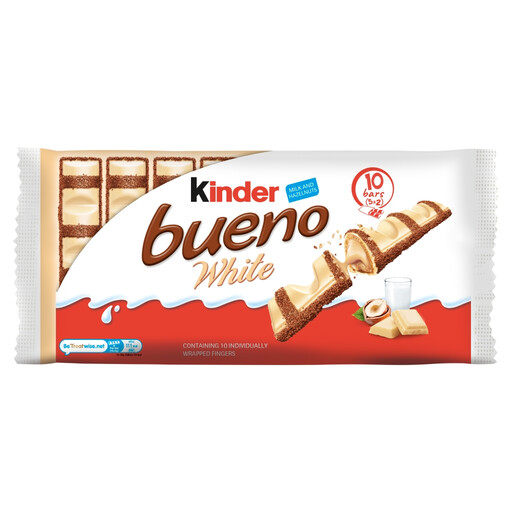
These options include a labelled five-pack, a bag of white-chocolate buttons and a box of filled white-chocolate truffles. Compare their formats rather than assuming every piece is mini-sized or that every product consists solely of white chocolate.
 No image available
The labelled five-pack offers a different way to choose an amount from a loose bag of buttons. Check the ingredients and serving information on the pack if you specifically want white chocolate rather than a white-variant snack.
 No image available
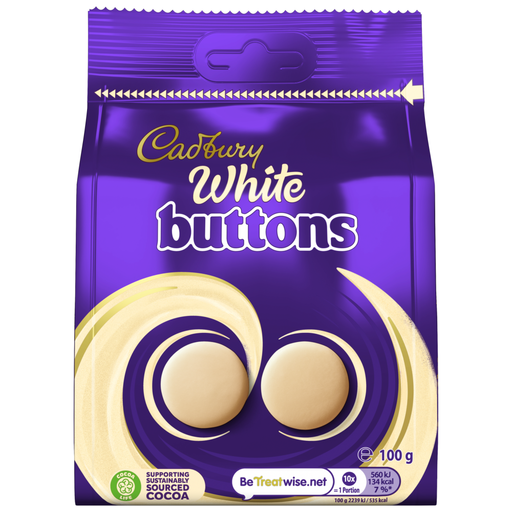
Choose an amount from this 100g bag if you want white chocolate in button form; the name does not promise mini-sized pieces. The Joybuy listing gives 535kcal, 63g sugars and 4.8g protein per 100g and declares milk and soya.
 No image available
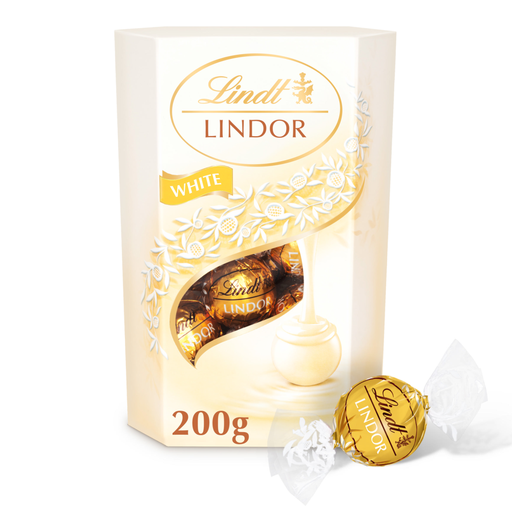
Consider this 200g box if you prefer filled truffles to buttons, and check the pack for a serving that suits you. Lindt describes a smooth melting filling and lists 632kcal, 48g fat and 4.1g protein per 100g; it says the product may contain hazelnuts and other nuts.
Do not assume they will. The Joybuy listing for Cadbury White Giant Buttons gives 4.8g protein per 100g, while Lindt lists 4.1g per 100g for its white-chocolate truffles. If protein is your reason for choosing post-exercise food, consider the chocolate as a treat alongside the other food you choose.
A stated serving by number of pieces can make the amount easier to count: the Waitrose Milkybar Mini Eggs listing defines five eggs as one serving. With loose buttons, choose your amount from the bag yourself; Cadbury's description of its White Chocolate Buttons as bite-sized is not a serving size.
Yes, if ingredients or allergens affect your choice, check the current pack. The Joybuy Cadbury White Giant Buttons listing declares milk and soya, and Lindt says its Lindor White Chocolate Truffles may contain hazelnuts and other nuts. An online listing should not replace the label on the product you receive.
Check the school-food standards currently applicable to the state-funded school before providing them. England's Requirements for School Food Regulations 2014 define chocolate as confectionery. The Department for Education's published September 2027 secondary-school resource excludes chocolate and products containing it from permitted snacks, but the department says the updated standards are subject to Parliamentary approval.