For guests who chew and swallow without difficulty, bite-sized white-chocolate buttons fit a small-piece afternoon-tea serving; a truffle offers a different presentation, while giant buttons are not a mini format. Do not choose any standard chocolate piece on the strength of its size or smoothness for someone with dysphagia or a prescribed modified-texture diet: follow their speech and language therapist’s or care plan’s instructions. Check the pack being served for allergens, and put out a considered portion rather than leaving a sharing bag open.
Who is this choice for?
The first distinction is whether guests can eat ordinary chocolate pieces or need to follow individual eating and drinking advice.
Hosts serving guests without eating restrictions
If guests chew and swallow without difficulty, compare bite-sized buttons, single truffles and larger sharing pieces by how you intend to serve them. A small dish lets you offer pieces without cutting a bar.
Families and carers supporting someone with swallowing difficulty
Choose according to the person’s individual eating and drinking plan, not a description such as “mini” or “smooth”. University Hospitals Coventry and Warwickshire NHS Trust says a speech and language therapist may recommend changes to food texture or fluid consistency after assessing swallowing risk.
Hosts checking sugar or allergens
Compare nutrition on the same stated basis, decide how much to put out and read the label on the pack you will serve. Ingredient and precautionary allergen statements matter when a guest has an allergy or intolerance.
What should you check before choosing?
Choose the serving format only after accounting for any chewing or swallowing restrictions. Then compare piece size, the pack’s nutrition information and its allergen label.
Bite-sized buttons
Choose when: Guests can eat ordinary pieces and you want small buttons to pass around or place in a dish; Cadbury UK describes its White Chocolate Buttons Bag as bite-sized.
Bear in mind: “Bite-sized” describes the format, not suitability for someone with dysphagia.
White-chocolate truffles
Choose when: You prefer to offer a distinct truffle rather than a loose button; Lindt Shop UK describes its LINDOR version as a white-chocolate shell with a smooth filling.
Bear in mind: A smooth filling does not establish that the whole truffle meets a guest’s prescribed food texture.
Giant buttons
Choose when: Guests without relevant chewing or swallowing restrictions want a larger button; Waitrose & Partners lists Milkybar Giant Buttons in a sharing bag.
Bear in mind: Giant buttons do not meet a mini-piece brief, even if you serve only a few at a time.
| Priority |
What to check |
Your needs |
| Piece size and serving |
Check whether the pack says bite-sized, truffles or giant buttons. Look for a stated portion, and put out the amount you intend to serve rather than the whole bag. |
I’d like guests to pick up a small piece without cutting a bar. If piece size matters, a giant button is a different choice from a bite-sized button. |
| Chewing and swallowing |
Check for an individual swallowing-care plan or prescribed food texture before offering ordinary chocolate. Follow that plan; a small piece or smooth filling is not a texture classification. |
If someone has dysphagia, coughs while eating or follows a modified-texture diet, I need to follow their specific instructions rather than choose chocolate by appearance. NHS trust guidance says a speech and language therapist may specify food texture after assessment. |
| Sugars and portions |
Compare sugars per 100 g on like-for-like labels, then check the stated serving basis. Lindt Shop UK lists 45 g sugars per 100 g for LINDOR White Chocolate Truffles; Waitrose & Partners lists 15.7 g sugars for 15 Milkybar Giant Buttons. |
I want to decide how much chocolate to serve with tea, rather than leave it available for repeated snacking. The NHS advises keeping the amount and frequency of sugary foods low. |
| Allergens |
Read the ingredients and precautionary statements on the current pack. Lindt Shop UK lists milk, lactose and soya for its LINDOR white truffles, with a may-contain warning for hazelnuts and other nuts. |
Before serving someone with an allergy or intolerance, I need to check the specific pack they would eat—not assume that every white chocolate has the same ingredients or warnings. |
What can go wrong when choosing a format?
-
Assuming “mini” or “melt-in-the-mouth” means suitable for dysphagia
Piece size and a description of the filling do not establish how a chocolate should be managed by someone with swallowing difficulty. University Hospitals Coventry and Warwickshire NHS Trust says a speech and language therapist may assess aspiration risk and recommend a particular food texture.
If a guest has a swallowing-care plan or prescribed modified-texture diet, follow their individual instructions instead of selecting standard buttons or truffles by guesswork.
-
Leaving the sharing bag open throughout tea
An open bag makes it harder to keep track of the amount served. The NHS identifies chocolate as a food containing free sugars and advises keeping the amount and frequency of sugary foods low.
Put out the portion you intend to offer in a dish, using the product’s stated serving information where available.
-
Relying on an older online allergen listing
Ingredients and manufacturing processes can change. Galaxy says its back-of-pack information is the information it can stand by for allergens.
Read the physical pack before serving, including any precautionary statements, and keep it available if guests or carers need to inspect it.
-
Treating giant buttons as mini buttons
Both formats can be placed in a serving dish, but a giant button does not provide the same small-piece format. Cadbury UK describes its White Chocolate Buttons Bag as bite-sized, while Waitrose & Partners identifies Milkybar Giant Buttons as giant buttons.
If small pieces are the point of the purchase, check the exact product name and format rather than relying on the word “buttons” alone.
Which brand products illustrate the options?
These specific products show how button size and truffle format differ; a brand name alone does not establish the size, ingredients or suitability of another product.
Cadbury
Cadbury UK describes its White Chocolate Buttons Bag 100g as smooth white chocolate in bite-sized buttons.
- The stated bite-sized format matches a small-piece serving for guests who can eat ordinary chocolate.
- The format description does not establish suitability for dysphagia or a prescribed modified-texture diet.
Lindt
Lindt Shop UK lists LINDOR White Chocolate Truffles in a 200 g box and describes a white-chocolate shell with a smooth filling.
- Distinct truffles provide an alternative presentation to loose buttons.
- Lindt lists 45 g sugars per 100 g and identifies milk, lactose and soya, plus a may-contain warning for hazelnuts and other nuts. The filling description is not swallowing guidance.
Milkybar
Waitrose & Partners lists Milkybar White Chocolate Giant Buttons in a 94 g sharing bag.
- The retailer gives a 15-piece reference portion, with 15.7 g sugars and 5.70 g saturates for that portion.
- These are giant buttons, not mini buttons; do not assume the format suits someone with chewing or swallowing difficulty.
White-chocolate options on Joybuy
These are a truffle box and a giant-button bag for guests who can eat ordinary chocolate pieces. Neither product name identifies a mini-button format, so check the piece format if small bites are central to your afternoon tea.
 No image available
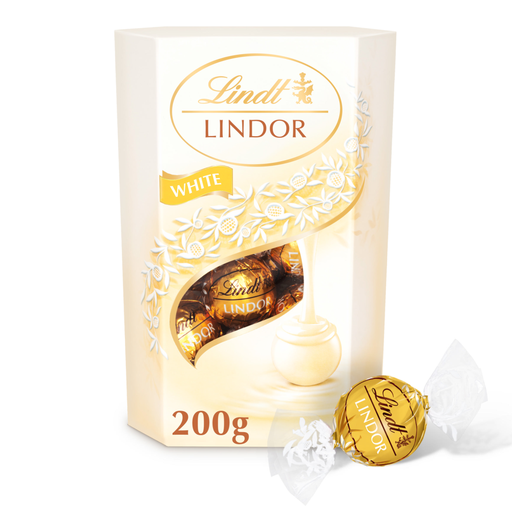
Lindt LINDOR White Chocolate Truffles 200g
Discrete truffles can be offered without cutting a bar to guests who can eat ordinary chocolate pieces. Lindt Shop UK lists 45 g sugars per 100 g and ingredients including milk, lactose and soya, with a may-contain warning for hazelnuts and other nuts. Check the current pack for allergens and whether its piece size suits your planned serving; a smooth filling does not establish suitability for a modified-texture diet.
Joybuy
 No image available
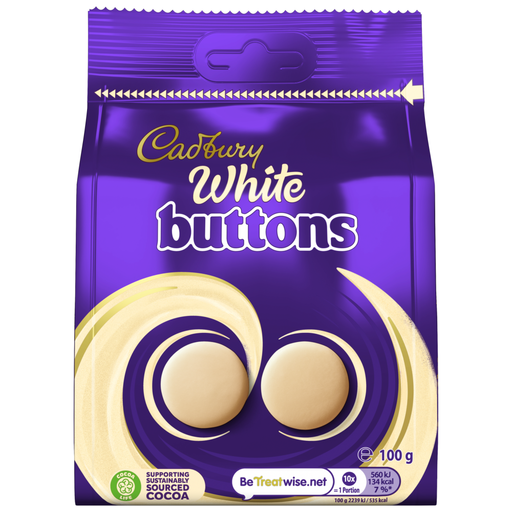
Cadbury White Giant Buttons 100g
These are white-chocolate giant buttons rather than the bite-sized Cadbury White Chocolate Buttons Bag described above. The 100 g product information identifies milk and soya in the ingredients. Check the current pack before serving and choose another format if a smaller piece is important; giant buttons should not be selected by guesswork for someone following a swallowing-care plan.
Joybuy
Questions about serving white chocolate
Are mini white-chocolate buttons suitable for every older guest?
No. A small or smooth piece is not proof that it suits someone with dysphagia or a prescribed modified-texture diet. University Hospitals Coventry and Warwickshire NHS Trust says a speech and language therapist may assess swallowing risk and recommend changes to food texture; follow the guest’s individual instructions.
Should I choose buttons, truffles or giant buttons for afternoon tea?
For guests who can eat ordinary chocolate and want small pieces, Cadbury UK’s bite-sized White Chocolate Buttons fit that format. Choose a truffle if you prefer a distinct piece with a filled centre, or giant buttons if a larger piece is wanted; neither description makes a product suitable for someone with swallowing difficulty.
How much white chocolate should I put out?
Serve a considered amount with tea and use the pack’s stated portion to understand what that amount represents. The NHS advises keeping the amount and frequency of sugary foods low; for a product-specific reference, Waitrose & Partners lists 15.7 g sugars for 15 Milkybar Giant Buttons.
Which allergens should I check?
Read the ingredients and precautionary statements on the exact pack before serving. Lindt Shop UK lists milk, lactose and soya for its LINDOR White Chocolate Truffles and warns that they may contain hazelnuts and other nuts; other products can have different declarations.


