What should you check first?
Decide whether the food is for an everyday snack or an occasional mealtime treat before comparing packs. Then consider who will portion it and what the current label says.
| Priority |
What to check |
Your needs |
| Everyday snacks |
Is this food for between meals? The NHS lists fruit, vegetables, plain yoghurt, toast and crackers as snack options for young children; it says children under 1 should not be given snacks. |
I’m choosing something to offer regularly between meals, rather than planning a shared chocolate treat. |
| When it is served |
For sugary foods, consider the meal occasion. Lancashire and South Cumbria NHS Foundation Trust advises having foods containing sugars as part of a meal, not between meals, and avoiding them at bedtime. |
If we offer chocolate occasionally, I want to keep it with a meal rather than turn it into an afternoon or bedtime snack. |
| Portioning |
Check the pack size and button format. An adult can take out an amount to serve rather than handing over the sharing bag; the pack size is not a toddler serving size. |
We’re sharing a bag as a family, so I need to decide what to serve separately from what remains in the pack. |
| Ingredients |
Read the ingredients, highlighted allergens and any precautionary wording on the exact current pack. Do not assume that different white-chocolate products have the same recipe. |
Before serving, I need to check the particular product for ingredients relevant to my child. |
Brand and retailer references
These examples show why a white-chocolate product, a sharing format and a retailer listing are not interchangeable. None makes a sharing bag an everyday toddler snack.
Cadbury
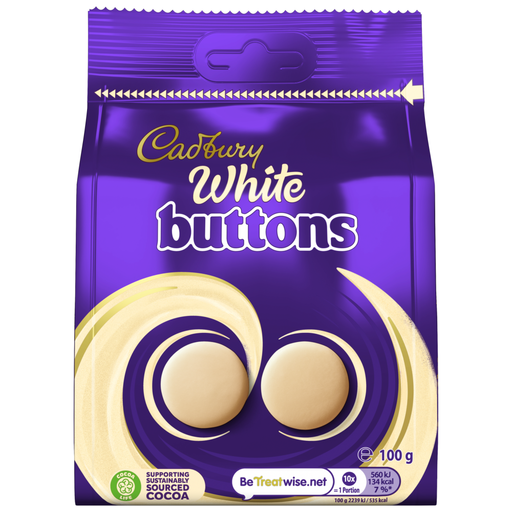
Cadbury lists a White Chocolate Buttons Bag in a 100g format.
- Buttons can be taken out of the bag for an adult-portioned mealtime treat.
- Cadbury Gifts lists 63g sugars per 100g for its White Buttons Bag 100g and identifies milk-derived ingredients and soya lecithins. Check the label of the exact bag being bought.
Lindt
Lindt Shop UK lists white-chocolate products including LINDOR White Chocolate Truffles 200g.
- The 200g truffle box is presented for treating oneself or others.
- A truffle box is a different format from a button bag and does not answer the question of what to offer as a routine toddler snack.
M&S
Marks & Spencer describes chocolate button sharing bags and separately lists white chocolate for baking and dessert decoration.
- Its chocolate-button range gives shoppers a format to compare when considering a shared treat.
- The separately listed baking chocolate is not itself a white-chocolate sharing bag; confirm the product and format before choosing.
Waitrose
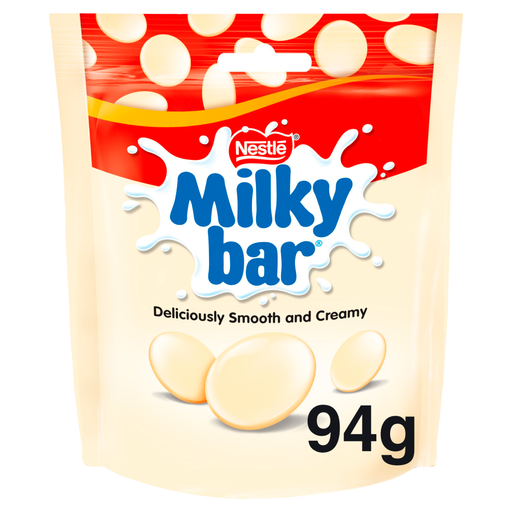
Waitrose & Partners lists a Milkybar White Chocolate Giant Buttons Sharing Bag, 94g, in its chocolate range.
- The listing identifies a white-chocolate button bag and its pack size.
- Milkybar is the product brand, not a Waitrose own-brand range. Check the current pack before serving.
Galaxy
Galaxy’s sharing-bag page describes Minstrels and Counters as chocolate sharing options.
- The range illustrates the sharing-bag format.
- Galaxy describes those listed options as milk-chocolate products, so their sharing format should not be mistaken for the requested white-chocolate product.
White-chocolate button bags on Joybuy
These button bags are options to consider if a family has decided on an occasional shared mealtime treat for a child aged 1 or over. They are not alternatives to choosing a different food for routine between-meal snack time.
 No image available
Milkybar Buttons 94g
For an occasional family treat with a meal, an adult can portion out buttons rather than offer the 94g pack as a toddler serving. Check the current pack’s ingredients, allergens and serving information before offering any to a child.
View on Joybuy
 No image available
Cadbury White Giant Buttons 100g
For an occasional shared mealtime treat, serve an adult-portioned amount from the 100g bag rather than treating the whole pack as a toddler serving. Read this pack’s current ingredients and allergen statement before serving.
View on Joybuy
Questions about toddler snack time
Should a white-chocolate sharing bag be an everyday toddler snack?
Choose another food for routine snacks between meals. The NHS suggests options for young children including fruit, vegetables, plain unsweetened yoghurt, toast and crackers; Lancashire and South Cumbria NHS Foundation Trust advises keeping foods containing sugars to mealtimes.
What about a child under 1?
Do not choose a white-chocolate bag as a snack for a child under 1. The NHS says children under the age of 1 should not be given snacks.
When should an occasional chocolate treat be offered?
If a family chooses to offer chocolate, keep it with a meal rather than serving it between meals or at bedtime. That follows guidance from Lancashire and South Cumbria NHS Foundation Trust and Wirral Community Health and Care NHS Foundation Trust on sugary foods; it does not make chocolate an everyday toddler snack.
What should I read on the bag before serving it?
Read the exact current pack’s ingredients, allergen wording and any serving information. For example, Cadbury Gifts lists milk-derived ingredients and soya lecithins for its White Buttons Bag 100g, but another bag needs its own label check.
Does the same advice settle whether a school can supply the bag?
No. For food provided in a state-funded school in England, check the applicable school-food requirements and the setting’s policy. Department for Education guidance addresses that school-provided-food context; it should not be treated as a rule for every household purchase or every school setting across the UK.


