Runners considering fuel during a 5k
If you are thinking of carrying chocolate for the run, start with your expected duration and your usual routine. The UK Sports Institute advises against treating a parkrun like a marathon when planning fuel.


For a typical 5k, do not buy chocolate on the assumption that you need fuel during the run: the UK Sports Institute says a parkrun does not call for marathon-style fuelling, and World Athletics gives a range of 0–20 g of carbohydrate per hour for exercise lasting 45–75 minutes. Choose white chocolate as a familiar treat if it suits your routine; if you want a dark cocoa flavour, choose a product explicitly sold as dark chocolate instead. In either case, check the portion and try its timing in training rather than for the first time on race day.
If you are thinking of carrying chocolate for the run, start with your expected duration and your usual routine. The UK Sports Institute advises against treating a parkrun like a marathon when planning fuel.
If the appeal is the taste of white chocolate, compare the amount you intend to eat with the pack’s carbohydrate and fat information. A familiar snack is a different choice from buying dedicated running fuel.
If you want dark chocolate, look for a bar explicitly labelled dark rather than relying on the presence of cocoa butter in white chocolate. Choosing a dark bar is a flavour choice, not an established way to improve a 5k run.
Decide whether you need anything during the run before comparing chocolate types. Then check the portion, timing and exact pack.
| Priority | What to check | Your needs |
|---|---|---|
| Run duration | Estimate your running time and consider your established routine. World Athletics gives 0–20 g of carbohydrate per hour for exercise lasting 45–75 minutes; the UK Sports Institute cautions against marathon-style fuelling for a parkrun. | I would rather avoid carrying a snack I do not need, but I want a familiar plan if my run takes longer than expected. |
| Portion and timing | Compare carbohydrate and fat for the portion you would actually eat, not just per 100 g. Try the portion and timing during training; University College London Hospitals describes pre-exercise snacks in its clinical guidance as containing carbohydrate with minimal fat. | A snack close to the start needs to fit a routine I have already tried. I want to know what one serving contains before choosing it. |
| Chocolate type | Check whether the product is white or explicitly dark chocolate. Compare its ingredients and, if a dark flavour is the aim, the stated cocoa percentage; cocoa butter in a white bar does not establish a dark-chocolate profile. | I am choosing between a white-chocolate treat and a dark cocoa flavour, not assuming they are interchangeable running fuels. |
| Allergens | Read the ingredients, emphasised allergens and any precautionary wording on the current pack. The Food Standards Agency says prepacked food must carry an ingredients list with allergens present emphasised. | If an allergy affects my choice, I need the label for the exact product and recipe I am buying. |
White chocolate can contain cocoa butter without having the dark cocoa profile you had in mind. Waitrose lists cocoa butter in its Belgian White Chocolate ingredients, while Lindt identifies its EXCELLENCE 70% bar as dark chocolate.
Choose a product explicitly sold as dark if that is the flavour you want. If you prefer white chocolate, check its ingredients and nutrition panel on their own terms.
The UK Sports Institute says a parkrun does not require marathon-style fuelling. For exercise lasting 45–75 minutes, World Athletics gives a range of 0–20 g of carbohydrate per hour, which can involve a mouth rinse or a small amount rather than a full bar.
Plan around your expected time and established routine. Try any new snack during training, not for the first time before an event.
Per-100-g figures do not tell you what your chosen serving contains. Waitrose lists 63.1 g carbohydrate and 30.2 g fat per 100 g for its Belgian White Chocolate; M&S lists 54.8 g carbohydrate and 35.4 g fat per 100 g for its white bar.
Use the pack’s serving information to compare the amount you intend to eat, including both carbohydrate and fat. Consider how that portion fits the timing you have tried in training.
Recipes and precautionary warnings can differ between products and change over time. An earlier online description is not a substitute for the packet when an allergen affects your decision.
Check the current pack’s ingredients, emphasised allergens and any “may contain” wording against your allergy-management plan.
These examples help distinguish white-chocolate treats from dark-chocolate choices; they do not establish which product to use as running fuel.
Cadbury lists a 90 g White Chocolate Bar on its UK site.
Waitrose Belgian White Chocolate has published ingredients and per-100-g nutrition information.
The M&S white-chocolate bar is another confectionery option with published per-100-g information.
Lindt EXCELLENCE Dark 70% Cocoa is a dark-chocolate reference for shoppers seeking that product type rather than white chocolate.
Galaxy Minstrels offer a confectionery portion comparison, rather than a white- or dark-chocolate bar comparison.
These options include white-chocolate treats, a white-chocolate-coated wafer snack and explicitly dark bars. Compare them by the type you want and the portion you might eat; none needs to be part of a typical 5k running plan.
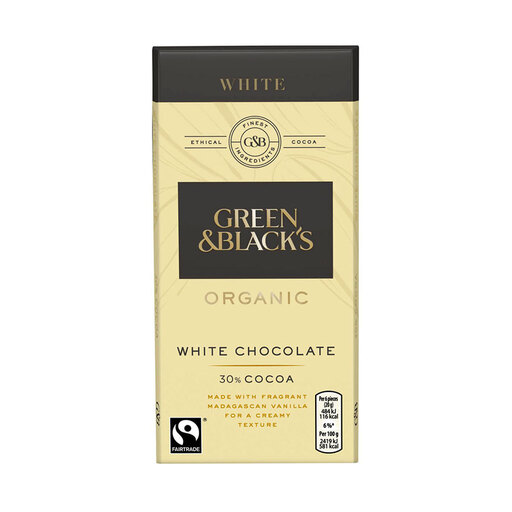 No image available
A white-chocolate bar to consider as a treat rather than required fuel during a 5k. Check the portion you plan to eat and the current pack’s milk, soya and possible nut information if relevant.
 No image available
An explicitly dark, 72% cocoa bar for a shopper choosing a dark flavour rather than white chocolate. Its cocoa percentage does not establish a running benefit; consider the portion and check the current allergen label.
 No image available
A 70% cocoa dark-chocolate alternative for someone seeking that flavour, not white chocolate or necessary 5k fuel. If milk or nuts affect your choice, check the current pack’s allergen wording before buying.
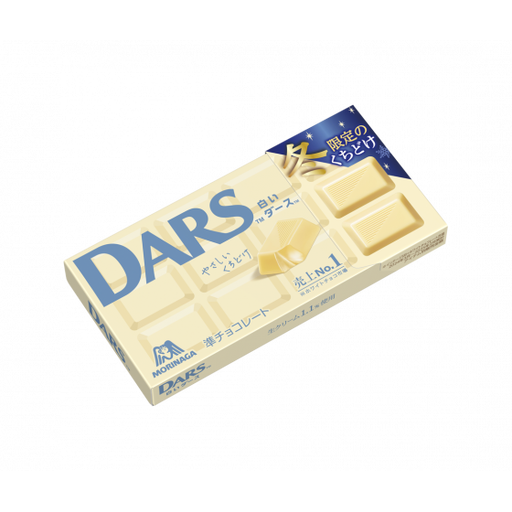 No image available
A 47 g white-chocolate pack for a treat rather than automatic fuel during a run. Check the packet if you need nutrition for the amount you will eat or if milk, soya, wheat or nuts affect your choice.
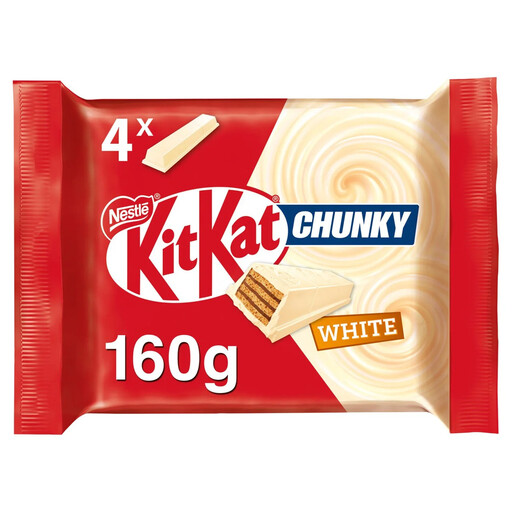 No image available
Four individually wrapped 40 g wafer bars with a white-chocolate coating, rather than plain white chocolate. Compare the nutrition for one bar with the portion you intend to eat, and check the current pack for milk and wheat allergens.
Not as a default. The UK Sports Institute says a parkrun does not need marathon-style fuelling; for exercise lasting 45–75 minutes, World Athletics gives a range of 0–20 g of carbohydrate per hour, potentially as a mouth rinse or small amount. Base your plan on your expected duration and an established routine.
No: cocoa butter in white chocolate does not make it an explicitly dark chocolate. Waitrose lists cocoa butter in its Belgian White Chocolate, whereas Lindt sells EXCELLENCE Dark 70% Cocoa as a dark bar. Choose the labelled product type that matches the flavour you want.
Check the intended serving, carbohydrate, fat, ingredients and allergen wording on the current pack. The Food Standards Agency says prepacked food must have an ingredients list with allergens present emphasised; a portion and timing already tried in training also give you a firmer basis for your choice.
Use your individual clinical exercise plan rather than a general chocolate rule for a 5k. If you are considering a change to your usual carbohydrate portion or timing around a run, discuss it with your care team.