
24/7 Customer Support

Free returns

Same-day & Next-day Delivery

Quality Guaranteed

Unlock Your Welcome Offers: FREE Delivery | Up to 80% OFF | Free 30-day JoyPlus trial
Download the APP
Choosing a new white fridge freezer can feel like a significant undertaking. It's a central appliance in any British home, and with so many features and specifications to consider, it's easy to feel overwhelmed. More importantly, it's easy to make a choice that seems right at first but leads to frustration and unexpected costs down the line.
As the Joybuy Product Recommendation Officer, my role is to help you navigate the market and focus on what truly matters. Before you start browsing, let's look at a few common pitfalls that can catch buyers out.
To ensure your new appliance is a perfect fit for your home and lifestyle, focus on these non-negotiable parameters.
The first decision is whether you need a freestanding fridge freezer or an integrated fridge freezer.
Always measure your available space (height, width and depth) before you start looking, and remember to leave a few centimetres of clearance around the back and sides for ventilation.
The ratio of fridge to freezer space is a critical factor. This is usually described as a split, such as 70/30 or 60/40.
Two pieces of technology can make a huge difference to your daily life.
Based on these practical criteria, here are a few models suited to different UK household needs.
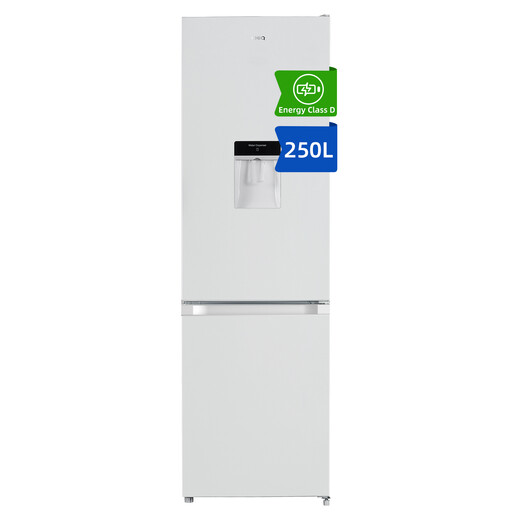
Why This Fits Their Persona: Perfect for modern flats or galley kitchens where floor space is tight. Its 54cm slimline width fits into narrower gaps than standard appliances, while its tall design still provides a generous 250-litre capacity for a couple or small family.
This model features Total No Frost technology, completely eliminating the need for manual defrosting. It also includes a non-plumbed fridge freezer with water dispenser, a premium feature not often found on narrow models.
Impressive D energy rating for lower running costs and a quiet 39 dB operation, making it ideal for open-plan living.
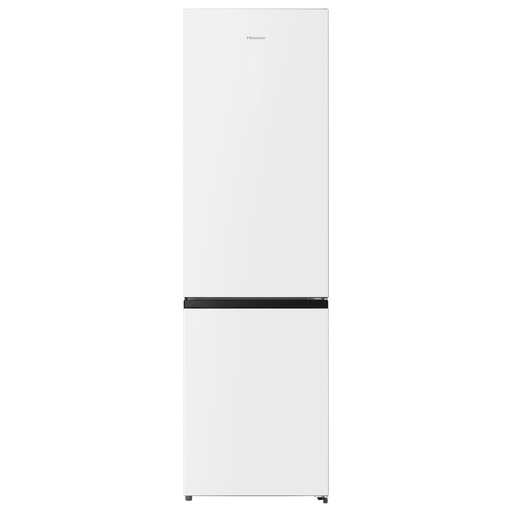
Why This Fits Their Persona: For families who need maximum storage for the weekly shop. This model offers a huge 336-litre capacity, equivalent to about 18 shopping bags, with a versatile 60/40 fridge freezer split that suits most households.
It avoids the capacity trap with a well-organised interior and Multi-Airflow cooling for even temperatures on every shelf. It also features Total No Frost technology, saving busy families the hassle of defrosting.
Very quiet operation at just 39 dB and reversible doors for flexible kitchen placement. The large capacity and reliable cooling make it a solid workhorse.

Why This Fits Their Persona: For those who want their appliance to disappear. As a fully integrated fridge freezer, it fits behind a custom cabinet door, maintaining a clean and unified kitchen aesthetic without compromising on storage or features.
This model combines its sleek integrated design with practical technology, including a proper frost-free system. The 70/30 fridge freezer split provides a very generous 184-litre fridge, avoiding the capacity trap often seen in integrated units.
Extremely quiet operation at just 38 dB, making it virtually silent. It also features adjustable shelves and an efficient E energy rating for low-maintenance performance.
We have compiled a complete, real-time list of products that fully satisfy these strict selection criteria and UK safety regulations.
Yes, for most people, it is. While they can sometimes have a slightly higher initial cost, the convenience is significant. You will never have to manually defrost the freezer, which saves time and effort. This technology also ensures more consistent temperatures, which helps to preserve food quality and can improve the appliance's energy efficiency over time.
The running cost depends on the appliance's energy rating and your electricity tariff. The energy label on every new fridge freezer provides an estimated annual energy consumption in kilowatt-hours (kWh). You can multiply this number by the price you pay per kWh (found on your utility bill) to get an approximate annual running cost. A model with an E rating today is far more efficient than a model with an A+ rating from several years ago due to the revised scale.
The lifespan of a fridge freezer can vary depending on the brand, model and how well it is maintained. Generally, you can expect a new fridge freezer to last between 10 and 15 years. Ensuring good ventilation around the unit and keeping the condenser coils at the back clean can help prolong its life and maintain its efficiency.