
24/7 Customer Support

Free returns

Same-day & Next-day Delivery

Quality Guaranteed

Unlock Your Welcome Offers: FREE Delivery | Up to 80% OFF | Free 30-day JoyPlus trial
Download the APP
Choosing the right white gloss paint can feel overwhelming. With terms like water-based, solvent-based, quick-dry and non-drip, it's easy to get lost in the details. A fresh coat of brilliant white gloss paint can transform tired skirting boards, doors and window frames, but selecting the wrong product can lead to a frustrating decorating experience and a finish that doesn't last.
This guide is designed to help you navigate the options. We'll break down the key features to look for and provide some practical recommendations to help you find a suitable paint for your next interior or exterior project.
Before you pick up a brush, consider these three factors. They will help you narrow down your choices and select a paint that matches your project's demands and your working style.
The base of the paint is one of the most important decisions you'll make.
Not all gloss paints are created equal. Always check the tin to ensure it's suitable for the surface you're painting.
Certain features can make the painting process much smoother, especially for DIY enthusiasts.
Here are a few recommendations that cater to different project needs and priorities, from speed and convenience to versatility.
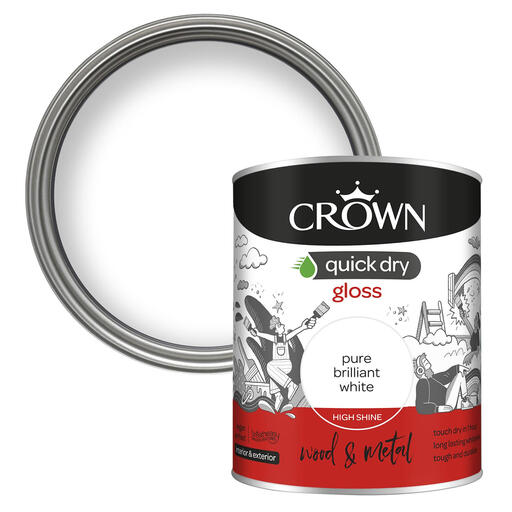
Why It Stands Out: This paint is all about efficiency. As a quick dry gloss paint, it significantly cuts down the waiting time between coats, allowing you to complete your decorating work much faster. Its water-based formula means it has a low odour and is easy to clean up, making it a convenient choice for interior projects.
According to Crown, its 99% solvent-free Breatheasy technology contributes to a more comfortable decorating environment. The brilliant white gloss paint finish is designed to be non-yellowing, ensuring a crisp, clean look that lasts.
Pros:
Who is it for? DIY enthusiasts and homeowners who want to refresh their home quickly and with minimal disruption. It's an excellent option for doors, skirting boards and window frames.
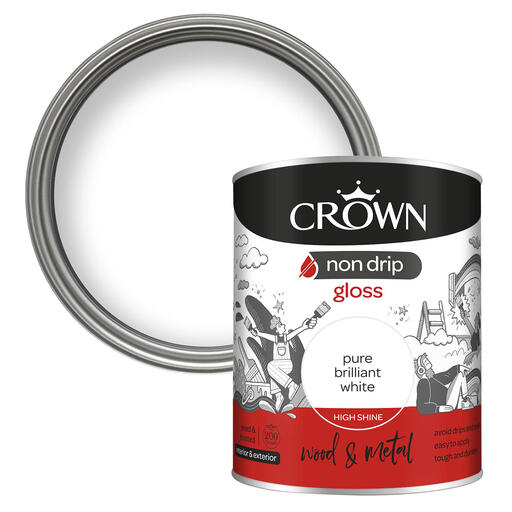
Why It Stands Out: The key benefit here is its formulation as a non drip paint. This makes application much cleaner, especially on vertical surfaces or intricate areas where drips can be a problem. As a solvent-based gloss, it provides a traditional, hard-wearing high gloss paint finish that is very durable.
Pros:
Who is it for? Decorators and DIYers looking for a classic, durable solvent-based finish with the added benefit of a non-drip application. It is particularly useful for panelled doors and detailed trim. Note that as a solvent-based product, it requires good ventilation during use.
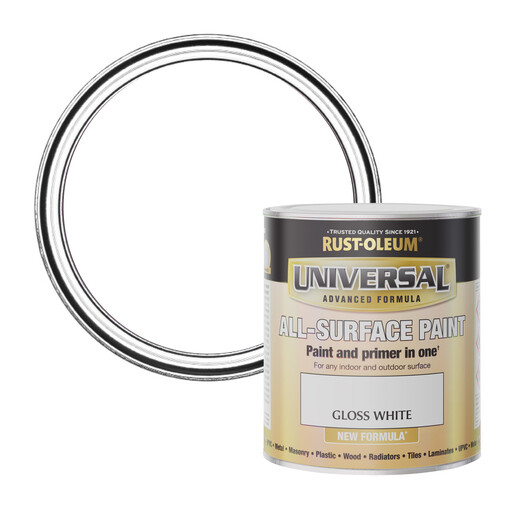
Why It Stands Out: This product's strength is its incredible versatility. It is an advanced paint and primer in one, designed for direct application to a vast range of surfaces. This all surface white paint can be used on wood, metal, plastics, uPVC, tiles, masonry and more, making it a true multi-purpose solution.
Pros:
Who is it for? Anyone with a varied or unusual project. If you need to paint a uPVC window frame, a metal radiator and a wooden door, this single tin can handle it all, offering great convenience and value.
While these three products cover many common decorating needs, your project might require something different. Whether you're looking for a specific shade, a larger tin size or a different finish, there are many other options available.
Explore our full collection of Gloss Wall Paint to find the perfect match for your home.
1. What is the difference between brilliant white gloss paint and standard white? Brilliant white gloss paint is typically a very bright, crisp shade of white. It is often formulated with a hint of blue to counteract the natural tendency of paint to yellow over time, which makes it appear brighter and cleaner to the human eye compared to a standard or "pure" white.
2. How can I prevent white gloss paint from yellowing? Yellowing is a common concern, particularly with older solvent-based paints, and it often occurs in areas with limited natural light. The most effective way to prevent it is to choose a modern, high-quality water-based gloss paint, as these are specifically formulated to be non-yellowing.
3. Do I need a primer before using high gloss paint? This depends on the paint and the surface. Some products, like the Rust-Oleum Universal Paint, are self-priming. However, for most other paints, using a primer is recommended on bare wood, new metal or when painting over a very dark colour. A primer ensures better adhesion, a more uniform appearance and a longer-lasting finish. Always check the instructions on the tin.