
24/7 Customer Support

Free returns

Same-day & Next-day Delivery

Quality Guaranteed

Unlock Your Welcome Offers: FREE Delivery | Up to 80% OFF | Free 30-day JoyPlus trial
Download the APP
Finding the right white satinwood paint can feel like a bigger task than the decorating project itself. With so many options available, each promising a perfect finish, it’s easy to get lost. Whether you're a seasoned decorator or a weekend DIY enthusiast refreshing your home, the goal is the same: a smooth, durable finish that revitalises your woodwork without the fuss.
This guide is designed to help you navigate the choices. We'll break down the key factors to consider, from the type of paint to the surface you're covering, and highlight a few popular options to help you make an informed decision for your next project.
Before you pick up a brush, a little knowledge goes a long way. Here are a few key points to consider when choosing your paint.
The most significant choice you'll make is between a water-based or solvent-based formula. Neither is inherently better; they simply serve different needs.
Water based satinwood paints have become increasingly popular, especially for interior work. They are known for having a lower odour and being a quick dry satinwood option, often touch-dry in a few hours. Cleanup is simpler, requiring only soap and water. Crucially, they are formulated as a non-yellowing white paint, meaning your brilliant white satin paint finish will stay brighter for longer, even in rooms with less natural light.
Solvent based satin paint (also known as oil-based) has been a traditional choice for professionals for many years. These paints are recognised for their high durability and smooth, flowing application, which can make achieving a flawless finish easier. They take longer to dry and require good ventilation due to stronger fumes, but their toughness makes them a consideration for very high-traffic areas.
Are you painting a single door, or are you tackling all the trim in a house? The surface and scale of your project matter.
Satinwood offers a sophisticated mid-sheen finish, sitting comfortably between matt and gloss. This subtle lustre is modern and practical, as it’s more durable and easier to wipe clean than a matt finish, but it also hides minor surface imperfections far better than a high-shine gloss. Most options come in a standard 750ml satinwood paint tin, which is ideal for trim or smaller projects.
Here are a few different types of white satinwood paint to help illustrate the options available for your decorating needs.
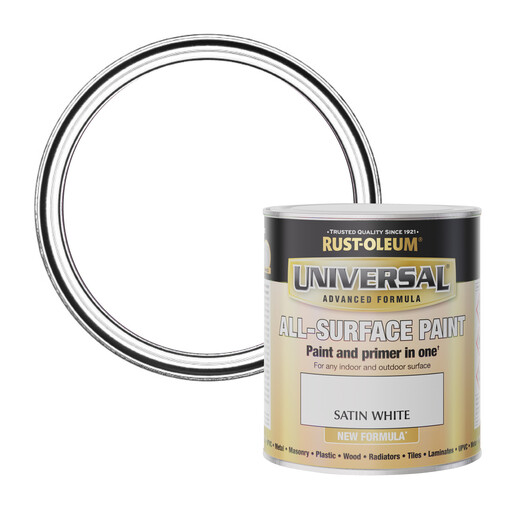
Why It Stands Out This product is a versatile problem-solver. It functions as a paint and primer in one, designed for direct application to an exceptionally wide range of surfaces. As a solvent-based satin paint, it offers a durable finish suitable for both interior and exterior projects, making it a highly flexible option.
Pros
Who is it for? This is a practical choice for decorators working on complex projects that involve multiple different materials, who need one tin that can handle almost anything.
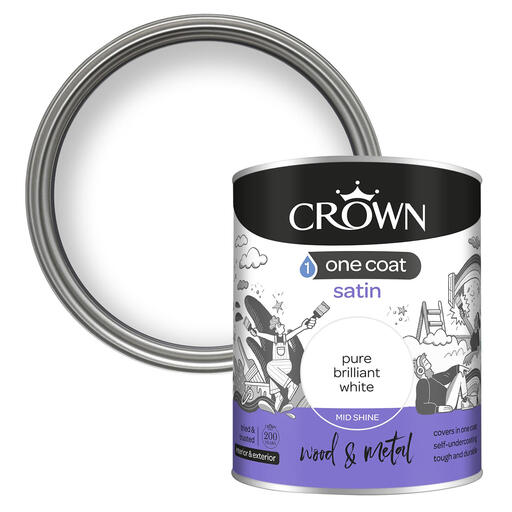
Why It Stands Out The main appeal of this paint is its time-saving one coat white paint formula. It’s designed to provide excellent coverage, reducing the need for multiple applications. This solvent-based satin paint delivers a hardwearing, mid-sheen finish on interior and exterior wood, metal and PVCu.
Pros
Who is it for? Ideal for anyone looking to complete a decorating job quickly, such as landlords preparing a property or homeowners wanting a fast refresh without compromising on durability.
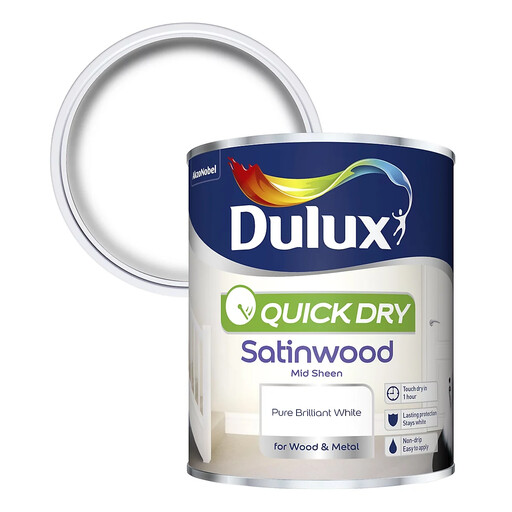
Why It Stands Out This is a modern water based satinwood paint focused on convenience and a lasting finish. Its quick dry satinwood properties mean it is touch-dry in 1-2 hours, allowing for two coats in a single day. The low-odour, non-yellowing white paint formula makes it particularly well-suited for interior use, especially in living spaces.
Pros
Who is it for? A great option for DIY home improvers working on interior paint for skirting boards, doors and other trim who value a fast, low-odour application and a bright white finish that lasts.
The products highlighted here represent some of the different types of white satinwood available. If you have a specific project in mind and want to see a wider selection, you can browse our full collection.
Explore our full range of wood satin paint for more options.
The main difference is the sheen level. Gloss paint has a high-shine, reflective finish (over 70% sheen), while satinwood has a more subtle, mid-sheen lustre (around 20-40% sheen). Satinwood is often preferred for a more contemporary look and is better at hiding minor surface imperfections. Gloss is traditionally seen as slightly more hardwearing and easier to clean, but modern satinwood formulas are very durable.
It depends on the paint and the surface. Many modern paints are self-undercoating, meaning you can apply them directly over a previously painted surface that is in good condition. However, for bare, untreated wood or when making a drastic colour change, using a separate primer and undercoat is recommended to ensure the best adhesion, coverage and long-term durability. Always check the manufacturer's instructions on the tin.
Yellowing is a common issue with traditional solvent-based paints, particularly in areas with low natural sunlight like hallways. The most effective way to prevent this is to choose a modern water based satinwood paint. These are specifically formulated with non-yellowing white paint technology to ensure your brilliant white finish stays bright over time.