
24/7 Customer Support

Free returns

Same-day & Next-day Delivery

Quality Guaranteed

Unlock Your Welcome Offers: FREE Delivery | Up to 80% OFF | Free 30-day JoyPlus trial
Download the APP
A whiteboard can support lesson planning, meeting notes, revision, household organisation and children’s creative play. However, the cheapest-looking option is not always practical once you consider wall space, surface compatibility, installation and replacement accessories.
Before buying, watch for three common traps:
Start by measuring the available wall or desk area. A small dry erase whiteboard can suit a home office, bedroom or kitchen notice area. Larger boards are more appropriate for shared planning, classroom teaching or presentations.
For comparison:
Also consider orientation. Some larger boards can be mounted horizontally or vertically, but this should be confirmed in the product information before installation.
A magnetic whiteboard combines a wipe-clean writing surface with space for holding notes, worksheets, calendars and printed documents. This can reduce the need for a separate noticeboard, particularly in a home office or classroom.
Check what is included. Some boards are supplied with magnets, markers and an eraser, while others include the board only. Magnetic strength can also vary depending on the board’s construction and the type of magnets used.
For a large office whiteboard, consider the wall material before purchasing. Brick, concrete and plasterboard may require different anchors. Large boards should generally be installed by two people, with brackets fixed securely into a suitable supporting surface.
Standard whiteboard markers are intended for non-porous, wipe-clean surfaces. Keep caps firmly closed after use and store markers horizontally where the manufacturer recommends it.
Wet-erase or liquid chalk markers are different. They can create brighter displays on glass, windows, blackboards and other non-porous surfaces, but often require a damp cloth for removal. Avoid using them on porous materials unless the product instructions specifically allow it.
A suitable whiteboard eraser should lift dry-erase ink without scratching the coating. Tap or brush dust from the felt regularly, and replace the eraser when it no longer picks up ink effectively. Avoid permanent markers, abrasive pads and unsuitable solvents, which may leave stains or cause ghosting.
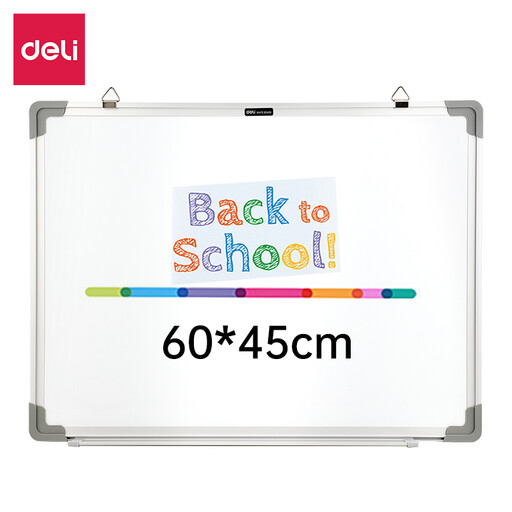
Why This Fits Their Persona: The compact format suits renters, students and home-office users who need a dedicated planning surface without committing to a large wall installation.
Its stated 24 × 18-inch size makes the space requirement clear, helping buyers avoid ordering a board that is too large for a desk area or small room.
Compact dimensions; suitable for office planning, study and household reminders.
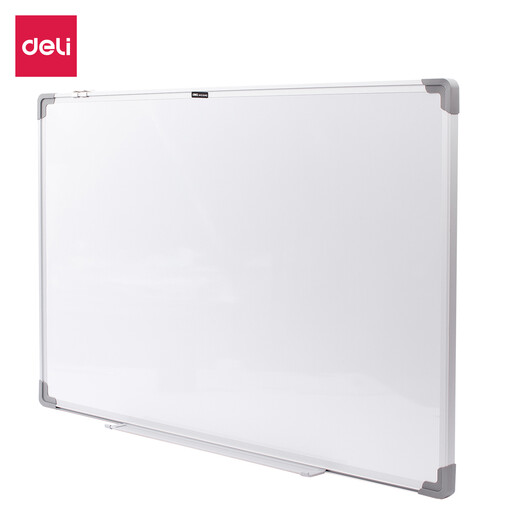
Why This Fits Their Persona: This large-format board is suited to home offices, study rooms and users who want one surface for writing, planning and displaying paperwork.
The 1200 × 1800mm dimensions and magnetic format are clearly specified, so buyers can assess both wall capacity and document-display needs before ordering.
Large 1200 × 1800mm format; magnetic surface; silver frame.
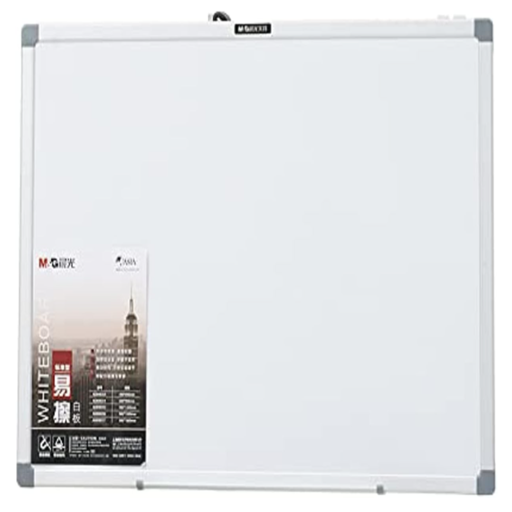
Why This Fits Their Persona: The generous surface and included accessories suit boardrooms, lecture spaces, classrooms and collaborative planning where several people need to see the board.
The package lists an eraser, two markers and four magnetic buttons, reducing the need to purchase basic accessories separately. Appropriate wall anchors remain the buyer’s responsibility.
1200 × 1800mm size; supplied with an eraser, two markers and four magnetic buttons; designed for wall mounting.
A board is only convenient when its supporting supplies are easy to find. Consider adding:
For children, the Casdon 2 in 1 Blackboard & Whiteboard Wooden Easel is designed for children aged four and above, while the AIYAPLAY 3-in-1 easel is listed for ages three to six and includes a paper roll and storage baskets. Adult supervision and the stated safety instructions remain important.
We have compiled a complete, real-time list of products that fully satisfy these strict selection criteria and UK safety regulations.
Yes. A compact board can handle daily priorities, schedules and short notes without taking over the room. Measure the wall or desk area first, and leave enough space to write comfortably around the frame.
Lifespan depends on surface quality, marker choice, cleaning habits and frequency of use. Use compatible dry-erase ink, erase writing regularly and avoid abrasive cleaners. Replace worn erasers so dirt is not rubbed across the coating.
Only if the surface is non-porous and the marker instructions permit it. Wet-erase and liquid chalk products may need a damp cloth for removal and should not be used on porous surfaces. When uncertain, use standard markers labelled specifically for dry-erase boards.