
24/7 全天候客户支持

免费退货

当日/次日达

品质保障

开启新人专享福利: 全场免邮 | 低至 2 折 | 免费试用 30 天 JoyPlus 会员
下载 Joybuy
By Joybuy Product Recommendation Officer
Whether you are preparing lessons, updating a café menu, organising an office meeting or creating a window display, choosing the right whiteboard and chalk markers can prevent wasted money and frustrating clean-up. The main issue is that “erasable” does not mean the same thing for every marker or surface.
Before choosing a pack, check the ink type, surface compatibility, nib design and storage instructions. A low price may be less appealing if the markers dry out quickly, leave ghosting or are difficult to remove from the intended surface.
Dry-wipe whiteboard markers are designed for glossy dry-erase boards. Liquid chalk markers and wet-erase chalk markers are generally intended for non-porous surfaces such as glass, mirrors, slate and some coated boards. Using the wrong ink on wood, painted MDF or a porous wall can cause staining or permanent marks.
Always check the product instructions and, where possible, test the marker on a discreet area first.
A dry-erase marker is usually removed with a dry cloth or board eraser. A wet-erase or liquid chalk marker normally needs a damp cloth. This extra step can be useful for menus, displays and teaching materials that should remain in place during normal handling, but it is less convenient for rapidly changing notes.
Some semi-permanent formulations may also resist light moisture once dry. That does not make them suitable for every outdoor application, so check the stated use and cleaning method.
A broad chisel nib can cover a large menu heading or shop window efficiently, while a fine or medium bullet nib is more suitable for lesson notes and office planning. A colourful pack is not necessarily practical if the line is too wide for your board or lacks contrast against the background.
For shared spaces, also consider cap security, odour and whether the barrel can withstand frequent use.
For standard planning boards, look for dry-wipe whiteboard markers with a clearly stated dry-erase formula. Low-odour whiteboard markers can be preferable in classrooms, offices and smaller rooms, particularly where several people are writing at once.
For windows, glass, slate and chalkboard-style displays, choose liquid chalk markers, glass markers or slate chalkboard markers specifically labelled for non-porous surfaces. Wet-erase ink should be cleaned with a damp cloth rather than a dry eraser.
Do not use a marker simply because its colour looks similar to chalk. The formulation and surface instructions matter more than appearance.
A 1.5 mm line width offers a useful balance for board notes, diagrams and presentation headings. A blocked acrylic tip can help prevent the nib from bending or retracting when used with firm pressure.
For signage and large-format writing, a jumbo chisel nib may offer a width of around 10–15 mm, allowing faster coverage. Reversible nibs can provide both bullet and chisel options, which is helpful when one pack needs to handle titles and detailed lettering.
A two-marker pack may suit occasional household use, while bulk whiteboard markers are more practical for schools, offices and training rooms where several markers are used each day. Check whether the pack contains the colours you actually need rather than paying for shades that will remain unused.
For buyers comparing eco-friendly markers, look for a specific recycled-material percentage rather than a general sustainability phrase. For example, some barrels in the recommendations below contain 51% or 69% recycled material. This refers to the stated barrel construction, not necessarily every component or the ink.
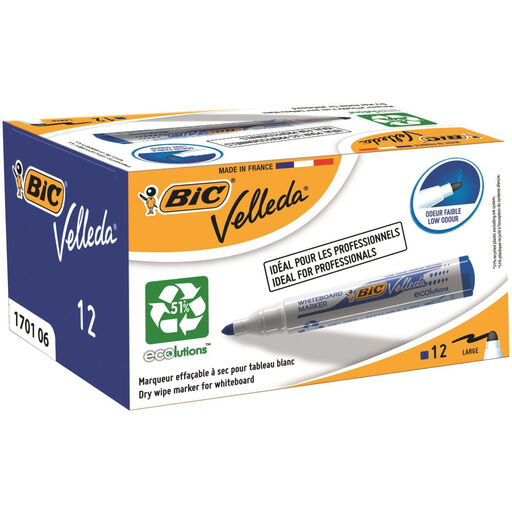
Why This Fits Their Persona: A 12-pack suits households, small offices and new classroom setups that need a dependable supply without buying several colours at once.
It is clearly specified as a dry-wipe board marker, reducing the risk of choosing wet-erase ink for routine board notes.
Low-odour ink, 1.5 mm line width, blocked acrylic tip and a barrel made from 51% recycled materials.
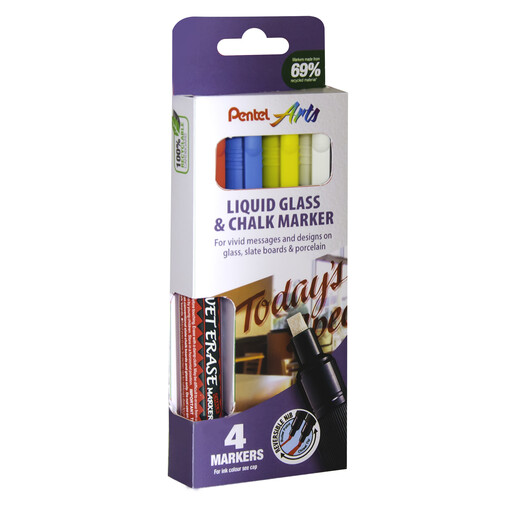
Why This Fits Their Persona: This set suits retailers, cafés, teachers and home decorators who want colourful writing on glass, slate, ceramic or metal.
The instructions specify non-porous surfaces and damp-cloth removal, making the wet-erase behaviour clear before purchase.
Reversible bullet and chisel nibs, four assorted colours and a barrel made from 69% recycled materials.
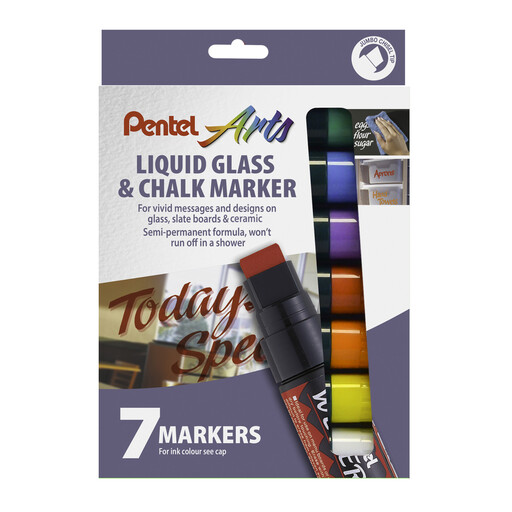
Why This Fits Their Persona: Large menus, event signage, shop windows and artwork benefit from a broad nib and a wider range of display colours.
Its stated use excludes vinyl, wood and painted MDF chalkboards, helping prevent unsuitable-surface purchases.
Jumbo 10–15 mm chisel tip, seven assorted colours and semi-permanent ink for indoor or outdoor display use.
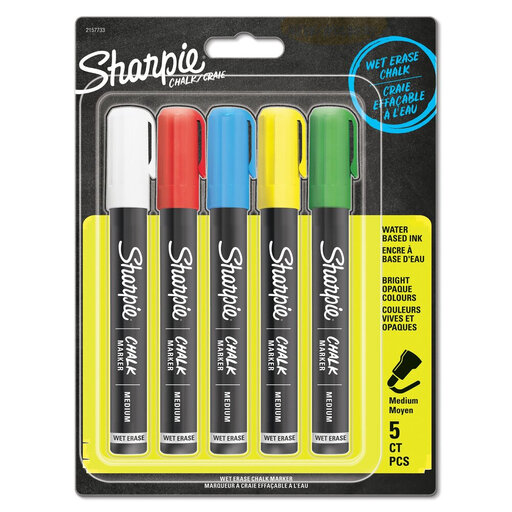
Why This Fits Their Persona: Suitable for cafés, classrooms, retailers and creative households producing colourful messages on glass, windows, boards and other non-porous surfaces.
The product guidance states that it should be wiped with a damp cloth and not used on porous surfaces.
Five assorted colours with bright, opaque-style display writing for blackboards, light boards, windows and glass.
We have compiled a complete, real-time list of products that fully satisfy these strict selection criteria and UK safety regulations.
No. Dry-wipe whiteboard markers are intended for dry-erase boards, while wet-erase chalk markers are generally for non-porous surfaces and require a damp cloth for removal. Always follow the surface and cleaning instructions.
Lifespan depends on nib size, writing frequency, storage and how quickly the cap is replaced. Broad nibs use more ink, while frequent uncapping can dry the tip. Keeping markers capped and horizontal, where specified, can help maintain consistent flow.
They can be, provided the product is labelled for glass or other non-porous surfaces. Before use, check whether the ink is wet-erase or semi-permanent, whether it can withstand moisture and which cleaning method is recommended.