Plain white-chocolate snack buyers
If you would rather have a plain bar than a filling or mixed-chocolate construction, Cadbury UK identifies its White Chocolate Bar as a 90g, vegetarian-labelled option.


For a plain white-chocolate bar, consider Cadbury White Chocolate Bar 90g; for a smooth melting filling, consider Lindt LINDOR White Bar 100g. Milka Bubbly White 95g is a different choice: milk chocolate with an aerated white-chocolate filling. Check the current pack for allergens and nutrition information, especially if those details affect what you can eat.
Start with the kind of bar you want to eat: plain white chocolate, a filled bar or a product combining milk and white chocolate.
If you would rather have a plain bar than a filling or mixed-chocolate construction, Cadbury UK identifies its White Chocolate Bar as a 90g, vegetarian-labelled option.
If a melting centre is the point of the treat, Lindt describes its 100g LINDOR White Bar as white Swiss chocolate with a smooth melting filling. Check its ingredients and precautionary allergen wording against your requirements.
Compare the exact product label rather than choosing by brand alone. The ASDA listing for Milka Bubbly White declares milk, soya and hazelnuts and says it may contain wheat; Lindt’s product information lists milk and soya ingredients and possible nut cross-contact.
Decide on the chocolate’s construction first, then compare the pack label and the amount you intend to eat. A similar-looking wrapper need not mean a similar filling, ingredient list or serving size.
| Priority | What to check | Your needs |
|---|---|---|
| Format and texture | Check whether the product is plain white chocolate, white chocolate with a filling, or milk chocolate with a white-chocolate filling. ASDA describes Milka Bubbly White 95g as milk chocolate filled with 46% aerated white chocolate. | I want a plain bar, not a filled or mixed-chocolate one. If texture matters more to me, I can choose a filling deliberately rather than assume every white-labelled bar is alike. |
| Ingredients and allergens | Read the current pack’s ingredients and precautionary allergen statements. The ASDA listing for Milka Bubbly White declares milk, soya and hazelnuts and says it may contain wheat; check Lindt LINDOR White’s nut warnings on its current pack too. | Before I choose a snack, its declared ingredients and warnings need to fit my dietary requirements. An older online listing is not enough for that check. |
| Pack size and serving | Confirm the net weight and how much of the pack you plan to eat. The evidenced formats include Cadbury’s 90g bar, Lindt’s 100g bar and Milka’s 95g bar; pack weight alone does not define an individual serving. | A bar might be one afternoon treat or something I divide into servings. I want to judge the amount I will actually eat, not just the weight printed on the front. |
| Nutrition label | Compare like with like: per 100g with per 100g, or calculate from clearly stated serving information. Lindt Shop UK lists 647 kcal and 39g saturates per 100g for LINDOR White Bar 100g; do not compare those figures directly with another bar’s per-serving values. | If nutrition values affect my choice, I need the same measurement basis for each product and the current label for the portion I intend to have. |
Lindt’s LINDOR White Bar has a melting filling, while ASDA describes Milka Bubbly White as milk chocolate filled with aerated white chocolate. Neither has the same construction as a plain white-chocolate bar.
Read the product description before choosing: decide whether you want plain chocolate, a filled white-chocolate bar or a milk-and-white combination.
Ingredient and precautionary-allergen wording matters for these products. An online description may not reflect the particular pack you receive.
Check the current pack before eating, including its ingredients and any “may contain” statement, if an allergy or intolerance affects your choice.
The Department for Education’s July 2026 school-food guidance concerns food provided during the school day in England’s state-funded school settings. Separately, Department of Health & Social Care guidance describes HFSS promotion and placement restrictions for businesses operating in and selling to England; it does not describe a general ban on an adult buying chocolate.
If you are choosing food for a school menu or tuck shop, check the rules for that nation and setting. Do not assume the England guidance applies to every school context across the UK.
These references describe particular bars, not every product made by each brand or what any shop currently carries.
Cadbury UK identifies a 90g White Chocolate Bar for shoppers considering a plain white-chocolate format.
Lindt describes its 100g LINDOR White Bar as white Swiss chocolate with a smooth melting filling.
The ASDA listing describes Milka Bubbly White 95g as alpine milk chocolate filled with 46% aerated white chocolate, rather than an all-white bar.
These options include smaller white-chocolate packs and individually wrapped, white-chocolate-coated wafer multipacks. The wafer products are alternatives for a different kind of afternoon snack, not substitutes for a plain white-chocolate bar.
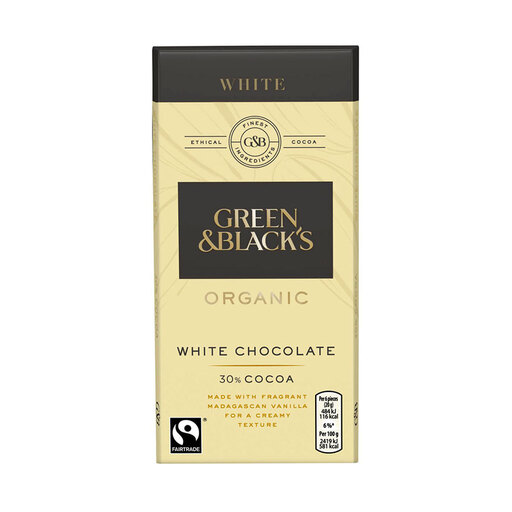 No image available
A 90g white-chocolate bar to consider if you want a plain-bar afternoon treat. Check the current pack’s ingredients and allergen information if dietary requirements affect your choice.
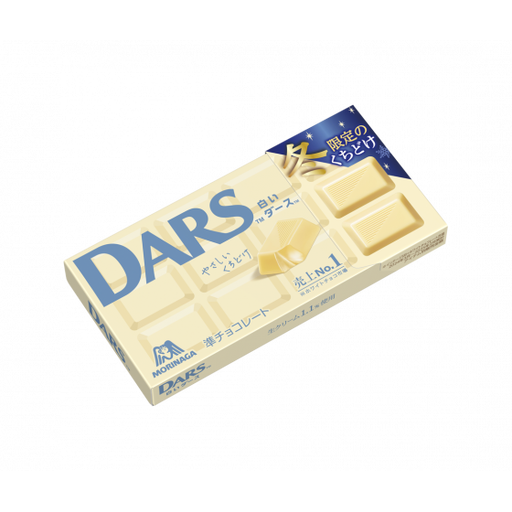 No image available
A 47g white-chocolate pack if you prefer a smaller stated pack weight. Check the current label for ingredients, allergens and nutrition values before relying on them for your choice.
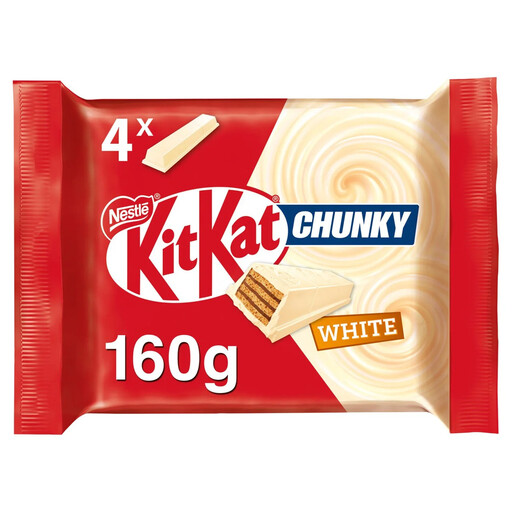 No image available
A four-bar option if you want a white-chocolate-coated wafer snack rather than a solid white-chocolate bar. Confirm the total pack weight on the pack before comparing it with other sizes.
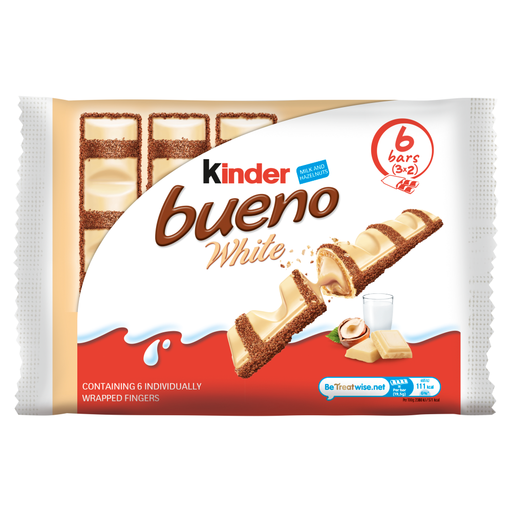 No image available
This 117g three-pack suits a preference for a filled wafer snack with white-chocolate coating, rather than plain white chocolate. Check the current pack’s allergen information before choosing it for dietary requirements.
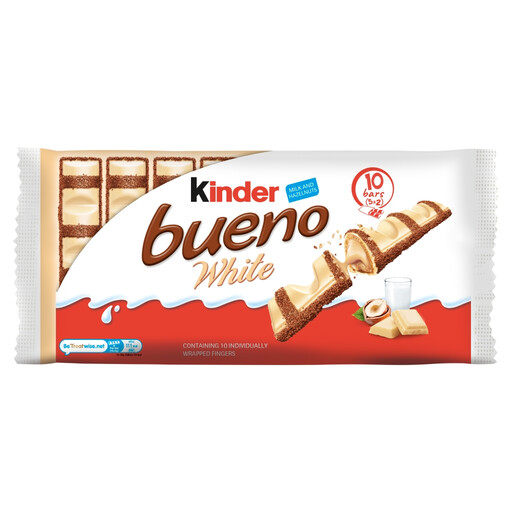 No image available
A 195g filled-wafer option with white-chocolate coating, rather than a plain white-chocolate bar. Confirm the number of individually wrapped fingers on the pack before planning portions: the stated pack and finger counts need to be read together.
Cadbury UK identifies its White Chocolate Bar 90g as a plain white-chocolate option. Lindt’s LINDOR White Bar has a melting filling, while the ASDA listing describes Milka Bubbly White as milk chocolate with a 46% aerated white-chocolate filling.
Read the current pack’s ingredients and precautionary statements before eating. The ASDA listing for Milka Bubbly White declares milk, soya and hazelnuts and says it may contain wheat; Lindt’s information lists milk and soya ingredients and possible hazelnut, almond and other-nut cross-contact. Do not rely on an older listing in place of the pack.
Yes, if you use a consistent basis and check the current labels. Lindt Shop UK lists 647 kcal and 39g saturates per 100g for LINDOR White Bar 100g; a per-100g figure should not be compared directly with another product’s per-serving figure.
The Department for Education’s July 2026 guidance identifies chocolate confectionery among foods not to provide during the school day under England’s standards for food provided in state-funded school settings. That conclusion concerns school provision, not every privately brought snack, and should not be extended to schools in other UK nations without checking their rules.
No. Department of Health & Social Care guidance describes restrictions on certain promotions and product placement by businesses operating in and selling to England, including online equivalents; it does not describe a general consumer purchase ban. Whether a particular product falls within those promotion rules requires more than its category name alone.