White-chocolate fans considering dark chocolate
If creaminess is the attraction, a cocoa percentage alone will not tell you whether you will enjoy the change. Decide whether you actually want a more pronounced cocoa taste before switching.


Stay with white chocolate if its creamy, sweet profile is what you want with tea; choose a dark bar if you want a more pronounced cocoa taste. A labelled 70% bar is one starting point, while 72% to 85% bars suit shoppers who already enjoy a more intense cocoa profile. Compare the exact bar’s ingredients, nutrition and allergen statements before buying.
If creaminess is the attraction, a cocoa percentage alone will not tell you whether you will enjoy the change. Decide whether you actually want a more pronounced cocoa taste before switching.
A declared percentage helps distinguish the cited 70%, 72% and 85% dark bars. Choose a level that fits the flavour you want, rather than treating the largest number as the automatic choice.
Dark colour or a vegan-recipe description does not establish allergy suitability. Read the ingredients and precautionary allergen statements on the current pack of the bar you intend to buy.
Choose the type of chocolate first, then compare labelled cocoa levels and the details of the exact bar.
| Priority | What to check | Your needs |
|---|---|---|
| Chocolate type | Check whether the bar is white, dark or a creamy dark-style product. For dark bars, look for a declared cocoa percentage. | I want to keep the creamy sweetness of white chocolate, or make a deliberate move towards a more pronounced cocoa taste. |
| Cocoa intensity | Compare the stated percentage on the exact bar. Lindt lists a 70% EXCELLENCE bar; M&S lists separate 72% and 85% dark bars. | A 70% bar gives me a starting point for dark chocolate. If I already enjoy a stronger cocoa profile, I can consider 72% or 85% instead. |
| Tea pairing | Consider the bar’s flavour description and any pairing suggestion as a guide to that product, not a taste guarantee. Waitrose & Partners suggests green tea with the listed Lindt EXCELLENCE Dark 70% bar. | I want chocolate that appeals to me alongside my usual tea; a pairing suggestion is useful, but my flavour preference still matters. |
| Ingredients and nutrition | Compare ingredients and the per 100g sugars and saturates figures for the exact products. Do not use cocoa percentage alone as a nutrition verdict. | If I am comparing recipes, I want to read the actual labels rather than assume every dark bar has similar nutrition. |
| Allergens | Read the current pack’s ingredients and precautionary statements, including any milk, nut, peanut, soya or sesame information relevant to you. | For an allergy, I need to check the particular bar and its current packaging, not rely on its dark colour or a vegan description. |
The phrase mixes two different choices: the creamy profile associated with white chocolate and the cocoa intensity shoppers seek from dark bars.
Choose the flavour direction first. If it is dark chocolate you want, compare bars with a stated cocoa percentage.
Recipes and nutrition panels belong to individual bars. A higher cocoa figure does not, by itself, settle a comparison of sugars and saturates.
Read the current per 100g panel alongside the ingredients, then choose an intensity you expect to enjoy.
The cited Lindt and M&S dark bars carry product-specific allergen cautions. A recipe description is not a substitute for those statements.
If you have an allergy, check the ingredients and precautionary wording on the current pack every time.
These examples describe particular product lines and listings, not everything made or sold under each name.
Lindt’s EXCELLENCE Dark 70% Bar 100g is a specific option with a declared minimum of 70% cocoa solids.
M&S lists distinct 72%, 85% and 100% cocoa dark-chocolate examples for shoppers considering different cocoa levels.
Cadbury describes Darkmilk as combining rich cocoa with creaminess and sells Bournville Classic as a dark-chocolate bar.
Waitrose & Partners lists individual dark-chocolate products, including Lindt EXCELLENCE Dark 70% and Divine 70% Dark Chocolate with Raspberries.
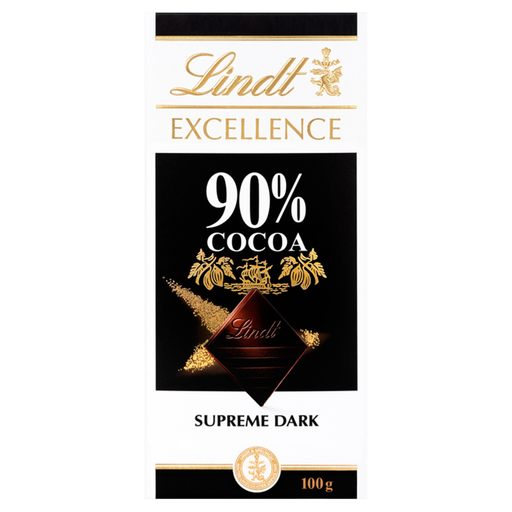
These bars offer labelled dark-chocolate choices for a tea break, from 70% cocoa options to a 90% option. They are alternatives to staying with white chocolate, not a comparison of every chocolate type.
 No image available
A 72% dark bar to consider if you want a labelled cocoa level above 70% for your tea break. Check the current pack’s allergen statements before buying.
 No image available
A 70% dark bar if you want to try a declared cocoa level with tea. Read the current pack’s ingredients and allergen statements if these affect your choice.
 No image available
Consider this 85% bar if you already prefer a more intense dark-chocolate profile. Check its current nutrition and allergen information rather than applying details from Lindt’s separate 70% bar.
 No image available
A 70% dark bar with raspberries if you want a fruit-flavoured option rather than plain dark chocolate. Its listing has conflicting vegan-friendly and milk information, so check the current pack carefully if milk matters to you.
 No image available
The title identifies this as a 90% dark bar for shoppers considering a cocoa level beyond the 70% to 85% examples. Confirm the cocoa-solids declaration and allergen statements on the current pack.
They are different choices for this tea-break decision. If you want white chocolate’s creamy profile, look for white chocolate; if you want a more pronounced cocoa taste, look for a dark bar with a stated cocoa percentage.
A labelled 70% bar is one starting point if you want to try dark chocolate without choosing the highest cocoa level shown here. Waitrose & Partners suggests green tea with its listing of Lindt EXCELLENCE Dark 70%; whether that pairing appeals to you is a matter of taste.
No. Cocoa percentage and sugars are different label details. Compare the per 100g nutrition panels of the exact bars you are considering rather than assuming that percentage alone settles the question.
Do not assume so from the vegan description. A dark bar can carry a precautionary milk statement, so check the current pack’s ingredients and allergen information for the particular product.
Yes. Recipes and allergen information can change. Use the current pack to check the ingredients and any precautionary statements that matter to you.