What should you check before buying?
Decide whether you want white chocolate’s creamy taste or a dark bar with a stated cocoa percentage, then compare the exact packs on the details that matter to you.
| Priority | What to check | Your needs |
|---|
| Breakfast role |
Consider the portion you plan to carry. Choose a separate breakfast food that contributes nutrients such as protein or fibre; British Dietetic Association guidance distinguishes those contributions from the extra sugar and fat some snacks provide. |
I want something quick to take with me, but I do not want a chocolate bar to be my entire breakfast. |
| Cocoa and sugars |
Read the cocoa-solids declaration and compare sugars per 100g on the exact bars. Lindt lists 70%, 78% and 85% minimum cocoa solids for its corresponding Excellence bars, with 29g, 17g and 15g sugars per 100g respectively. |
A stated cocoa percentage matters to me, and I want sugar figures on the same per-100g basis before choosing between dark bars. |
| Allergens |
Read the ingredients, highlighted allergens and any precautionary statement on the current pack. A vegan recipe or dairy-free label alone does not establish suitability for an allergy. |
I need the exact product’s allergen information to fit my requirements, including any warning about possible cross-contact. |
| White or dark |
Check whether the product is white chocolate or a dark bar with a named cocoa-solids percentage. M&S lists sugar, cocoa butter and milk ingredients for Choc Marks White Chocolate, with 54.8g sugars per 100g; compare products rather than assuming that figure applies to all white chocolate. |
Perhaps I prefer a creamy white bar; if a named high cocoa percentage is what I am looking for, I will choose a dark bar that states it. |
High-cocoa dark options on Joybuy
These dark-chocolate bars have stated cocoa percentages to consider if you want a small treat alongside a more substantial grab-and-go breakfast.
 No image available
Green & Black's Dark 85% 90g
A 90g dark bar labelled 85% cocoa for a small accompaniment to breakfast. Check the current pack’s sugars-per-100g figure and allergen statement before choosing it.
View on Joybuy
 No image available
Morrisons The Best 85% Cocoa Ecuador Dark Chocolate 100g
Another 85% dark bar to consider as an accompaniment rather than the whole breakfast. Its 100g pack size is not a suggested serving; check the nutrition panel and allergen statement on the current pack.
View on Joybuy
 No image available
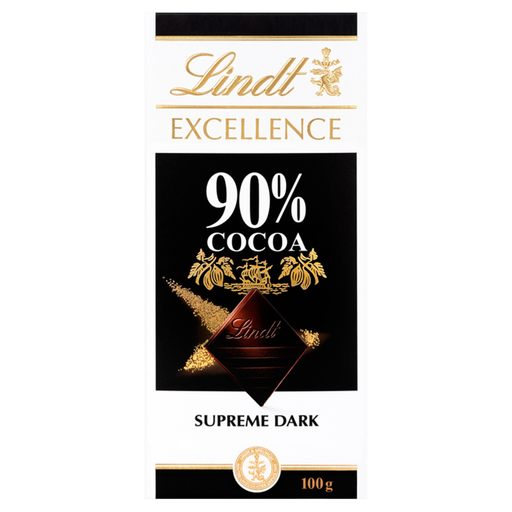
Lindt Excellence 90% Cocoa Supreme Dark 100g
The title states 90% cocoa, so this bar suits a shopper specifically seeking that named percentage. Compare the current pack’s sugars per 100g and allergen information rather than assuming its figures from the cocoa percentage.
View on Joybuy
 No image available
Morrisons The Best 72% Cocoa Dominican Republic Dark Chocolate 100g
A 72% cocoa dark bar for someone comparing stated cocoa levels before choosing a small breakfast-time treat. Use the current pack’s per-100g nutrition and allergen information for the rest of the decision.
View on Joybuy
 No image available
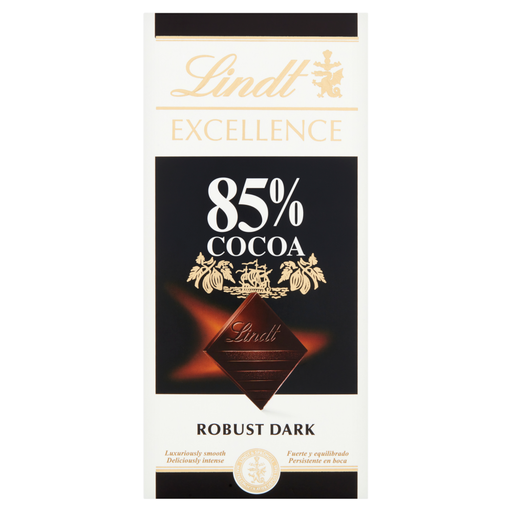
Lindt Excellence 85% Cocoa Dark 100g
A 100g bar labelled 85% cocoa for a small accompaniment to breakfast. Lindt lists 15g sugars per 100g for its Excellence 85% bar and says that, despite its vegan recipe, it is not suitable for people with a milk allergy; check the current pack’s full declaration.
View on Joybuy
Questions about chocolate at breakfast
Is high-cocoa dark chocolate a breakfast on its own?
Treat it as an accompaniment, not the whole breakfast. British Dietetic Association guidance notes that snacks can contribute nutrients such as protein and fibre, while some also add sugar and fat; take a more substantial food that fits your requirements alongside a small chocolate portion.
Does a higher cocoa percentage always mean less sugar?
No. Lindt lists 29g sugars per 100g for Excellence 70%, 17g for 78% and 15g for 85%, but that pattern across these three bars is not a rule for other recipes. Compare the nutrition panels of the exact products you are considering.
Can white chocolate meet a high-cocoa dark-chocolate preference?
Not if you want a dark bar with a named high cocoa-solids percentage. M&S lists sugar, cocoa butter and milk ingredients for Choc Marks White Chocolate, while Lindt states minimum cocoa solids of 70%, 78% or 85% for its corresponding Excellence dark bars. Choose according to the product type and flavour you actually want.
Is vegan chocolate automatically suitable for someone with a milk allergy?
No. Lindt says its Excellence 85% bar is made to a vegan recipe but is not suitable for people with a milk allergy because it is manufactured in a facility using milk. Read the current pack’s ingredients and precautionary allergen statement for the exact bar.
What allergen details should I read on a prepacked chocolate bar?
Read the ingredient list for highlighted allergens and check any precautionary statement about possible cross-contact. GOV.UK food-labelling guidance requires allergens to be highlighted in the ingredient list; the exact ingredients and warnings can differ between chocolate bars, including products labelled vegan or dairy-free.


