Choose white chocolate when you want its sweet, creamy character; it will not meet a requirement for high-cocoa dark chocolate because it contains no cocoa solids. For a dark bar, compare the declared cocoa percentage alongside its intended use, ingredients and allergen information: a 70% option and a higher-cocoa option may suit different tastes, but the percentage alone does not settle the choice.
Who is choosing?
Shoppers choosing a dark bar to eat
If a cocoa-led bar is the aim, start with a clearly declared cocoa percentage, then consider whether you want a 70% bar or a higher-cocoa option. Check the ingredients and allergen statement on the particular pack rather than treating all dark bars alike.
Bakers choosing dark chocolate
Look for a cocoa percentage and a stated cooking or baking use. M&S Food and Green & Black's both describe 70% dark products intended for recipes; a bar chosen primarily for eating need not be the one you want for a particular bake.
White-chocolate buyers considering dark
Decide which flavour you actually want before comparing bars. M&S Food explains that white chocolate contains cocoa butter but no cocoa solids, so it is a different choice from high-cocoa dark chocolate.
What should you check?
Choose the chocolate type first. Then use the pack to compare cocoa content, intended use and ingredients within that type.
| Priority |
What to check |
Your needs |
| Chocolate type |
Check whether the pack says white or dark chocolate. M&S Food explains that white chocolate has cocoa butter but no cocoa solids; look for a declared cocoa-solids figure when choosing high-cocoa dark chocolate. |
I want creamy white chocolate for its own flavour, or I need a cocoa-led dark bar. Those are different purchases, not lighter and stronger versions of the same bar. |
| Cocoa and sweetness |
Compare declared cocoa percentages, then read the ingredients and nutrition per 100g if sweetness matters to you. A higher cocoa figure is not, by itself, a quality or recipe-use ranking. |
If I am choosing a dark bar to eat, I want to decide whether a labelled 70% option or a higher-cocoa option suits my taste. |
| Allergens |
Read the ingredients and precautionary allergen statement on the exact pack. The Food Standards Agency explains that “may contain” labelling communicates possible unintended allergen presence. |
Milk, nuts, soya or sesame may affect my choice, so a dark label or a vegan-recipe description is not enough for me to assess allergy suitability. |
| Intended use |
Check whether the product is presented for eating, baking or cooking. Compare the cocoa percentage and ingredient list for the particular recipe rather than assuming that all 70% bars serve the same purpose. |
For cakes or desserts, I want a bar identified for cooking; for eating, I am choosing primarily by the flavour and format I prefer. |
Common buying mistakes
-
Treating white chocolate as a milder dark chocolate
M&S Food explains that white chocolate contains no cocoa solids. It therefore cannot provide the cocoa-solids profile sought in a high-cocoa dark bar.
Decide whether you want white chocolate’s creamy character or a declared high-cocoa dark chocolate before comparing individual products.
-
Choosing by cocoa percentage alone
A percentage does not tell you whether a bar is positioned for eating or cooking, or what else its ingredients and allergen statement contain.
Compare the percentage alongside intended use and ingredients. If comparing nutrition, use the same per-100g basis rather than different bar sizes.
-
Using a dark or vegan description as an allergy check
Some dark bars contain milk ingredients or carry precautionary warnings. The Food Standards Agency describes “may contain” statements as warnings about possible cross-contact, not assurances that an allergen is absent.
For an allergy, read the current pack’s ingredients and allergen information for the exact product.
Brand references for dark chocolate
Lindt
Lindt’s UK EXCELLENCE range includes dark bars labelled 70% and 78% cocoa solids, giving shoppers two stated cocoa levels to compare.
- Lindt Shop UK lists the cocoa percentage and allergen information for both bars.
- The 70% bar carries a milk precaution despite its vegan-recipe description; the 78% bar contains anhydrous milk fat. Check the exact pack if milk is a concern.
M&S Food
M&S Food lists a 70% minimum cocoa-solids dark chocolate positioned for cakes, cookies and desserts.
- Its cooking use and minimum cocoa-solids figure are stated together.
- The product is not suitable for people with a milk allergy. Check the current pack, particularly when buying for someone with an allergy.
Green & Black's
A Green & Black's cooking bar listed by Waitrose & Partners declares 70% cocoa solids and is positioned for recipe use.
- The Waitrose & Partners listing states the cocoa percentage and identifies the cooking product as organic and Fairtrade.
- That cooking bar carries precautionary warnings for milk and nuts. Its details should not be assumed to apply to other Green & Black's bars.
Dark chocolate options on Joybuy
These Joybuy bars are labelled 70% to 90% cocoa and suit shoppers considering a dark bar rather than white chocolate. Compare each bar’s stated cocoa level, flavour additions and pack information for your intended use.
 No image available
Morrisons The Best 72% Dominican Republic Dark Chocolate 100g
A 72% dark bar described for eating or baking, if you want one product for either use.
The product information states a minimum of 72% cocoa solids and 20.7g sugars per 100g. It lists soya and says it may contain gluten, milk, nuts and peanuts; check the current pack where allergens matter.
Joybuy
 No image available
Green & Black's Dark Chocolate 70% 90g
Consider this 70% dark bar if you want a bar described for eating or desserts; it is not the Green & Black's cooking bar discussed above.
The product information states a minimum of 70% cocoa solids and 29g sugars per 100g, and makes organic and Fairtrade claims. It says the bar may contain almonds, hazelnuts, other nuts and milk; check the current pack for allergy suitability.
Joybuy
 No image available
Lindt EXCELLENCE 90% Cocoa Supreme Dark 100g
This 90% dark bar is an option if you want to consider a higher declared cocoa level than the 70% and 72% bars here.
The product information lists 7g sugars per 100g. Its allergen listing names nuts, milk, soya and sesame without making clear which are ingredients and which are precautionary warnings; check the current pack if relevant.
Joybuy
 No image available
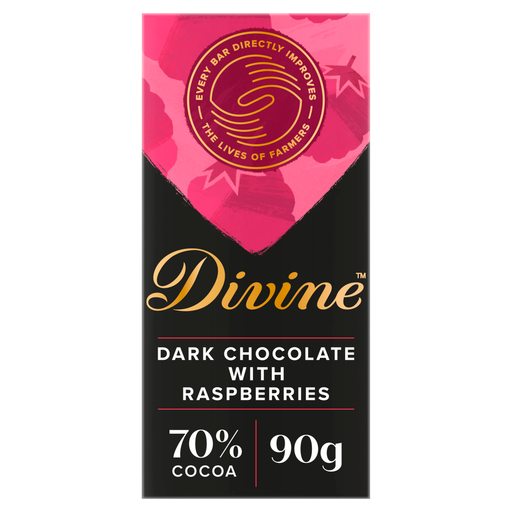
Divine Chocolate 70% Dark Chocolate with Raspberries 90g
Choose this bar for a stated 70% dark chocolate with raspberry pieces, rather than an unflavoured dark bar.
The product information states a minimum of 70% cocoa solids and 3% freeze-dried raspberry pieces. Its vegan-friendly and soy-free descriptions conflict with ingredient and allergen information that names milk; do not rely on those dietary descriptions without checking the current pack. The listing also says it may contain gluten and nuts.
Joybuy
 No image available
Lindt EXCELLENCE 85% Cocoa Dark 100g
This 85% dark bar gives you another stated cocoa level to compare when choosing a bar to eat.
The product information states a minimum of 85% cocoa solids and lists 15g sugars per 100g. Its allergen section names nuts, milk, soya and sesame without clarifying whether each is an ingredient or a precautionary warning; check the current pack if relevant.
Joybuy
Frequently asked questions
Can white chocolate meet a high-cocoa dark-chocolate requirement?
No. M&S Food explains that white chocolate contains cocoa butter but no cocoa solids. If cocoa solids are the deciding requirement, choose a dark chocolate with a declared cocoa-solids percentage.
Should I choose a 70% or a higher-cocoa dark bar?
Choose by the flavour and use you want, not by treating the larger percentage as a quality score. A labelled 70% bar and a higher-cocoa bar offer different cocoa levels; check their ingredients, intended use and nutrition per 100g if those differences matter to your purchase.
Does a vegan-recipe dark bar suit someone with a milk allergy?
Not necessarily. Lindt Shop UK describes its EXCELLENCE 70% bar as made to a vegan recipe but says it is made in a facility using milk and is not suitable for people with a milk allergy. Read the allergen information on the exact current pack.
What does “may contain” mean on a chocolate pack?
It is precautionary allergen labelling about possible unintended allergen presence. The Food Standards Agency explains that it communicates a potential cross-contact risk; it is not an assurance that the named allergen is absent.


